Precision-fabricated gravity flow beds, selective pallet racking, structural mezzanines, and warehouse safety solutions engineered to match ISO, EN, and ASTM structural criteria.
A comprehensive operational, structural, and thermodynamic analysis of high-density dynamic storage in Central America’s expanding industrial logistics hubs.
In the contemporary supply chain landscape of Central America, Costa Rica has solidified its standing as the preeminent high-value logistics, manufacturing, and distribution crossroads. From the industrial clusters of the Gran Área Metropolitana (GAM)—incorporating Alajuela, Heredia, San José, and Cartago—to the rapidly expanding duty-free regimes operating under the Régimen de Zonas Francas (Free Trade Zone System), supply chain directors are confronted with escalating per-square-meter facility costs, rigorous regulatory hygiene requirements, and complex seismic design variables. Within this demanding framework, traditional selective pallet racking frequently fails to deliver the cubic efficiency, stock rotation rigor, and labor minimization necessitated by competitive omnichannel operations.
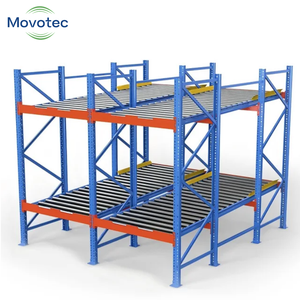
As an established, world-class Gravity Roller Racks Supplier & Exporter, we design, manufacture, and ship heavy-duty dynamic storage systems tailored precisely to the environmental and seismic parameters of Costa Rica. Gravity roller racks—widely recognized across Latin America as racks dinámicos por gravedad—utilize slightly inclined roller conveyors (typically between a 2.5% and 4% slope gradient) engineered with continuous roll-formed channels, precision ball bearings, and speed-damping brake drums. Operating completely on pure gravitational kinetic energy, palletized freight enters via the rear charging aisle, glides safely under modulated velocity toward the discharge face, and rests precisely against heavy-duty end stops. This architecture creates a flawless, non-powered First-In, First-Out (FIFO) dynamic buffer that drastically reduces transit aisles, curtails forklift internal travel distances, and prevents inventory obsolescence across date-sensitive product matrices.
Engineering dynamic storage for Costa Rica requires far more than generic calculations. Equipment deployed across logistics hubs like Coyol Industrial Park or Global Park must contend with the Código Sísmico de Costa Rica (CSCR-10). Because dynamic gravity racks maintain uninterrupted rows of rolling mass along the horizontal plane, lateral acceleration during a seismic occurrence exerts complex cyclic dynamic forces upon upright uprights, baseplates, and horizontal bracings. Our engineering department conducts structural finite element analysis (FEA) to confirm that beam connectors, mechanical anchor bolts (rated for C20/25 to C30/37 industrial concrete slabs), and frame cross-ties absorb torsional inertia without triggering system failure or structural dislodgement.
Equipped with centrifugal magnetic and mechanical brake rollers positioned strategically along the lane to ensure stable glide velocities (under 0.3 m/s) regardless of pallet load variations from 250 kg to 1,500 kg.
Custom beam profiles roll-formed from certified high-tensile structural steel (Q235B / Q355B / ASTM A36) with heavy-duty base anchorage designed specifically to withstand regional ductile displacement and seismic shock.
To resist condensation and aggressive oxidation in Central American coastal corridors (Moín/Limón and Caldera), uprights and dynamic beds undergo electrostatic thermosetting powder coating or continuous hot-dip galvanization.
| System Metric | Technical Specification | Costa Rican Operating Benefit |
|---|---|---|
| Load Capacity Per Pallet | 200 kg to 1,800 kg per position | Accommodates both lightweight medical devices and dense beverage shipments. |
| Lane Incline Gradient | 2.8% to 4.0% fully adjustable | Adjustable to suit timber GMA pallets, plastic pallets, or slip sheets. |
| Roller Pitch & Construction | Φ50mm / Φ60mm galvanized steel; sealed bearings | Maintenance-free, dust-tight rotation in unconditioned tropical facilities. |
| Separation Mechanisms | Automatic mechanical pallet separator at face | Eliminates line pressure, permitting safe picking by standard counterbalance forklifts. |
| Export Crating & Assembly | Knock-Down (KD) modular design with CAD maps | Optimized ocean container cubing into Puerto Caldera or Puerto Moín. |
Bridging the operational gaps within free zone cleanrooms, temperature-controlled agriculture, and high-velocity fast-moving consumer goods networks.
Costa Rica is a premier exporter of cardiovascular, surgical, and life-science devices. Cleanroom outer-staging warehouses in Coyol utilize gravity roller systems with non-shedding galvanized components to isolate raw material inputs, maintain sterile buffer lanes, and assure strict batch trace validation under FDA and ISO 13485 audits.
From pineapple and banana staging in Limón to fresh dairy in the Highlands, refrigeration costs represent an enormous operational overhead. Gravity roller flow systems reduce chilled air volume by consolidating warehouse cube capacity up to 60%, delivering an immediate reduction in HVAC energy consumption.
Distribution centers serving domestic retail chains throughout San José, Heredia, and Cartago rely on gravity dynamic racks for high-velocity cross-docking. Rear-loading separate from front-picking prevents vehicle cross-traffic, eliminates picking queues, and drastically lowers collision hazards.
Stringent compliance with national Ministry of Health (Ministerio de Salud) mandates requires verified FIFO dispatch for medication batches. Automatic separation stops at the picking face allow reach trucks to access individual pallets smoothly without back-pressure resistance from trailing inventory.
Key economic, structural, and nearshoring drivers propelling the adoption of gravity roller flow technology.
1. Accelerated Nearshoring & Foreign Direct Investment (FDI): Multinational corporations are pivoting operations away from distant Asian manufacturing hubs toward Central America to service North American consumer markets with minimal ocean transit latency. Costa Rica is capturing record investments across technology and advanced manufacturing sectors. As industrial park land prices around San José International Airport (SJO) surge, facilities are compelled to build vertically and maximize high-density dynamic storage instead of undertaking horizontal expansion.
2. Decarbonization & Green Logistics: Costa Rica’s international reputation as a leader in renewable electrical generation has translated into strict corporate sustainability agendas. Warehouses are seeking Bandera Azul Ecológica accreditation and carbon neutrality certification. Unlike automated powered shuttles or continuous electric conveyors, gravity flow racks operate entirely on passive potential energy, reducing facility kilowatt-hour usage and operational carbon footprint.
3. Modernization of Secondary Port Logistics: Investment in the APM Terminals container port in Moín and modernization programs at Caldera on the Pacific coast are shifting bonded bulk freight processing toward off-dock container logistics zones. These buffer terminals require high-throughput dynamic staging racks capable of handling varying pallet configurations with immediate turnover.
Direct manufacturing control, global project engineering, and field-tested structural performance.
Over two decades of structural rack fabrication expertise. We oversee roll-forming, laser profiling, robotic welding, and automated punching lines under one roof to maintain tight geometric tolerances and rapid turnaround.
We do not work from generic catalogs. Our licensed structural engineering group designs bespoke CAD blueprints calculating dynamic roller friction, brake spacing, entry guides, and concrete anchoring according to your specific site slab and forklift fleet.
All international consignments intended for Costa Rica feature ocean-worthy protective packaging, anti-corrosive wrapping, clear bundle coding, and detailed step-by-step assembly blueprints to ensure effortless on-site erection by local installation contractors.
Real-world insights addressing local import regulations, seismic standards, and operational considerations.
Our engineering team verifies upright column thickness, footplate dimensions, and diagonal bracing geometry using dynamic response spectrum analysis. By modeling the rolling payload as a reactive mass, we provide engineering certifications and load calculations that satisfy municipal construction permits in Alajuela, Cartago, and San José.
Yes. For cold store settings down to -30°C or high-moisture tropical packing facilities, we specify specialized low-temperature synthetic lubricants, sealed stainless steel ball bearings, and either hot-dip galvanized or specialized electrostatic polymer-coated roll frames to prevent moisture-induced corrosion.
Standard GMA wooden pallets (1200x1000mm or 48x40in) with intact bottom runners perform cleanly. For damaged wooden skids or flexible plastic pallets, we integrate 3-roller or multi-roller track layouts, or supply full-width heavy steel rollers to eliminate deck sag and prevent line jams.
Equipment is containerized in knocked-down (KD) format, strapped and moisture-protected. Cargo is consigned to Puerto Caldera (Pacific) or Puerto Moín (Atlantic). We provide full shipping documentation including commercial invoices, packing lists, Mill Test Certificates (MTC), and bill of lading (B/L) for swift customs clearance via your local customs broker (Agencia de Aduanas).
Lanes exceeding 3-pallet depth incorporate strategically spaced centrifugal brake rollers. These mechanical units engage progressively as the pallet rolls over them, keeping descent speeds controlled between 0.2 and 0.35 m/s, preventing damaging impact at the discharge unloading face.
Every delivered system is backed by comprehensive CAD layout plans, total lane load rating plaques, structural safety documentation, operational manuals, and torque maintenance guides to ensure your safety committee and insurance provider can sign off without friction.