Cantilever Racking Systems: The Global Engineering, Load Dynamics & Procurement Architecture Guide
A comprehensive technical evaluation addressing the mission-critical inquiries asked by supply chain executives, structural consultants, and warehouse automation directors. Explore structural cantilever vs. roll-formed mechanisms, deflection thresholds, automated side-loader integration, and GCC high-load design criteria from manufacturer Signature Racking Systems F.Z.C.
Engineering Fundamentals: Eliminating Obstacles for Linear, Long & Heavy Inventory
Traditional selective pallet racking relies on front and rear upright vertical frame assemblies linked via horizontal load beams. While ideal for standard wooden pallets, this structure creates an impenetrable barrier for non-standard, long-length freight such as structural steel tubes, aluminum extrusions, timber planks, PVC conduits, bar stock, and sectional plates.
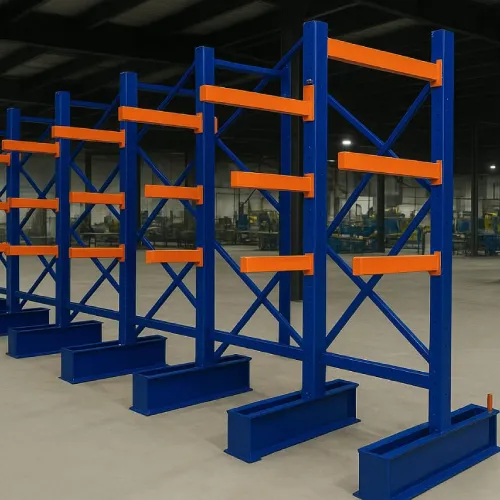
Cantilever Racking Systems eliminate front column obstructions entirely. Supported exclusively by robust vertical center-columns anchored to wide horizontal floor bases, cantilever arms extend outward to create uninterrupted, continuous horizontal storage levels. This unique geometry allows unrestricted side-access, instantaneous direct selectivity, and seamless handling via conventional counterbalanced forklifts, multidirectional reach trucks, articulated narrow-aisle units, or automated guided vehicles (AGVs).
Engineered at our Ajman Free Zone manufacturing plant, Signature Racking Systems designs and fabricates both roll-formed and heavy-duty hot-rolled structural steel cantilever systems tailored to eliminate load deflection, withstand high dynamic forklift impact, and maximize clear vertical ceiling heights.
Critical Engineering Insight: Managing Dynamic Cantilever Overturning Moments
Unlike standard pallet racks where vertical gravity loads transmit down closed frames symmetrically, a cantilever column functions as a vertical cantilever beam subject to tremendous dynamic overturning bending moments (M = F × Larm-center). Proper foundation anchoring design, base gusset plate gusseting, cross-aisle X-bracing, and rigorous slab shear calculations are non-negotiable engineering requirements to prevent progressive structural failure under asymmetrical loading cycles.
1. Technical Classification: Structural Hot-Rolled vs. Roll-Formed Cantilever Racks
Global procurement teams must clearly delineate between two manufacturing methodologies when planning capital expenditures for Cantilever Racking Systems:
Roll-Formed Cantilever
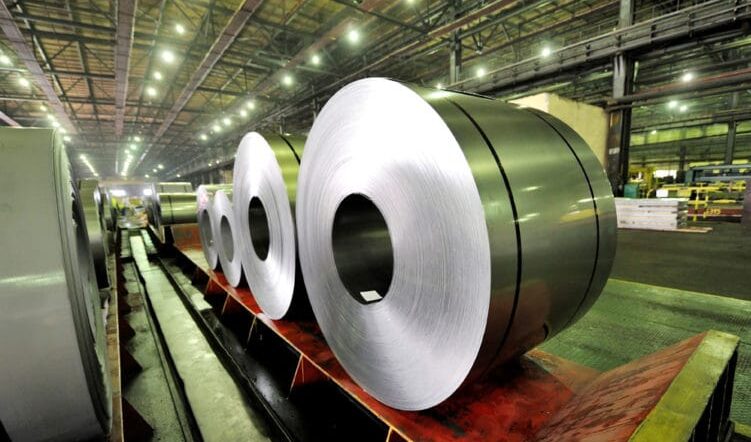
Fabricated through precision continuous roll-forming lines from high-yield structural steel coils (S275 / S355). Key characteristics include:
- Modular vertical pitch adjustments (typically 75mm or 100mm pin increments)
- Optimal for light-to-medium industrial loads (300 kg to 1,200 kg per arm)
- Lower initial capital outlay and rapid assembly
- Widely used for plumbing wholesale, moldings, and retail building depots
Hot-Rolled Structural Steel
Constructed utilizing heavy structural I-beams (HEA, HEB, IPE, or W-shapes) with bolted arm connections:
- Extreme heavy-duty capabilities exceeding 5,000 kg per arm
- High resistance against severe forklift collisions and operational shock loads
- Superior yield resilience for steel coils, marble slabs, and rebar bundles
- Engineered for open outdoor lumber yards and harsh marine coastal environments
Hybrid & Shelved Cantilever
Configured with heavy-duty GI decking panels, wire mesh decks, or steel grating spanning across adjacent cantilever arms:
- Provides continuous, unhampered horizontal decking
- Allows simultaneous storage of varying length cartons, pallets, and bundles
- Eliminates product sagging, drop-through hazards, and warping of flexible plastics
- Functions as a high-density intermediate bulk picking buffer
2. Next-Generation Procurement Trends Shaping Cantilever Storage
The global storage equipment landscape is shifting rapidly due to industrial real estate costs, tighter occupational safety regulations, and supply chain automation. Enterprise procurement departments are transitioning away from ad-hoc commodity racking toward high-performance structural systems engineered with the following strategic capabilities:
A. Integration with Multidirectional AGVs and Stacker AS/RS: Modern logistics hubs in the GCC, North America, and Europe are transitioning to narrow-aisle automated guided side-loaders. This requires cantilever systems manufactured with razor-sharp tolerances (EN 15620 execution classes), integrated mechanical guidance rails, and laser-reflective targeting plates along column flanges to allow 24/7 robotic material transfer without human intervention.
B. Mobile-Base High-Density Cantilever Architecture: Instead of fixed access aisles that consume up to 60% of floor real estate, progressive steel service centers mount entire cantilever upright banks onto motor-driven floor bogies traveling on recessed in-slab rails. Aisle openings occur automatically on demand, effectively doubling heavy profile storage capacity within the identical warehouse building shell.
C. Weather-Proofing & Marine-Grade Galvanization: For port-side distribution facilities, outdoor scrap yards, and structural steel distributors exposed to salt air, solar heat, and aggressive humidity, thermal Hot-Dip Galvanization according to ISO 1461 has replaced basic primer coats, delivering 30+ years of maintenance-free lifecycle value.
3. Structural Design Calculations: Arm Deflection, Pitch, and Spacing Rules
Selecting the correct cantilever configuration requires precise structural verification based on the physical properties of the items stored:
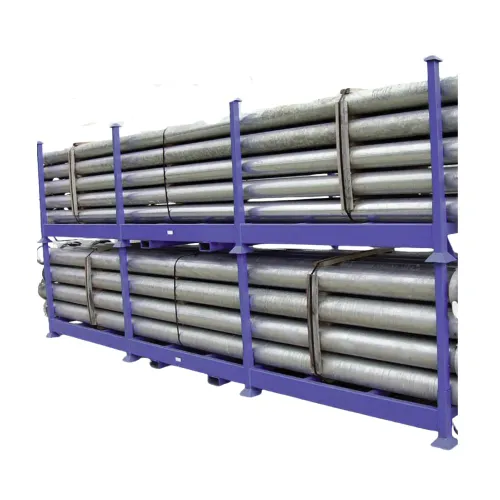
- Upright Pitch Spacing: The center-to-center distance between columns must prevent horizontal sag in the stored materials. As a proven industrial rule of thumb: overhang beyond the outer support arms should equal half the distance between adjacent arms (Distance = Span / 2). Stiff steel billets can tolerate broad spacing, while flexible PVC pipes, copper tubing, or lightweight timber require dense column spacing or intermediary supporting cradles.
- Arm Incline Angle & End Stops: To counterbalance arm deflection under full load, cantilever arms are engineered with an upward factory camber angle (typically 1.5° to 2°). Removable, welded, or drop-in mechanical pipe retainers (upward lip stops) prevent rolling round loads from accidental roll-off during handling cycles.
- Deflection Criteria (FEM 10.2.02 / EN 15512): Maximum allowable arm vertical deflection under a static uniformly distributed load (UDL) is constrained to δ ≤ L/200 or L/250. Any deflection exceeding these values introduces forklift mast binding, pallet displacement, and dangerous eccentric loads into the column spine.
| Cantilever Configuration | Arm Load Rating (per arm) | Maximum Column Height | Primary Handling Machinery | Standard Industrial Applications |
|---|---|---|---|---|
| Light-Duty Roll-Formed | 200 – 600 kg | Up to 4.5 meters | Counterbalanced Forklift / Manual Pick | Plastic PVC conduits, molding, trims, hardware retail |
| Medium-Duty Column | 600 – 1,500 kg | Up to 7.0 meters | Reach Truck / Side-Loader | Plywood packs, timber lumber, sectional garage panels |
| Heavy-Duty Structural I-Beam | 1,500 – 4,000 kg | Up to 12.0 meters | Heavy Multi-Directional Side-Loader | Structural steel I-beams, rebar packs, offshore machinery |
| Extra Heavy Yard Cantilever (Galvanized) | Up to 6,000+ kg | Up to 14.0 meters | Heavy All-Terrain Industrial Truck | Oilfield drill pipes, heavy casting billets, sheet metal bundles |
| Cantilever-Supported Clad Rack Shed | Custom Structural Calculation | Building Height | Overhead Stacker Crane / Automated Carrier | Automated self-supporting outdoor roofed storage yards |
All dynamic capacity ratings assume a Uniformly Distributed Load (UDL). Point loads or impact dropping significantly reduce rated load thresholds. Always consult Signature Racking Systems engineering specialists for exact structural calculations.
Why Global Industrial Buyers Choose Signature Racking Systems
Based in Ajman Free Zone, United Arab Emirates, Signature Racking Systems F.Z.C combines precision manufacturing, structural integrity, and ISO-standard quality controls to power warehouse reliability across the GCC, Africa, and international markets.
In-House Fabrication Control: From Raw Coil to Finished Steel Structure
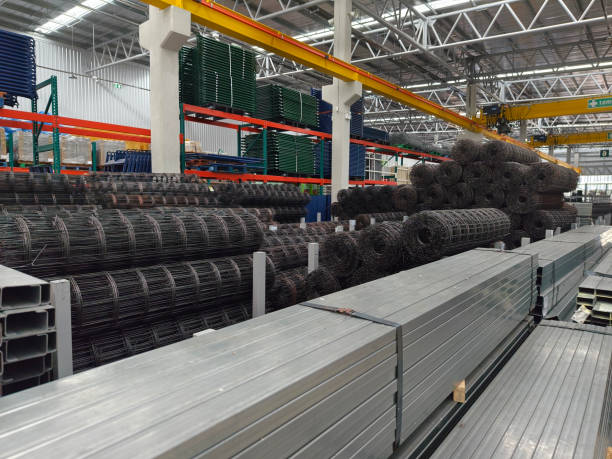
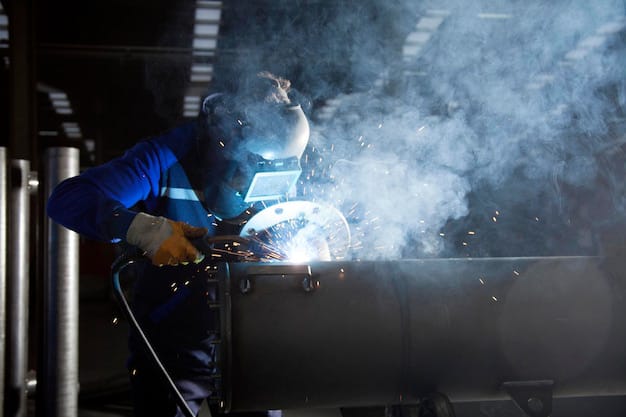
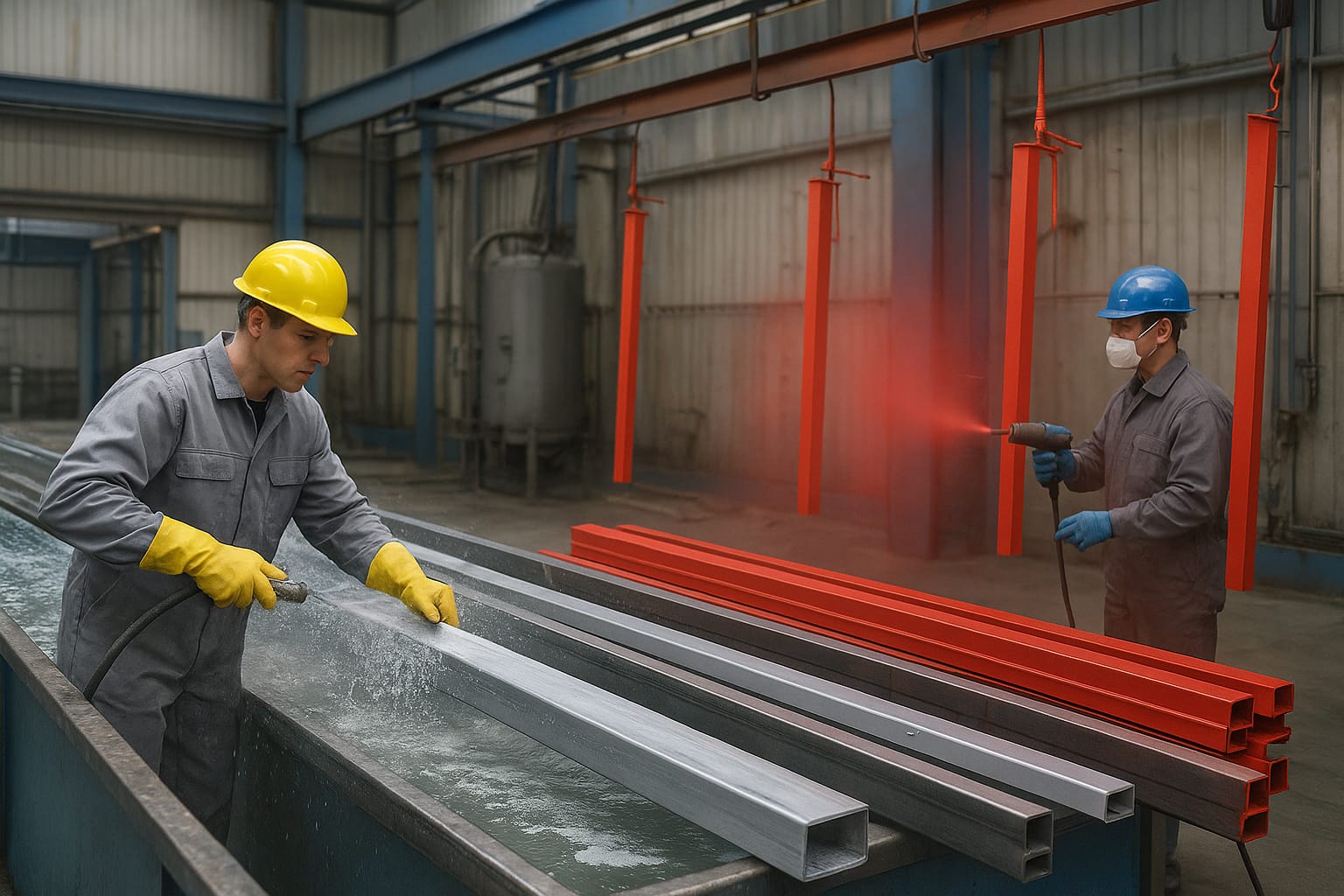
Unlike third-party distributors and trading intermediaries who outsource fabrication to fragmented suppliers, Signature Racking Systems operates a comprehensive, vertically integrated production facility. We control every facet of cutting, cold roll-forming, automatic CNC punching, robotic welding, shot-blasting, and automated electrostatic powder coating under one roof.
This vertical integration gives global procurement managers complete transparency over structural tolerances, steel metallurgy certifications, weld penetration consistency, and enforceable delivery schedules.

20+ Years of Storage Engineering
Over two decades delivering complex industrial projects for military, oil & gas, logistics, and retail giants.

Certified High-Tensile Steel & Zero Defect QA
Mill test certified steel coils and structural IPE sections evaluated stage-by-stage for load compliance.

Direct Accountability & Full Turnkey Deployment
From CAD site surveys and custom profile stamping to specialized erection crews and load sign-offs.
Inside Our Production Lines
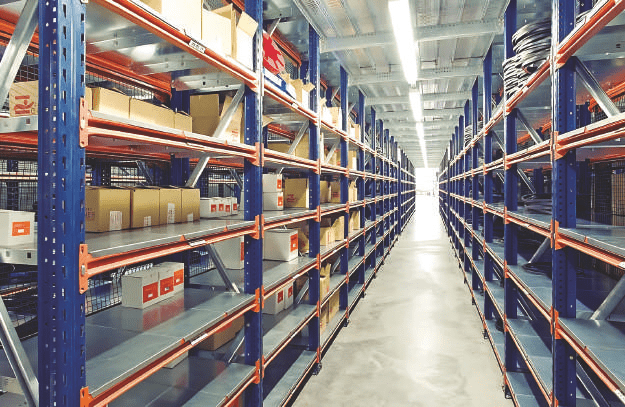
Every cantilever arm, base connection, and upright column is fabricated under stringent stage-by-stage quality parameters.
Frequently Asked Questions on Cantilever Racking Systems
Addressing the technical, operational, and commercial questions asked most frequently by procurement directors and warehouse engineers.
How does roll-formed cantilever racking compare to hot-rolled structural cantilever systems?
Roll-formed cantilever racking utilizes high-strength sheet coil fed through continuous roll-forming lines, producing profiles with punch holes along the column face. This configuration provides high modularity, pin-adjusted arm levels, and exceptional cost-efficiency for medium loads up to 1,200 kg per arm. It is ideally suited for indoor retail distribution, building materials, and timber workshops.
Structural cantilever racking uses heavy-duty hot-rolled steel I-beams (such as HEA, IPE, or W-sections). Featuring bolted arm connections and thick structural baseplates, hot-rolled cantilever systems deliver extraordinary impact resistance, higher deflection stiffness, and the ability to hold severe loads exceeding 5,000 kg per arm in heavy steel service yards, rebar distribution, and rough outdoor installations.
How do you calculate arm deflection and load limits for irregular, non-palletised materials?
Arm deflection is analyzed according to EN 15512 and FEM 10.2.02 standards. The standard limits vertical elasticity deflection under a Uniformly Distributed Load (UDL) to a maximum of L/200 or L/250 of the arm length.
When storing non-rigid, bundled, or irregular materials (such as flexible piping or varying length lumber), point loads and cantilever overhang bending moments must be accounted for. Weight cannot simply be divided equally; engineers must evaluate worst-case scenario loads on adjacent arm pairs to avoid severe localized torsional shear on the central column.
What are the essential floor anchor and slab load-bearing specifications for cantilever uprights?
Unlike standard symmetrical pallet racks where vertical loads transmit downwards through twin-leg frames, cantilever columns produce massive dynamic overturning moments. These bending moments (Torque = Arm Load × Arm Centerline Distance) create extreme uplift tension on rear floor anchors and concentrated downward compression on the front toe of the base.
Consequently, cantilever systems require reinforced concrete floor slabs typically between 175 mm and 300 mm thickness (minimum compressive grade C25/30 or C30/37). Upright bases are locked with high-tensile mechanical expansion anchors or chemical epoxy injection anchors engineered specifically to resist continuous dynamic pullout shear forces.
Can cantilever racking systems be integrated with automated guided vehicles (AGVs) and AS/RS?
Yes. Contemporary warehouse automation projects frequently deploy automated side-loaders, stacker cranes, or narrow-aisle AGVs interfacing directly with high-bay Cantilever Racking Systems. Achieving reliable automated operation requires:
1) Tighter structural manufacturing tolerances (conforming to EN 15620 execution classes); 2) Optical positioning and laser-reflective targeting plates along column flanges; 3) Mechanical lead-in guides and arm run-in safety buffers; and 4) Custom product cradles or steel wire mesh decking to accommodate automatic sensor-based pallet and profile pickup.
What surface finishes are recommended for outdoor cantilever timber and steel pipe yards?
For outdoor storage subject to rain, high humidity, UV exposure, and desert temperature cycling, thermal Hot-Dip Galvanization according to ISO 1461 is the industry standard. During this process, steel components are submerged in molten zinc at 450°C, forming an impermeable, metallurgical zinc-iron alloy layer that provides cathodic sacrificial protection even if scratched by forklift forks.
For coastal maritime regions, a duplex coating system (Hot-Dip Galvanization followed by architectural-grade polyester powder coating) provides maximum barrier resilience against aggressive marine chloride attack.
What parameters determine whether single-sided or double-sided cantilever columns should be used?
Single-sided cantilever columns feature arms extending in only one direction from the column web and are placed flush along building walls, perimeter fences, or boundary limits. They require an extended base leg to counteract forward overturning loads.
Double-sided cantilever columns stand freestanding within central warehouse bays, with arms extending from both sides of the central column. Structurally, double-sided designs achieve natural counterbalancing: loads placed on opposing arms neutralize horizontal bending moments, transmitting purely compressive axial force down the column spine, which significantly lowers anchor bolt stress and optimizes overall material utilization.
Ready to Engineer Your High-Performance Cantilever Storage Solution?
Connect with Signature Racking Systems F.Z.C technical engineers. Share your load dimensions, bundle weights, and floor plans for a tailored CAD layout, deflection calculation, and competitive factory quotation.