
Heavy structural steel profiles, high-load mold racking, and warehouse impact defense systems built in certified fabrication facilities and shipped directly to Ho Chi Minh City ports.
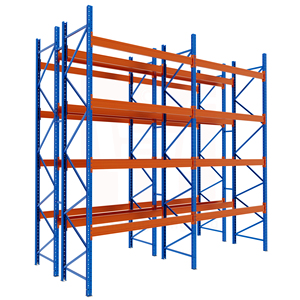
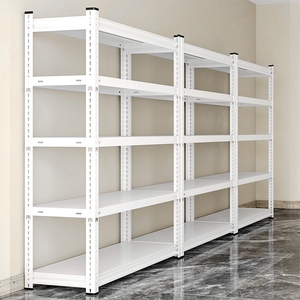
The industrial landscape across Ho Chi Minh City (HCMC) and its adjacent logistics belt—encompassing Binh Duong, Dong Nai, and Long An—is experiencing unprecedented cost appreciation. Prime logistics property lease rates have surged, propelled by foreign direct investment (FDI) inflows, booming e-commerce, and the relocation of global electronics and garment assembly. With industrial land rents in key zones such as Thu Duc City, Song Than, VSIP (Vietnam-Singapore Industrial Park), and Hiep Phuoc exceeding historic highs, warehouse operators cannot afford dead cubic volume or oversized access aisles.
Standard selective pallet racking systems require between 3.0 to 3.8 meters of aisle width for standard counterbalanced forklifts, dedicating up to 60% of total facility floor area strictly to vehicular navigation rather than revenue-generating pallet storage. Push Back Rack Systems (known locally as kệ Push Back or kệ trượt đẩy) resolve this spatial bottleneck by functioning on an inclined, nested-cart dynamic gravity design. By storing pallets up to 2, 3, 4, 5, or even 6 deep on structural telescoping carriers, operators achieve high-density accumulation while maintaining separate SKU selectivity across each horizontal and vertical lane.
For operations serving Cat Lai Port, Tan Son Nhat air cargo, and the upcoming Long Thanh logistics corridor, our direct China manufacturing platform delivers high-yield structural steel racking systems engineered specifically to withstand Southern Vietnam's tropical monsoon humidity, ground settlement profiles, and seismic loading parameters.
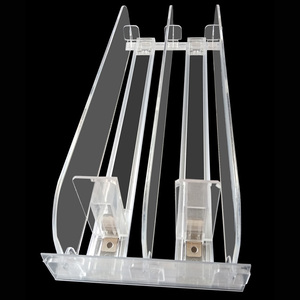
Push back racking operates on a straightforward yet structurally demanding mechanical principle: gravity-assisted accumulation utilizing a low-profile nested trolley mechanism. Each storage lane features a pair of inclined structural steel guide rails angled at approximately 2.5% to 3.0% (a calibrated grade sufficient to allow smooth descent under gravity without uncontrolled runaway acceleration). Telescoping carriages or carts are nested hierarchically within the rail profile:
Fabricated from heavy cold-rolled Q235B/Q355B structural steel, the top cart nests inside the intermediate cart, which in turn sits within the primary cart. The first deposited pallet rests on the highest cart; when the next pallet is introduced, the forklift operator pushes the first cart backward, exposing the subsequent carriage.
Each cart is equipped with sealed, heavy-duty steel flanged wheels running on precision ground axles. The flanged geometry prevents mechanical track derailment during high-speed pushback, while sealed ball bearings eliminate routine lubrication requirements in ambient or sub-zero environments.
Front-load safety stops, dynamic impact dampeners, and captive cart hooks prevent lift-off caused by uneven pallet entry. The calibrated slope guarantees that when a pallet is extracted, the trailing units smoothly coast forward to the pick face at a safe, controlled speed under 0.5 m/s.
This Last-In, First-Out (LIFO) dynamic architecture provides unmatched volumetric density for operations managing 3 to 10 pallets per SKU. It completely bypasses the complex electrical sensors, lithium batteries, and motor controls required by radio shuttle systems, eliminating maintenance downtime while delivering 90%+ of the operational density.
A rigorous engineering and financial comparison designed for supply chain directorship, facility planners, and warehouse procurement executives in the Ho Chi Minh City Metropolitan Area.
| Storage System Type | Floor Space Utilization | Forklift Cycle Efficiency | Damage Risk Profile | Relative CapEx / Pallet | Suitability for HCMC Cold Storage |
|---|---|---|---|---|---|
| Push Back Racking (2-6 Deep) | 70% – 78% (High) | Fast (Front-face only) | Minimal (Truck stays in aisle) | Moderate ($$) | Superior (No electronics / freeze-proof) |
| Selective Pallet Racking | 35% – 45% (Low) | Moderate (Deep aisle travel) | Low-Moderate | Lowest ($) | Poor (Excess air cooling space wasted) |
| Drive-In Racking | 75% – 82% (High) | Slow (Mast travel inside tunnel) | High (Frequent upright impacts) | Low-Moderate ($$) | Moderate (High operator fatigue & risks) |
| Pallet Flow (Gravity Roller) | 75% – 85% (FIFO) | Fast (Dual dedicated aisles) | Low | High ($$$$) | Good (Higher maintenance on brake rollers) |
| Radio Shuttle Cart Racking | 80% – 88% (Max) | Automated lane travel | Very Low | Highest ($$$$$) | Variable (Battery life degrades below -18°C) |
Real-world integration scenarios across Southern Vietnam's leading manufacturing estates, free-trade corridors, and cold-chain hubs.
Warehouses in Long An (Ben Luc, Can Giuoc) and Binh Chanh handling frozen pangasius, black tiger shrimp, and tropical fruit for export via Cat Lai. Push Back systems minimize refrigerated airspace loss without introducing battery-operated robotics vulnerable to -25°C moisture condensation.
High-turnover consumer goods centers in Di An, Song Than, and VSIP 1 servicing mega-supermarket retail chains across District 1, District 7, and Thu Duc. 3-deep and 4-deep push back designs allow rapid stock rotation, batch-level tracking, and high pallet throughput.
Manufacturing facilities in Saigon Hi-Tech Park (SHTP) and Bien Hoa storing high-value subassemblies, clean packaging materials, and heavy molding components. Precision nested carts offer shock-free travel that preserves delicate components from excessive mechanical vibration.
Direct procurement from established Chinese racking manufacturers gives Vietnamese operations a distinct cost-to-performance ratio unreachable through purely domestic fabrication. Our manufacturing facilities leverage high-volume continuous coil steel sourcing from top-tier state mills, fully automated CNC punching, and robotic beam welding lines. Sourcing direct provides three structural advantages for Vietnamese project managers:
Under the ASEAN-China Free Trade Area (ACFTA) agreement, structural storage racks categorized under HS Code 7308.90 qualify for 0% preferential import duty into Vietnam when backed by a compliant Certificate of Origin (Form E). We handle the legal trade compliance documentation to ensure zero tariff friction at Cat Lai customs.
Containerized sea freight from Pearl River Delta ports (Shenzhen, Nansha) or Yangtze Delta ports (Ningbo, Shanghai) directly to Ho Chi Minh City ports (Cat Lai, SP-ITC, or Cai Mep deep-water port) averages only 3 to 5 days of transit time. This short maritime distance allows fast container turnaround and agile project completion.
Ho Chi Minh City experiences prolonged high ambient humidity (often >85% RH) during the wet season. All fabricated racking components receive an automated multi-stage pre-treatment wash (degreasing, phosphating, pure water rinse) followed by electrostatic thermoset epoxy-polyester powder coating (70-90 μm) cured at 200°C for chemical and corrosion resistance.
Every shipment is packed knock-down (CKD) with heavy-duty structural corrugated edge protectors, anti-moisture polymer wraps, and timber dunnage calibrated to fit standard 40ft High Cube containers. This packing density safeguards structural paint finishes against maritime abrasions while keeping ocean shipping costs per pallet position at rock bottom.
A rigorous five-stage delivery framework, engineered to guarantee structural integrity, compliance with FEM / RMI standards, and fast deployment across Southern Vietnam.
We analyze slab thickness, subgrade geotechnical reports, forklift reach limits, building clear heights, and pallet size/weight variations (e.g., standard 1200x1000mm or 1100x1100mm Asian pallets).
Engineers calculate section modulus, upright perforation pitches, beam load deflections (limited to L/200 per FEM 10.2.02), and incline angles to generate detailed layout drawings.
High-tensile steel is rolled on automated roll-forming lines. Sample components undergo tensile yield stress validation, robotic seam inspection, and dynamic cart-nesting verification.
Bundled components are delivered to Cat Lai Port. We provide comprehensive CAD installation manuals, technical video walkthroughs, and certified on-site assembly supervisors for local installation crews.
Direct answers addressing the engineering, commercial, and operational queries most frequently posed by logistics directors and facility managers in Ho Chi Minh City.
Send our senior engineering team your warehouse DWG floor plans, clear ceiling heights, pallet dimensions, and target capacity. We will generate a complimentary 3D CAD layout, volumetric density analysis, and a direct factory quotation delivered to Cat Lai Port within 24 hours.