Heavy Stacking
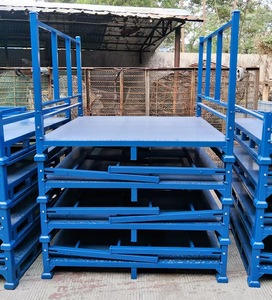
Mracking Foldable Stack Racking Cold Mobile Rack Cloth Stacking Shelf
Payload: 1,500 kg/tier
Type: Foldable / Mobile

Precision-machined, CE-compliant, and seismic-dampened mobile storage platforms engineered to unlock maximum cubic capacity in Nagoya's prime logistics real estate.
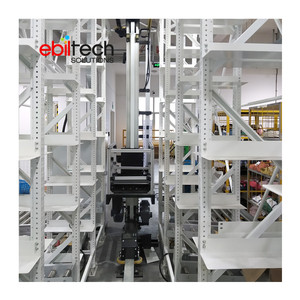
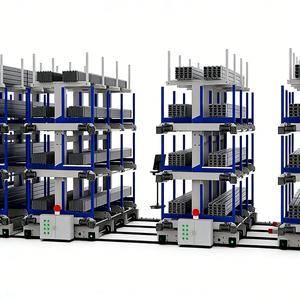
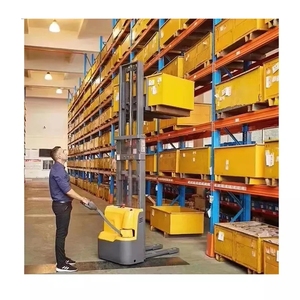
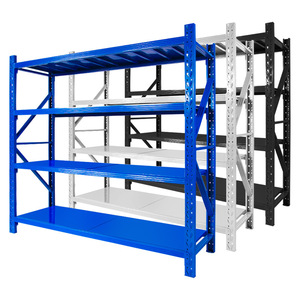
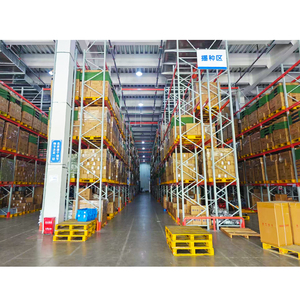
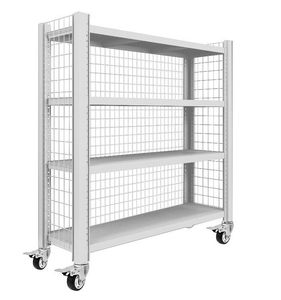
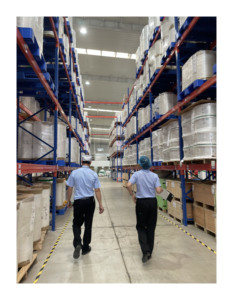
Greater Nagoya (Aichi Prefecture) stands as Japan's powerhouse of heavy manufacturing, precision automotive assemblies, and vital maritime trade hubs. Here is how mobile racking resolves space constraints across key regional sectors.
Aichi produces over 40% of Japan's automotive components. High-mix low-volume dies, heavy metal stamping molds, and battery packs require instantaneous accessibility without consuming expansive floor space. Mobile racking provides 100% direct crane or forklift access while compressing 8 selective aisles down to a single dynamic working aisle.
Nagoya Port handles Japan's largest maritime export and import tonnages. In high-cost deep-freeze warehouses (-25°C to -30°C) storing seafood, imported proteins, and dairy, operational refrigeration costs scale with cubic volume. Mobile racking delivers an 85% surge in storage capacity, slashing kilowatt-hour consumption per stored pallet by up to 40%.
Housing composite wing tooling, titanium fuselage jigs, and specialized aluminum extrusions for the Chubu aerospace corridor demands extra-length cantilever racks. Electric rail-type mobile cantilever carriages eliminate fixed dead aisles, preventing mechanical damage and providing programmable soft-start movement for ultra-delicate tooling.
Stainless steel heavy-duty mobile shelving configurations (SUS 304) operate in high-precision electronics staging. By employing non-shedding polyurethane wheels, electrostatically grounded rails, and washdown-safe drive assemblies, cleanrooms maintain Class 100/1000 standards without compromising inventory capacity.
Faced with acute logistical labor shortages throughout Central Japan, 3PL distributors deploy mobile racking synchronized with automated guided vehicles (AGVs) and warehouse management software (WMS). Radio-frequency remote aisle selection unlocks rapid batch picking for peak retail campaigns.
Integrating European Machinery Directives with Japan's Stringent Anti-Earthquake Building Standards (Kenchiku Kijun-hō).
Installing industrial mobile racking systems in seismically active regions like Aichi Prefecture requires an advanced multi-layered safety architecture. Our CE-certified mobile carriages comply strictly with EN 15095 (Power-operated mobile decking, racking and shelving) while factoring in the strict dynamic lateral forces specified by the Japanese Building Standard Law.
Every system engineered for the Japanese market features high-yield cold-rolled profiles (Q355B / SS400 equivalent), dual-drive synchronized wheeled bogies, and embedded ground guide rails chemically anchored with seismic resin capsules. The structural frame incorporates heavy-duty cross-bracing designed to dissipate seismic shear waves, mitigating the risk of harmonic resonance during deep tremors.

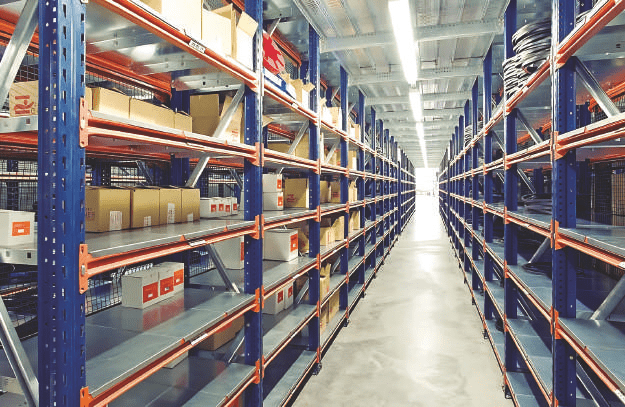
In accordance with CE Directive 2006/42/EC, motorized mobile racking installations cannot rely merely on procedural operator warnings. Our carriages are equipped with redundant hardware safety circuits meeting Performance Level d (PL d) Category 3 pursuant to EN ISO 13849-1:
This comprehensive multi-tier perimeter protection assures complete compliance with both Japanese Labor Safety and Health Regulations (Rōkikō) and international industrial standards.
Assessing storage density, seismic stability, and operational efficiency for Nagoya industrial sites.
| Performance Dimension | Motorized Mobile Racking | Conventional Selective Racking | Drive-In Pallet Racking | Automated Miniload ASRS |
|---|---|---|---|---|
| Volumetric Floor Utilization | 80% – 90% (Ultra High) | 40% – 45% (Baseline) | 65% – 75% (High) | 85% – 95% (Maximum) |
| SKU Selectivity & Direct Access | 100% Direct Accessibility | 100% Direct Accessibility | LIFO / FIFO (Restricted lanes) | 100% Automated Access |
| Seismic Damping Capacity (JIS) | Active dynamic base locking & tie-beams | Floor-anchored vertical deflection only | Vulnerable to honeycombing resonance | Rigid high-bay top-braced matrix |
| Cold-Storage Thermal Efficiency | Maximized (40% kWh reduction) | Poor (High empty airspace cooling) | Good (High cubic density) | Exceptional (Minimized door cycles) |
| Forklift Aisle Requirements | Single variable aisle (3.0m - 3.4m) | Multiple fixed aisles (3.2m per pair) | Forklift drives inside storage bays | Zero forklift aisles (Crane operated) |
| Civil Foundation Requirement | Embedded guide rail / Level tolerance FF50 | Standard industrial concrete slab | Standard industrial concrete slab | Deep pile high-flatness super-flat slab |
| Safety System Redundancy | SIL 3 light curtains + base bumpers | Passive column guards & rack protectors | Guide rails & buffer stops | Fully enclosed safety zone barriers |
Navigating the "2024 Problem" in Japanese freight transport through space optimization, electrification, and intelligent WMS convergence.
With Japan's cap on commercial driver overtime hours taking full effect, regional supply chains in the Chubu industrial area require centralized consolidation hubs. Mobile racking systems compress holding facilities, allowing manufacturers to maintain larger buffer reserves locally rather than relying on rapid long-haul replenishment runs from Tokyo or Osaka.
Logistics land prices along the Meinikan (Nagoya Daini Kanjo Expressway) and Isewangan Expressway have surged. Building greenfield facilities has become financially prohibitive for small-to-mid enterprises. Upgrading existing brownfield warehouses with heavy-duty mobile racking doubles pallet capacity without expanding real estate footprints.
Japanese corporations are mandated to document carbon neutrality milestones. In cold-chain logistics, cooling inefficient empty aisles consumes massive power. High-density mobile racking decreases cooling volume per cubic meter, translating directly into reduced thermal leakage and lower Scope 2 greenhouse gas emissions.
Modern mobile racks no longer operate as isolated mechanical blocks. Equipped with open Modbus, Profinet, and OPC-UA interfaces, our CE-certified carriages link directly with autonomous forklifts and automated guided vehicles (AGVs), synchronizing dynamic aisle-opening commands in advance of vehicle approach.
As Nagoya automotive plants transition to electric vehicle powertrains, casting and stamping presses require completely reconfigured stamping dies. Electric rail-type telescopic cantilever and heavy-duty mold mobile racks allow heavy dies (3,000kg to 10,000kg) to be indexed safely within arm's reach of robotic transport dollies.
With over 20 years of bespoke manufacturing mastery, our specialized factory fabricates, tests, and certifies structural racking solutions engineered for zero-defect operational longevity.
Unlike trading intermediaries, our manufacturing facility controls the complete mechanical production continuum. Our factory floor houses continuous CNC roll-forming lines capable of profiling high-strength structural uprights from 90mm up to 140mm face dimensions with uniform structural tolerances.
Every structural weld is executed using robotic MIG/MAG apparatus verified by non-destructive ultrasonic testing. Steel elements undergo multi-stage shot blasting (Sa 2.5), zinc phosphate pre-treatment, and high-temperature thermoset epoxy polyester powder coating (70–90 micron thickness) to prevent corrosive degradation in humid coastal ports such as Nagoya Port.
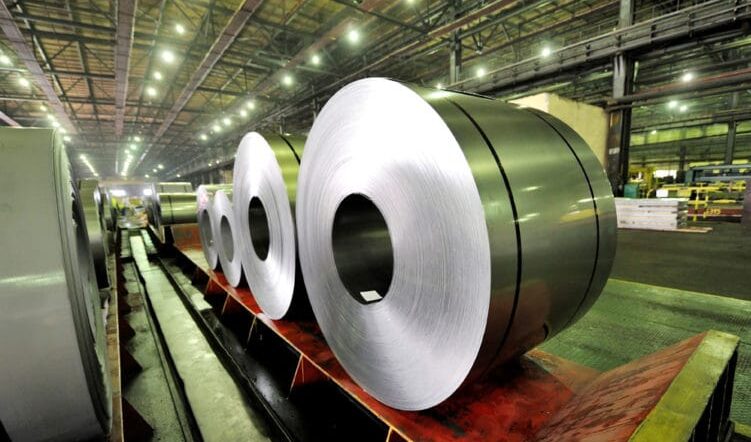
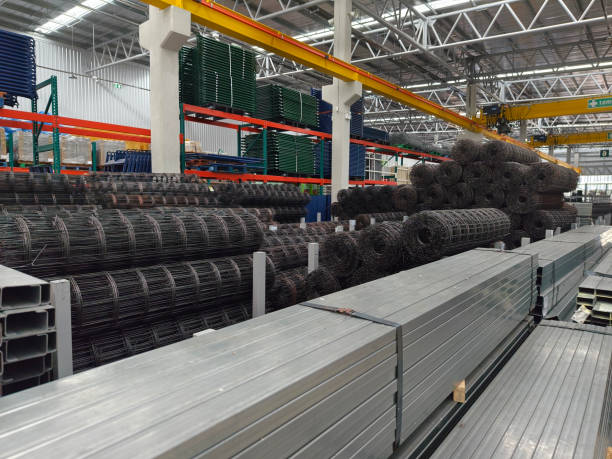
Prime certified coil stock (Q235B/Q355B) inspected with mill test certificates for tensile resilience.
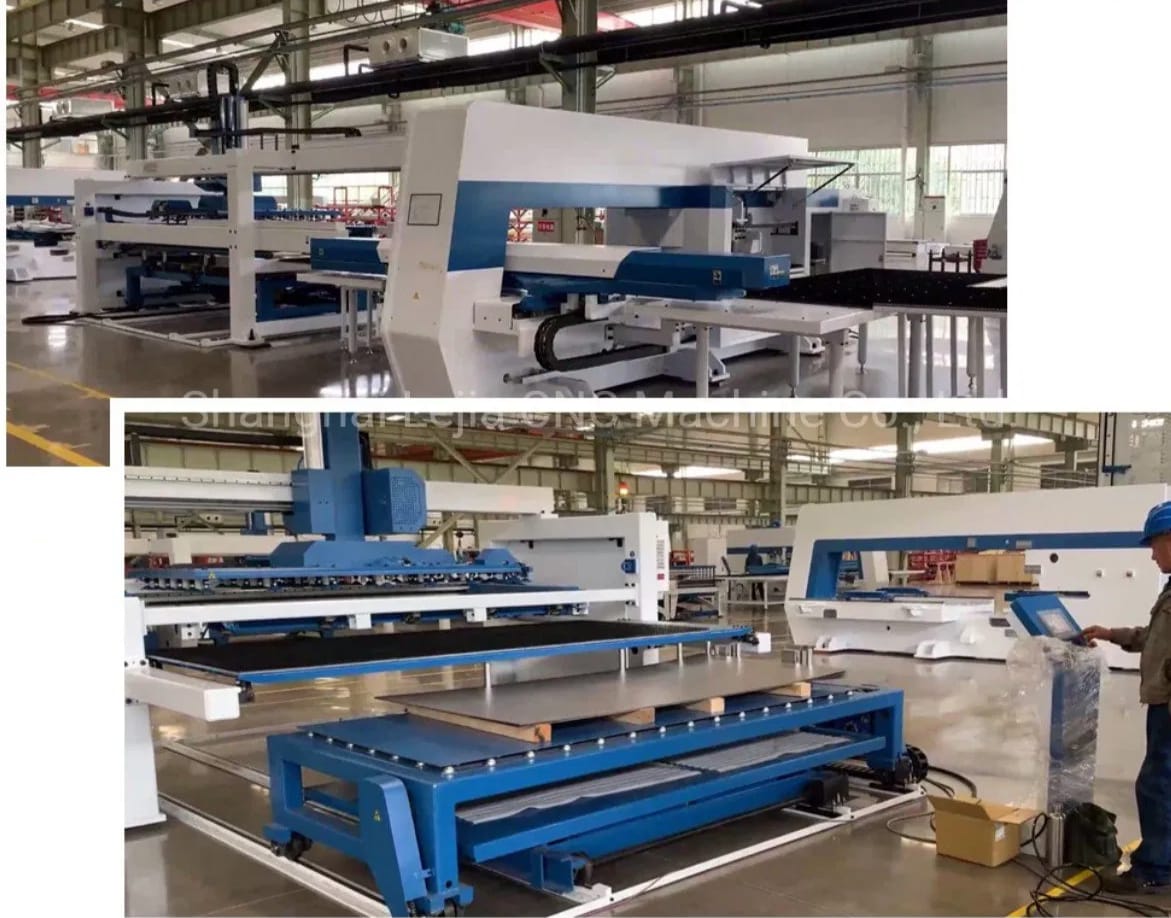
Multi-axis punching stations delivering 50mm and 75mm pitch precision for adjustable beam hooks.
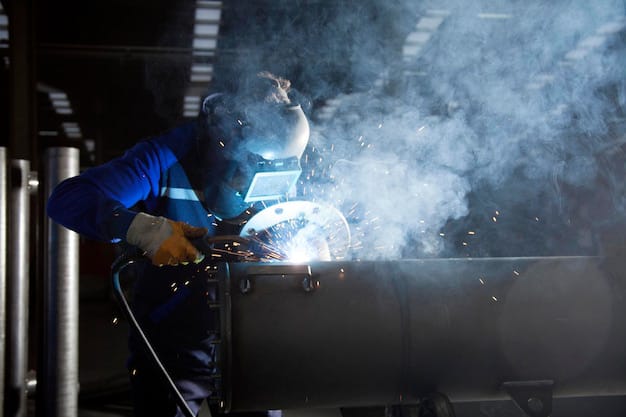
Continuous robotic seam-welding guarantees maximum dynamic load deflection resistance on beam connectors.
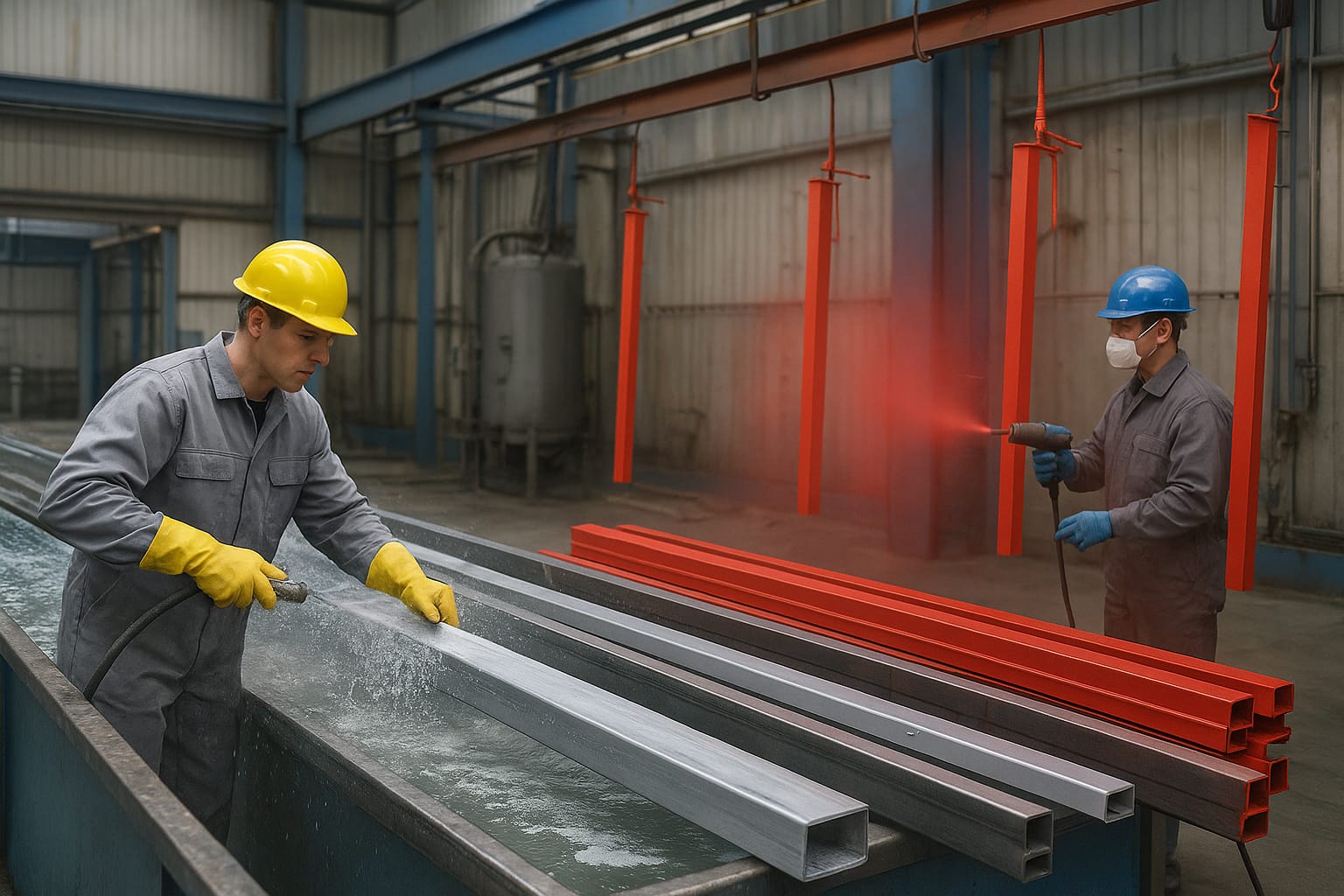
Automated powder line curing followed by heavy timber skid packing designed for maritime container shipping to Nagoya Port.
Essential technical insights for Japanese plant managers, structural engineers, and intralogistics procurement directors.
While Japan utilizes its own Building Standard Law (Kenchiku Kijun-hō) and JIS standards (such as JIS B 8941 for industrial storage racks), CE certification under Directive 2006/42/EC and EN 15095 verifies that the mechanical, electrical, and control architecture meets the world's most rigorous functional safety benchmarks.
For Nagoya municipal approvals and building confirmation applications (Kakunin-Shinsei), our engineering department delivers comprehensive structural calculation sheets (Kōzō Keisan-sho), steel mill test certificates (Tensile yield strength > 355 MPa), and seismic lateral load deflection models matching local seismic acceleration coefficients ($k_h$).
Yes. We offer two distinct track engineering solutions for retrofits across Greater Nagoya:
Our deep-freeze mobile racking models are rated for continuous operational cycles down to -35°C. For sub-zero installations, we incorporate cryogenic low-temperature lubrication grease, heated internal motor enclosures to prevent condensation freezing, low-temperature silicon cabling, and IP67-rated optoelectronic photo eyes. In addition, cold-storage drives include dynamic current-limiting acceleration to prevent carriage wheel skidding on frost-prone concrete surfaces.
The centralized PLC (Mitsubishi Electric or Siemens S7-1500) supports native industrial protocols including CC-Link, Profinet, Modbus TCP, and Ethernet/IP. Restful API endpoints or dry-contact relays allow direct integration with warehouse management systems. AGVs or narrow-aisle reach trucks can transmit radio-frequency trigger signals to initiate aisle opening sequences automatically as the vehicle maneuvers toward the designated storage bay.
Standard fabrication timelines range from 25 to 35 calendar days depending on bay quantity. Maritime transit to Nagoya Port (Kinjo / Tobishima container terminals) typically spans 7 to 14 sailing days. All structural frames, carriages, and electrical enclosures are packed in heavy-duty fumigated steel-strapped wooden crates, wrapped in waterproof vapor-barrier film with desiccant packs to prevent maritime salt spray oxidation.
EN 15095 mandates semi-annual checks of functional safety mechanisms (light curtain response time, pressure bumper sensitivity, emergency stop circuits) and annual structural alignment audits of drive chains, wheel flange bearings, and guide rail parallelism. We furnish comprehensive bilingual maintenance manuals, calibration jigs, and a 10-year structural warranty backed by readily dispatchable replacement components.