+971 55 447 8664 +971 50 514 7060 [email protected]
DACH Region Logistics Engineering

Wire Mesh Decking Manufacturers & Factory for the Austria Market

Certified EN 15512 structural integrity, ÖNORM compliance, and TRVB 127 S sprinkler-compatible wire mesh deck solutions engineered for Austrian high-density intralogistics.

100% TRVB 127 S Fire Compliant
>70% Sprinkler Water Penetration
1500 kg Max Tested UDL Capacity
20+ Years Engineering Expertise
Precision Engineered Decking Portfolio

Standard & Heavy-Duty Wire Mesh Decking Solutions

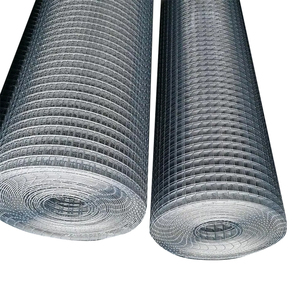
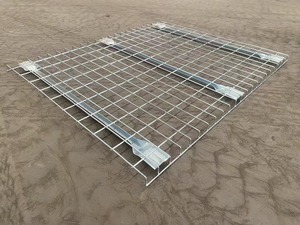
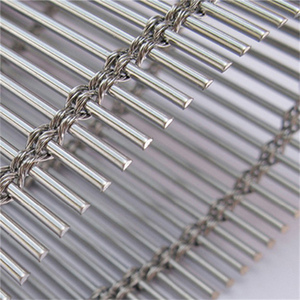
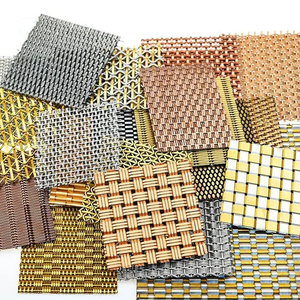
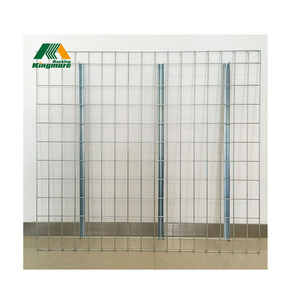
Direct factory supply of heavy-duty welded wire mesh decking, waterfall shelf panels, and architectural partition netting built to rigorous European warehouse racking tolerances.

Technical Engineering Whitepaper

Engineering Wire Mesh Decking for Austrian Structural & Fire Safety Regimes

Navigating the intersection of EN 15512 structural requirements, Austrian TRVB 127 S sprinkler standards, and Euro-pallet handling dynamics.

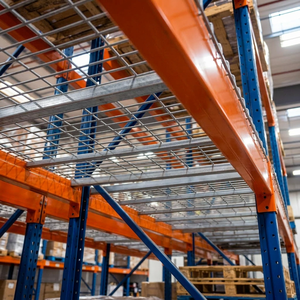
For industrial logistics directors and warehouse planning engineers across Austria (Wien, Linz, Graz, Salzburg, and Innsbruck), storage rack decking selection is not merely a material handling preference—it is a tightly regulated engineering discipline. The Austrian storage landscape is governed by stringent workplace and property insurance mandates. Racking decking must simultaneously withstand heavy dynamic pallet drop impacts, guarantee zero deflection beyond strictly defined elastic thresholds, and preserve unhindered ESFR (Early Suppression Fast Response) sprinkler flow.

Historically, warehouses across Central Europe utilized combustible chipboard panels (Spanplatten) or corrugated timber decks due to initial cost considerations. However, modern Austrian industrial property fire guidelines—specifically TRVB 127 S (Technische Richtlinien Vorbeugender Brandschutz) and alignment with VdS CEA 4001—have systematically rendered solid combustible decking unviable for tier-1 insured commercial facilities. In high-bay pallet racking (Hochregallager), solid shelving acts as an umbrella, deflecting sprinkler deluge away from localized rack fires and exacerbating thermal accumulation at ceiling levels.

TRVB 127 S & CEA 4001 Compliance Criterion: Austrian fire mitigation authorities demand a minimum open deck surface area of 70% to permit unhindered vertical water penetration and smoke dispersal, an engineering threshold effortlessly achieved by our 50×100 mm and 50×50 mm automated mesh matrices.

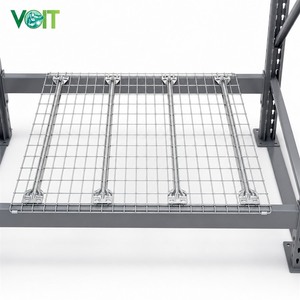
From a static structural calculation perspective, our wire mesh decks conform strictly to EN 15512 (Steel static storage systems – Adjustable pallet racking systems – Principles for structural design) and maintenance requirements under ÖNORM EN 15635. The calculation of load-bearing capacities relies on Uniformly Distributed Load (UDL) principles, reinforced by roll-formed cold-rolled steel support channels (1.5 mm to 2.0 mm wall thickness) spot-welded to low-carbon longitudinal cold-drawn wires.

To eliminate failure risks during off-center EUR-pallet placements, our engineering team deploys three channel geometries tailored for typical European beam types:

  • Universal Flanged Channels (Cascade / Waterfall): Engineered with a flared outer wing resting flat across the horizontal beam face, compatible with standard European box beams, structural I-beams, and open-step beams.
  • Inverted U-Channels (Self-Cleaning): Eliminates internal dust, grain, and debris buildup, specifically requested by Austrian food distribution and cold storage logistics operators in Upper Austria and Styria.
  • Inside-Drop Flush Channels (Step-Fit): Seats flush with the step beam shoulder to provide a completely flat, non-obstructed shelf plane, essential for automated guided vehicles (AGVs) and hand-picking carton flows.

In terms of metallurgical durability, Austria’s dramatic seasonal climate variations—ranging from humid Continental summers in the Vienna Basin to sub-zero Alpine winter conditions along the Tauern and Brenner transit corridors—demand superior galvanic corrosion resistance. Our cold-drawn high-tensile steel wire (Q235B / S235JR equivalent with tensile strength >450 N/mm²) is treated via either automated continuous Electro-Galvanization (zinc layer 12–18 μm) or Hot-Dip Galvanization conforming to ISO 1461 (minimum 55–85 μm coating thickness), providing complete lifecycle immunity against electrolytic corrosion and flaking in -30°C pharmaceutical cold rooms.
Decking Performance Benchmark: Wire Mesh vs. Traditional Substrates

Performance Criterion Engineered Steel Wire Mesh Decking Industrial Plywood / Chipboard (Spanplatte) Solid Corrugated Steel Deck Panels
TRVB 127 S Sprinkler Flow >70% Open Area (Optimal deluge penetration) 0% (Shields water, accelerates flue fires) 0% – 15% (Requires costly slotted punching)
Deflection Limit (UDL L/200) Certified compliant under EN 15512 calculations Prone to permanent sagging & moisture warping High deflection unless heavy gauge sheet is used
Sub-Zero Alpine Durability (-30°C) 100% resilient; zinc-alloy coatings remain intact Embrittlement, delamination, mold colonization Resilient but susceptible to panel condensation
Lighting & Visibility Penetration High ambient light passage; lower lighting OPEX Blocks overhead illumination completely Opaque; creates dark racking shadows
Hygiene & Debris Accumulation Self-clearing mesh; zero particulate collection Harbors dust, insects, and splinter hazards Traps spilled liquids and dust within corrugations
Austrian Insurance Risk Premium Lowest underwriting category across DACH insurers High surcharge; requires localized in-rack sprinklers Standard category; requires sprinkler coordination
Austria Intralogistics Ecosystem

Targeted Deployment Across Key Austrian Industrial Clusters

From transnational distribution hubs along the Danube corridor to high-tech manufacturing in Styria, our wire decking meets exacting regional operating environments.

Vienna Schwechat Cargo Logistics Hub Racking

Wien-Schwechat & Lower Austria Multi-Modal 3PL Hubs

Serving central logistics centers around Vienna International Airport and the Danube corridor. High-throughput selective pallet racking systems utilize 1000 kg UDL mesh decks with flared waterfall lips to accommodate standard EUR 1 (1200×800 mm) and EUR 2 (1200×1000 mm) pallets, ensuring total operator safety when picking split cases and broken pallet loads.

Styria Automotive Supply Chain Racking Decking

Graz (Styria) Automotive & Heavy Engineering Corridor

Within the automotive clusters around Graz and southern Austria, storage systems handle metal stillages, European Gitterboxen (DIN 15155), and non-standard tool dies. Reinforced welded wire decks with inverted channel supports distribute point loads safely across the racking beams, preventing localized structural beam deformation under intense cyclic loading.

Alpine Cold Storage Facility Wire Decking

Tyrol & Salzburg Alpine Cold-Chain & Food Distribution

Sub-zero food consolidation hubs (-25°C to -30°C) operating in western Austria require corrosion-resistant, hot-dip galvanized wire decking. The open mesh allows seamless convective thermal air currents to circulate efficiently throughout the high bay, significantly cutting HVAC energy costs while complying with IFS Logistics and HACCP sanitation standards.

Linz Upper Austria Automated E-Commerce Fulfillment

Linz-Wels (Upper Austria) E-Commerce & Retail Fulfillment

In high-density omnichannel distribution facilities, wire mesh decking is configured with integrated snap-in vertical dividers and back-stop mesh barriers. This converts bulk pallet beam levels into dynamic, ergonomic manual carton-picking bays, ensuring zero item falls into forklift transit aisles.

Market Evolution 2025–2030

Emerging Trends Transforming Austrian Warehouse Infrastructure

How structural modernization, automation integration, and European ESG frameworks are shaping future wire mesh procurement.

Industrial Manufacturing Excellence & Engineering Quality Control

Backing our Austrian partners with 20+ years of advanced manufacturing mastery. From raw steel coil intake to automated multi-point resistance welding, every stage is executed in-house for unyielding dimensional consistency.

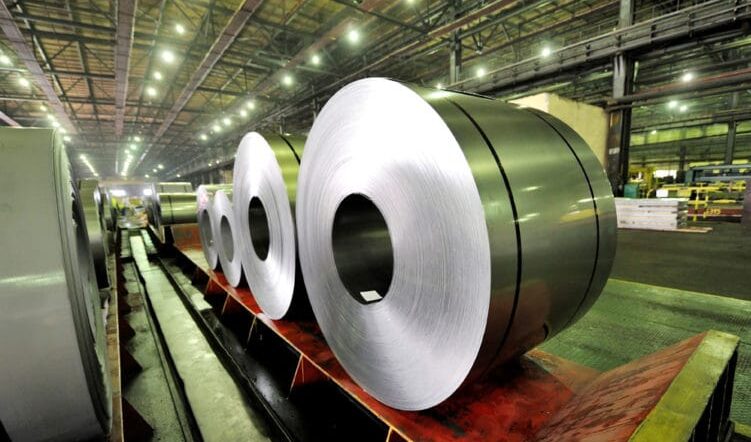
Raw Material Intake of Steel Coils
Raw Material Verification Certified structural steel wire coils inspected for chemical composition and tensile elongation.
Automated Steel Cutting Unit
High-Precision Cutting CNC computer-controlled wire straightening and cutting for exact pitch and square edge tolerances.
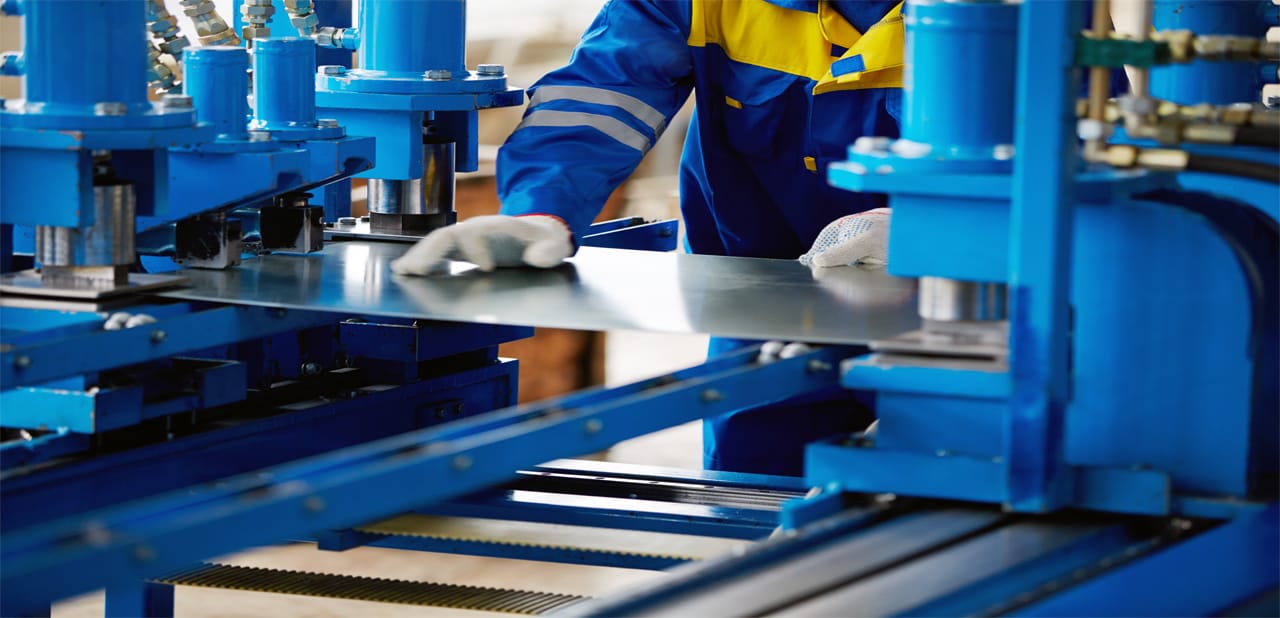
Hydraulic Pressing and Channel Forming
Channel Stamping & Pressing Heavy hydraulic presses form rigid support channels with precision flanged waterfall profiles.
Roll Forming Machinery Line
Continuous Roll Forming High-precision roll forming lines yielding structural steel profiles with minimal scrap waste.
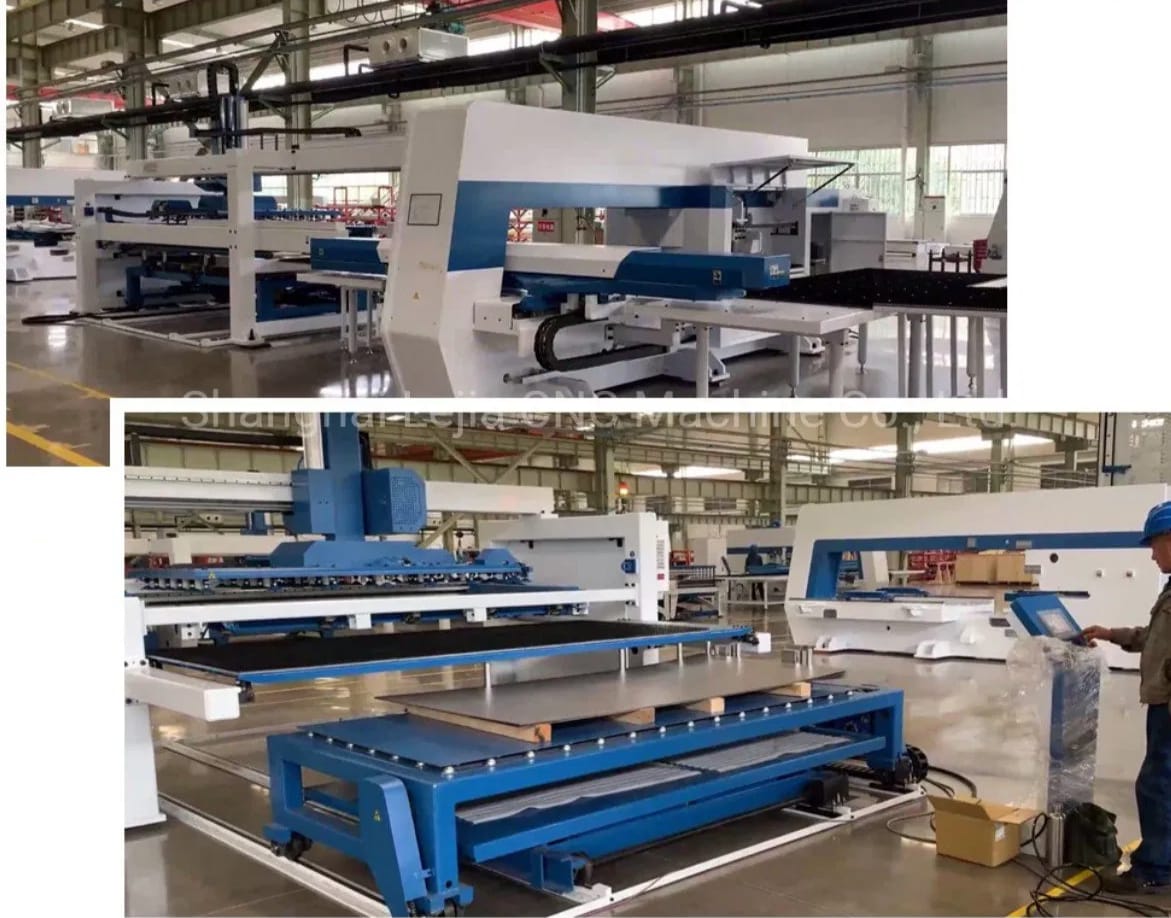
Automatic Punching Unit for Racking Uprights
Automatic Punch Unit CNC hole-punching matrix guarantees repeatable fastening patterns and rapid modular field assembly.
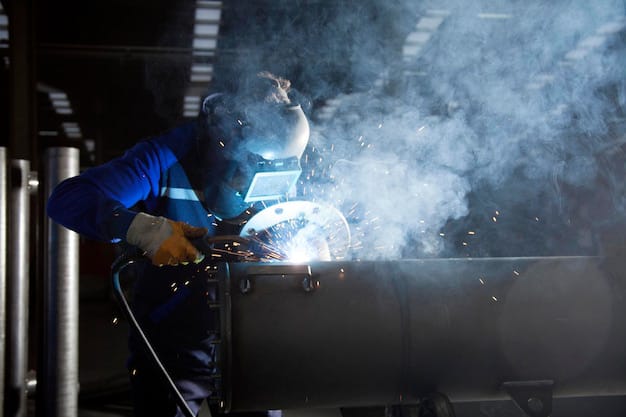
Automated Multi-Point Resistance Welding
Multi-Point Resistance Welding Simultaneous automatic fusion welds every intersection for maximum joint shear load resistance (>2.5 kN).
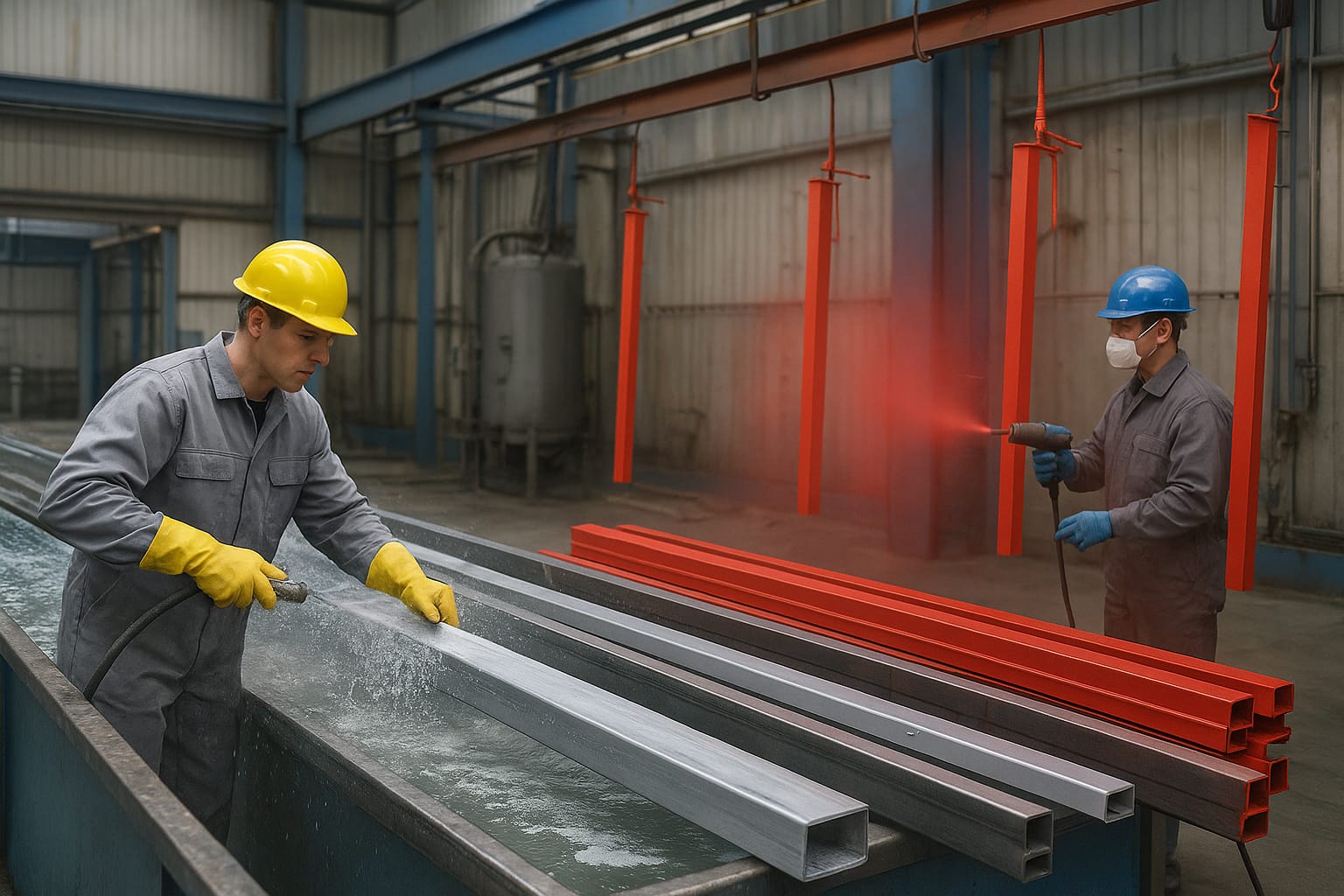
Surface Washing Coating and Finishing
Surface Treatment & Coating Multi-stage alkaline wash, acid pickle, and zinc plating/epoxy powder coating line for durable protection.
Export Logistics Packaging and Shipping
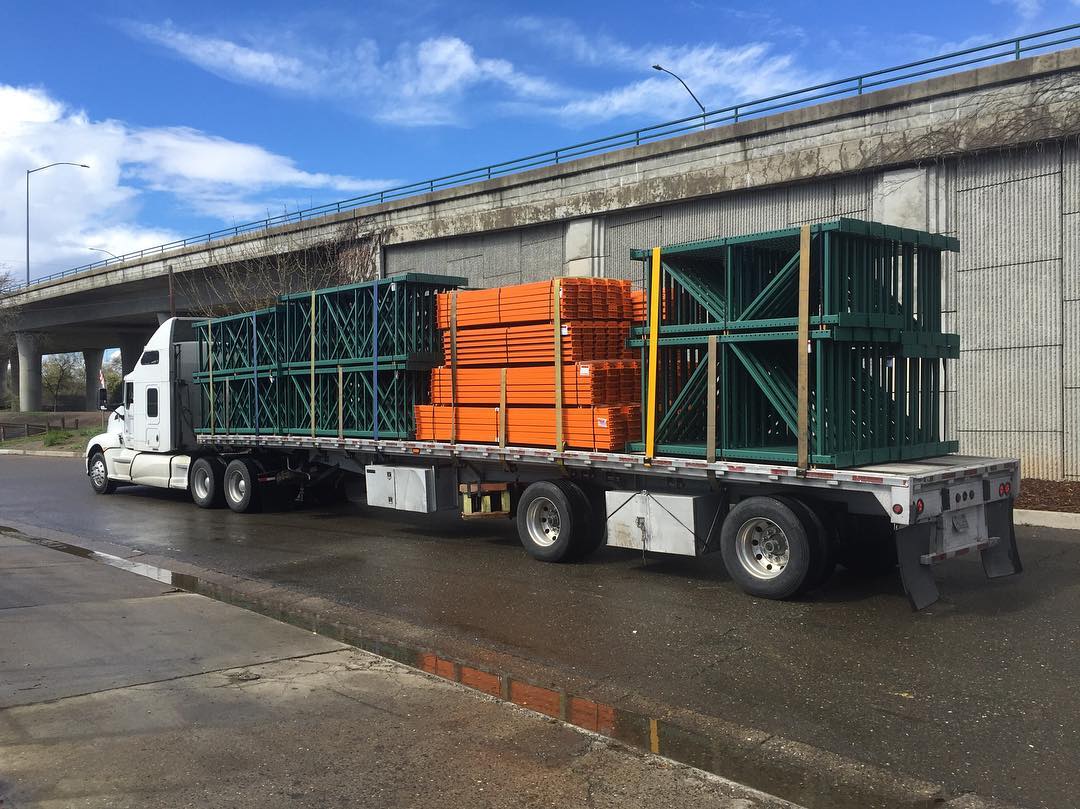
Export Packaging & Shipping Palletized, shrink-wrapped, steel-banded bundle packaging engineered for direct delivery to European project sites.
Procurement Guidance

Frequently Asked Questions for Austrian Warehouse Buyers

Clear answers regarding Austrian building norms, fire regulations, load calculation protocols, and international factory procurement.

Why is wire mesh decking mandatory over timber/chipboard in Austrian high-bay warehouses?

Under the Austrian fire protection guideline TRVB 127 S and standard European fire underwriting guidelines (such as VdS CEA 4001 and FM Global), solid wooden or chipboard shelves create an impermeable ceiling barrier across rack bays. In the event of an ignition, this obstruction delays overhead fire detector triggers and blocks sprinkler spray from reaching the lower tiers. Wire mesh decking with a minimum open grid area of 70% allows the sprinkler deluge to penetrate all levels instantaneously, extinguishing localized fires while drastically lowering facility insurance premiums.

How do you calculate wire mesh deck load capacity to meet EN 15512 and ÖNORM EN 15635?

Load ratings are calculated as Uniformly Distributed Loads (UDL) based on finite element analysis and destructive static test beds conforming to EN 15512. Under testing, the maximum acceptable elastic deflection limit is restricted to L/200 (span length divided by 200). A safety factor of at least 1.5 to 2.0 against structural collapse is verified. For an Austrian standard 1000 kg UDL deck spanning 1100 mm depth, three to four heavy-duty cold-formed support channels distribute the pallet weight directly onto the structural steel beam flanges.

What channel configuration is best suited for Austrian pallet rack beams (Box vs Step beams)?

Austrian installations commonly use roll-formed box beams (Kastenprofile) or step beams (Stufenbalken). For box beams, our Universal Flanged (Waterfall) Channel is recommended because its flared outer wings rest smoothly across the top beam face while the 38 mm front waterfall lip prevents front-to-back sliding. For step beams, our Flush-Step Channel sits directly on the inner step recess, creating a completely level surface with the beam top—ideal for manual order picking and automated tote sliding.

Can your wire decking support non-standard European transport containers and Gitterboxen?

Yes. Standard EUR 1 pallets have bottom skids that distribute weight along the beam direction, but European standard Gitterboxen (DIN 15155) transfer heavy point loads via four corner feet. For Gitterbox storage, we engineer customized wire decks with thicker 5.5 mm or 6.0 mm cold-drawn wire, denser 50×50 mm mesh spacing, and inverted U-channels positioned directly underneath the box foot impact tracks to prevent localized wire punch-through.

What surface coating should be chosen for cold storage facilities in Austria?

For standard dry ambient warehousing, our high-adhesion bright Electro-Galvanized coating (12–18 μm) or high-grade electrostatic polyester powder coating (60–80 μm) provides excellent longevity. However, for refrigerated or sub-zero logistics operations (-20°C to -30°C) with condensation risks during defrost cycles, we recommend Hot-Dip Galvanizing (HDG) to ISO 1461. HDG creates an iron-zinc alloy metallurgical bond that prevents flaking, rust creep, and structural embrittlement throughout decades of sub-zero operation.

What is the typical lead time and logistics arrangement for bulk export orders to Austria?

Because all roll-forming, cutting, stamping, multi-point welding, and coating processes are performed in our own manufacturing facility, typical production turnarounds range from 14 to 21 working days for multi-container volumes. Shipments to Austria are containerized in tightly strapped, weather-protected export bundles and delivered via major European logistics corridors (such as Koper or Hamburg/Rotterdam, routed directly via rail or road to Vienna, Linz, or Graz) with complete customs documentation, Certificate of Origin, and Mill Test Certificates (MTC EN 10204 3.1).

Do you accommodate OEM specifications for European racking manufacturers and systems integrators?

Absolutely. We operate as an OEM/ODM manufacturing partner for racking systems contractors, racking suppliers, and automated intralogistics system integrators across Europe. We produce custom dimensions (e.g., depths of 800 mm, 1050 mm, 1100 mm, 1200 mm, and widths from 880 mm to 1340 mm), proprietary channel profiles, custom powder-coat RAL colors (e.g., RAL 7035 light grey, RAL 5010 gentian blue), and customized waterfall lip profiles matching your exact beam designs.

Request an Engineering Quotation & Load Assessment

Planning a new logistics center in Austria or retrofitting existing pallet racks to meet TRVB 127 S sprinkler standards? Send us your rack beam dimensions, pallet sizes, and required load ratings. Our structural engineers will generate precise CAD proposals and factory-direct volume pricing within 24 hours.

Get a Quote