Precision-fabricated components manufactured with ISO-certified high-tensile steel, robotic MIG welding, and impact-resistant coatings for Japanese logistics environments.
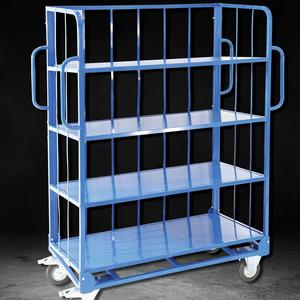
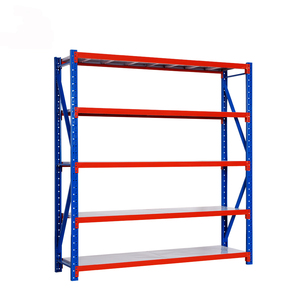
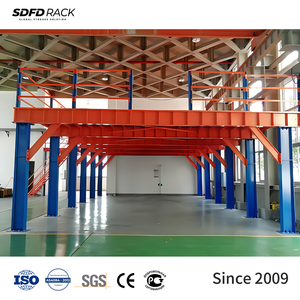
The Greater Tokyo Area, encompassing the bayside industrial zones of Koto, Shinagawa, and Ota wards through to the inland arterial terminals of Kanagawa, Saitama, and Chiba, represents one of the world's most concentrated logistics ecosystems. Real estate economics across the Kanto Plain have driven modern warehouse developers—such as Mitsui Fudosan Logistics Parks (MFLP), Prologis Park, and GLP Japan—to design multi-story ramps, automated high-bay fulfillment centers, and ultra-dense storage facilities. However, high-density warehousing operating concurrently with automated guided vehicles (AGVs), autonomous mobile robots (AMRs), and high-capacity reach trucks introduces acute operational risks that standard guardrails cannot mitigate.
Industrial safety barriers serving Tokyo cannot merely be decorative visual warnings; they are structural energy-dissipation mechanisms. In Japan, industrial safety standards are governed rigorously by the Industrial Safety and Health Act (労働安全衛生法) and municipal fire protection codes. When an unladen or fully loaded counterbalance forklift traveling at 8 to 12 km/h collides with a structural building column or the end frame of a high-bay selective pallet rack system, the kinetic energy transferred ranges between 6,000 Joules to upwards of 30,000 Joules. Without mathematically engineered collision deflection systems, the resulting shear stress either collapses structural racking uprights—initiating catastrophic progressive racking collapse—or cracks expensive reinforced concrete floor slabs.
Seismic Multiplier Factor in the Kanto Basin: In Tokyo’s alluvial delta zones, seismic horizontal acceleration coefficients (exceeding 0.3g to 0.6g under severe earthquakes) impose simultaneous dual-vector loads on warehouse fixtures. Safety barriers must absorb vehicle impacts without fatiguing or loosening the seismic anchors that secure racking bases to subfloors.
The design of industrial safety barriers relies on precise dynamic impact energy equations. The kinetic energy ($E_k$) of a moving material handling vehicle is expressed by the standard physical model:
$E_k = \frac{1}{2} \cdot m \cdot v^2$
Where $m$ represents the gross operating mass (vehicle unladen weight plus the maximum rated load mass in kilograms) and $v$ represents the velocity at impact in meters per second ($m/s$). In typical Tokyo e-commerce distribution facilities, a standard 2.5-ton capacity forklift carries a total dynamic mass of approximately 4,200 kg. If cruising along an end-of-aisle crossway at an average terminal speed of 2.78 m/s (10 km/h), the impact energy generated upon an unyielding barrier reaches 16,229 Joules.
Our engineering matrix balances yield strength and deflection distance. Rigid structural steel barriers engineered from cold-rolled Q235B/Q355B structural hollow sections (SHS) act as rigid arrestors, instantly transferring force into floor anchor bolts. Conversely, our advanced elastomer-damped and multi-polymer modular barrier systems dynamically flex, converting kinetic impact into thermal and mechanical deformation energy over a controlled distance. This dramatically reduces instantaneous peak impact forces transmitted to the concrete sub-base, preserving Tokyo floor slabs from costly structural breakout.
Evaluating physical performance, floor foundation preservation, and long-term lifecycle expenditures for Tokyo distribution centers.
| Barrier Typology | Material Core | Energy Capacity (Joules) | Concrete Floor Stress | Seismic & Post-Impact State | Primary Application in Tokyo Hubs |
|---|---|---|---|---|---|
| Heavy-Duty Structural Steel Guardrail | Q235B / Q355B Steel (5mm-8mm wall) | 18,000 – 32,000 J | High Shear Load | Requires re-welding / anchor bolt replacement | Heavy manufacturing, exterior truck bays, Ota-ku yards |
| Polymer-Steel Hybrid Deflection Rail | Internal Spring Steel Core + High-Density Polyolefin | 14,000 – 26,000 J | Distributed Load | Self-recovering, zero permanent structural deformation | 3PL high-turnover fulfillment centers, Ariake & Koto-ku |
| Bollards (Base-Isolated Cast-In / Surface) | Schedule 40/80 Steel Tubing + Polyurethane Core | 10,000 – 22,000 J | Moderate Moment | Elastomeric absorption base eliminates floor shearing | Roller shutter doors, dock leveller corners, column protection |
| End-of-Aisle Rack Protectors (Omega Profile) | Hot-rolled curved steel / low-profile ductile iron | 8,000 – 16,000 J | Low / Base-Anchored | Absorbs sideswipe impacts from VNA & reach trucks | Automated pallet racking rows, high-bay cold storage |
| Pedestrian & AMR Segregation Handrails | Modular tubular aluminum / galvanized light-gauge steel | 3,500 – 6,000 J | Minimal Stress | Modular swap-out without disruption to operations | Kanto fulfillment zones, manual pick-to-light mezzanines |
Engineered for the distinct operational, seismic, and thermal requirements of the Greater Tokyo metropolitan infrastructure.
Sub-zero logistics facilities (-25°C to -30°C) experience severe cold embrittlement in standard steel. Our low-temperature treated impact rails and specialized cryogenic polymer compounds maintain elongation properties, eliminating sudden fracture under reach-truck impact inside blast freezers.
Multi-story mega-distribution centers feature high-speed spiral ramps and internal vehicle lanes. We supply continuous heavy-gauge crash barriers with high-visibility reflective striping to separate 10-ton wing-body transport vehicles from facility walls and pedestrian walkways.
Automated fulfillment centers operating hundreds of AMRs require low-profile optical-detection-friendly barriers. Our systems protect robotics grids from errant pallet movement while providing zero-clearance footprint segregation around sensitive automated sorting towers.
In high-density industrial tool and die machining centers across Ota Ward, space is at a premium. Our compact modular column guards protect high-precision CNC equipment, mold storage racks, and electrical switchboards without encroaching on vital circulation corridors.
Direct manufacturer control ensures mill-certified steel selection, automated punching tolerances, and high-adhesion corrosion protection.
Upright crash posts and Omega-profile rails are cold-rolled on multi-station automated roll-forming lines. Computer-controlled hydraulic punches maintain exact center-to-center hole tolerances (±0.2mm), allowing rapid bolt-together modular assembly without structural field drilling.
Base plates undergo continuous deep-penetration robotic metal inert gas (MIG) welding. Throat thickness and weld metallurgy comply with rigorous international seismic codes, preventing base plate tear-off during sudden moment rotational impacts caused by forklift masts.
Every steel component undergoes automated multi-stage alkaline washing, shot-blasting to Sa 2.5 cleanliness, and electrostatic powder application. Cured at 200°C, the 80–120μm thermosetting finish resists high humidity, industrial chemical washdowns, and relentless abrasive scraping.
The enforcement of Japan's "2024 Logistics Problem" (governing overtime caps for commercial truck drivers) has accelerated warehouse modernization across Tokyo. Operators are compelled to compress loading turnaround times, leading to intensified forklift throughput within consolidation docks. Faster operating cycles drastically increase physical collision risks at loading dock levellers, staging zones, and structural columns.
Concurrently, the rapid proliferation of high-density automated storage and retrieval systems (AS/RS) and automated mobile robots (AMRs) mandates clean physical segregation between human traffic corridors and high-velocity automated transit lanes. Under Japan's Occupational Safety and Health Regulations (労働安全衛生規則), employers are strictly mandated to establish safe passage passages that prevent contact between industrial machinery and personnel.
Our safety barrier portfolio anticipates these operational evolutions. By offering modular barriers equipped with low-clearance ground sweep rails, our systems prevent AGV drive forks from penetrating pedestrian lanes while safeguarding complex sensor housings and automated conveyors from stray pallet jacks. Every system is built to facilitate layout reconfigurations with minimal downtime—a critical asset for 3PL providers managing fluctuating seasonal SKUs.
Key technical, regulatory, and logistics questions answered by our structural engineering and export teams.
Combining over two decades of heavy-duty industrial fabrication with direct manufacturer pricing and strict quality assurance.
Over two decades of hands-on expertise in roll-forming, steel fabrication, and warehouse optimization. We deliver proven engineering backed by hundreds of industrial installations.
From uncoiling raw hot-rolled coils to cold roll-forming, automatic stamping, robotic welding, and powder coating—every manufacturing stage is handled within our facilities with full traceability.
Every shipment is packed in modular knock-down steel stillages with edge-cushioned strapping. Materials arrive on site in pristine condition, ready for immediate anchor installation without sorting delays.
Work directly with structural engineers rather than trading intermediaries. We provide custom CAD floor layouts, finite element stress calculations, and anchor pull-out data for your safety audits.
Contact our structural engineering team today for technical CAD reviews, kinetic energy absorption modeling, and factory-direct project quotes delivered to Tokyo and Greater Kanto ports.
Send an Inquiry