
Direct from our precision manufacturing facility: heavy-duty structural racking, dynamic flow beds, and industrial warehouse hardware built to strict international safety and seismic benchmarks.
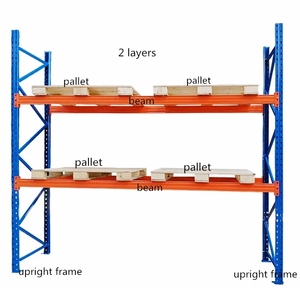
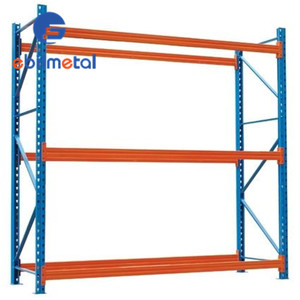
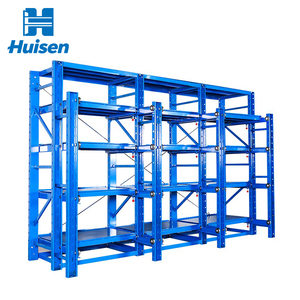
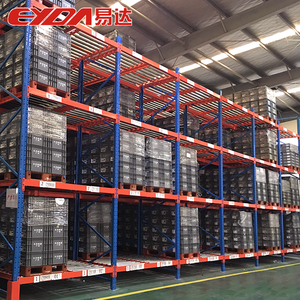
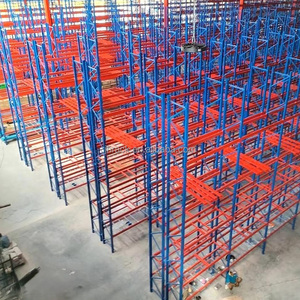
Why conventional warehouse tire racking collapses under Pacific Northwest structural demands—and how certified cold-formed engineering protects high-bay inventory from catastrophic cyclic loads.
The Seattle metropolitan area sits directly over the Cascadia Subduction Zone and the Seattle Fault system, placing the entire regional logistics corridor—stretching from the Kent Valley through Auburn, Sumner, and Tacoma—within Seismic Design Categories (SDC) D, E, and F. In high-density tire storage, tires act as dynamic non-rigid live loads that amplify sway acceleration during lateral ground motions.
Our engineering team performs nonlinear dynamic modal analyses to configure extra-thick base plates, oversized anchor patterns, and cross-aisle seismic horizontal trusses that eliminate the risk of rack overturning under the severe acceleration spectra established by the 2024 International Building Code (IBC) and ASCE 7-22.
Securing racking permits through the Seattle Department of Construction and Inspections (SDCI) or King County Permitting requires rigorous structural calculations stamped by a Washington State licensed Professional Engineer (PE). Generic import racks frequently fail municipal review due to inadequate baseplate anchorage depth or non-compliant weld quality records.
Every tire rack system we export to Washington State includes comprehensive engineering packages: stamped structural calculations, finite-element deflection models, certified steel mill reports (Q235B and Q355B high-tensile hot-rolled coils), and anchor bolt pull-out calculations fully harmonized with ANSI MH16.1 specifications.
Located on Elliott Bay and Puget Sound, Seattle warehouses endure high baseline relative humidity, chronic marine fog, and coastal salt-mist intrusion. Ordinary steel finishes quickly suffer from galvanic blister corrosion, leading to beam notch failure and pin-connector seizure in high-bay structures.
Our automated finishing lines employ a rigorous 7-stage pre-treatment wash cycle (hot alkaline degrease, iron phosphating, and deionized water rinses) followed by automated electrostatic polyester-epoxy powder application cured at 200°C. This delivers a resilient 70–90µm dry film thickness exceeding 500 hours of continuous ASTM B117 salt spray exposure without micro-cracking.
Engineered storage configurations tailored to regional wholesale distribution centers, commercial fleet depots, aerospace tire staging, and containerized port transit facilities.
The Kent Valley constitutes the Pacific Northwest’s largest distribution hub, where skyrocketing industrial rents demand maximum vertical cube utilization. Our tiered selective tire racks allow 6-to-8 levels of vertical storage up to 36-foot clear heights, integrating step beams curved to match tire tread radius, preventing bead deformation and sidewall flattening during multi-month bulk warehousing.
With Boeing assembly lines in Renton and Everett, regional aerospace contractors and ground support equipment (GSE) facilities require non-sparking, scratch-free aircraft tire storage. We supply custom heavy-duty cantilever and horizontal bar racks lined with high-density polyurethane strips to preserve sensitive bead compounds and meet strict FAA compliance requirements.
Commercial transport fleets and tire service centers handling Interstate 90 and US-2 Cascade pass routes deal with colossal twice-yearly tire swap cycles between studded winter treads and commercial steer tires. Our modular stackable tire stillages allow rapid forklift-driven seasonal rotation and flat-pack collapsible storage during off-peak months.
Positioned near Terminal 18, Terminal 46, and Harbor Island, drayage operators burn through chassis and prime mover tires at high turnover rates. We configure ruggedized outdoor-ready hot-dip galvanized tire racks engineered to withstand maritime salt spray, continuous forklift vibration, and heavy 24/7 container logistics cycling.
Public fleet maintenance operations for King County Metro, Sound Transit, and municipal service yards demand heavy-duty TBR (Truck, Bus, Radial) tire racking with integrated impact-resistant steel column guards and high-visibility yellow polyurethane safety bollards to protect structural uprights against heavy material handling machinery.
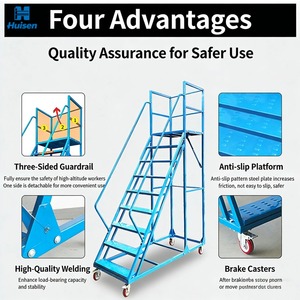
Rapid courier hubs in Tukwila and Fife require ergonomic picker access for light commercial van tires. Our multi-tier catwalk tire mezzanine platforms utilize high-strength slotted angle uprights and anti-slip galvanized steel grating decks, doubling picking surface area without expanding the building’s real estate footprint.
A granular side-by-side engineering comparison illustrating why our structural metallurgy and automated roll-forming processes outperform standard market alternatives.
| Engineering Parameter | Our Heavy-Duty Export Tyre Racks | Standard Market Generic Racks | Seattle Compliance Benefit |
|---|---|---|---|
| Raw Steel Metallurgy | Certified Q235B / Q355B High-Yield Cold-Formed Steel | Uncertified Commercial Grade Hot-Rolled Slag | Guarantees ductile plastic hinge behavior under seismic ground motion |
| Upright Punching Accuracy | CNC Automatic In-Line Continuous Punching (±0.05mm pitch) | Manual Mechanical Ganged Punching (±1.5mm drift) | Ensures precision beam lock-in and zero loose play in lateral bracing |
| Seismic Baseplate Spec | 12mm–16mm Laser-Cut Plate with 4-Anchor Seismic Wedge Pattern | 4mm–6mm Stamped Plate with Single Wedge Anchor | Meets ASCE 7-22 Chapter 15 pullout criteria for cracked concrete slabs |
| Surface Pretreatment | 7-Stage Automated Immersion Degrease & Iron Phosphatizing | Single-Stage Manual Solvent Wipe Down | Eliminates interfacial rust creep under Puget Sound maritime moisture |
| Powder Coating Durability | 70–90µm Electrostatic Polyester-Epoxy Cured at 200°C | 35–45µm Air-Dried Industrial Alkyd Paint | Prevents bead scratching, chemical wear, and salt fog corrosion |
| Beam Deflection Standard | Engineered to ≤ L/250 under maximum rated tire load | L/180 or unrated under dynamic live load | Eliminates beam sag that causes rolling tire spillage during seismic shifts |
| Container Packaging | Steel-Banded Palletized Bundles with PE Moisture Wrap | Loose Bulk Stacking with Minimal Dunnage | Zero transit deformation during trans-Pacific ocean freight to NWSA |
Strategic industry transformations influencing modern warehouse design, structural load ratings, and equipment configurations across Western Washington.
Seattle leads the United States in per-capita EV adoption, which directly alters warehouse weight calculations. EV-specific replacement tires (such as XL and HL load rated tires for heavy battery chassis) weigh 20% to 30% more than conventional passenger tires due to reinforced steel belts and sound-insulating polyurethane foam inserts.
Standard tire rack beams rated for legacy inventories risk structural failure under full EV tire loading. We provide reinforced box-step beams with engineered internal rib stiffeners that increase load capacity to 1,200 kg per beam level without adding excessive structural dead weight.
Geographical bottlenecks between the Cascade foothills, Lake Washington, and Puget Sound have triggered record low industrial vacancy rates in South King County and Pierce County. As industrial land values push lease rates upward, facility operators can no longer expand horizontally.
Our heavy-duty multi-tier catwalk tire racking and automated very-narrow-aisle (VNA) systems convert unused vertical airspace into revenue-generating storage density, tripling tire capacity within existing building footprints while maintaining 100% direct access to every SKU.
Tires are classified as high-hazard combustible commodities under NFPA 13 Chapter 21/22 and local Seattle Fire Department codes. Traditional solid decking traps heat and obstructs sprinkler water penetration, triggering strict storage height caps.
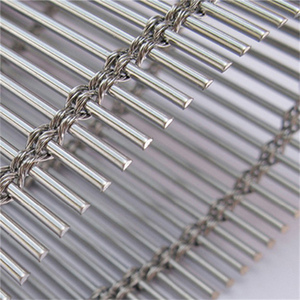
Our custom tire racks feature open tubular steel support beams and wire mesh decking that provide over 70% open vertical area. This allows overhead Early Suppression Fast Response (ESFR) ceiling sprinklers to penetrate directly through rack tiers, enabling legal storage heights up to 30 feet under King County fire codes.
We control every phase of production under one roof—from raw steel coil intake to automated roll forming, robotic welding, and precision export containerization.
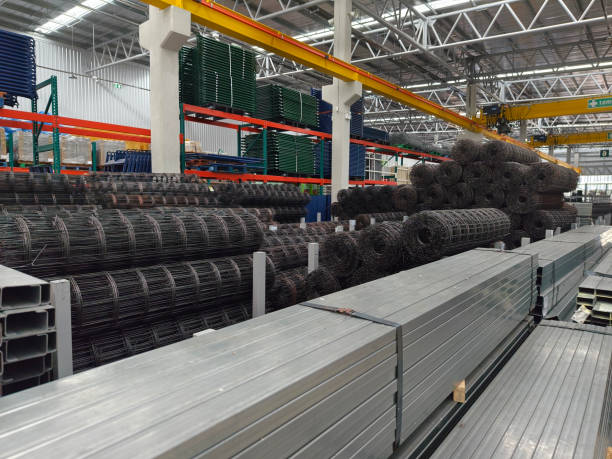
Prime structural coil inspection for chemical composition, yield strength, and dimensional tolerances.
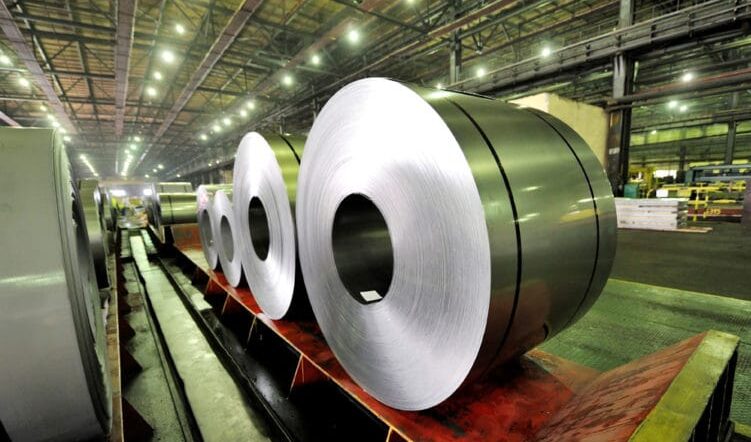
Multi-station computer-controlled rolling mills generating precise, stress-relieved upright profiles.
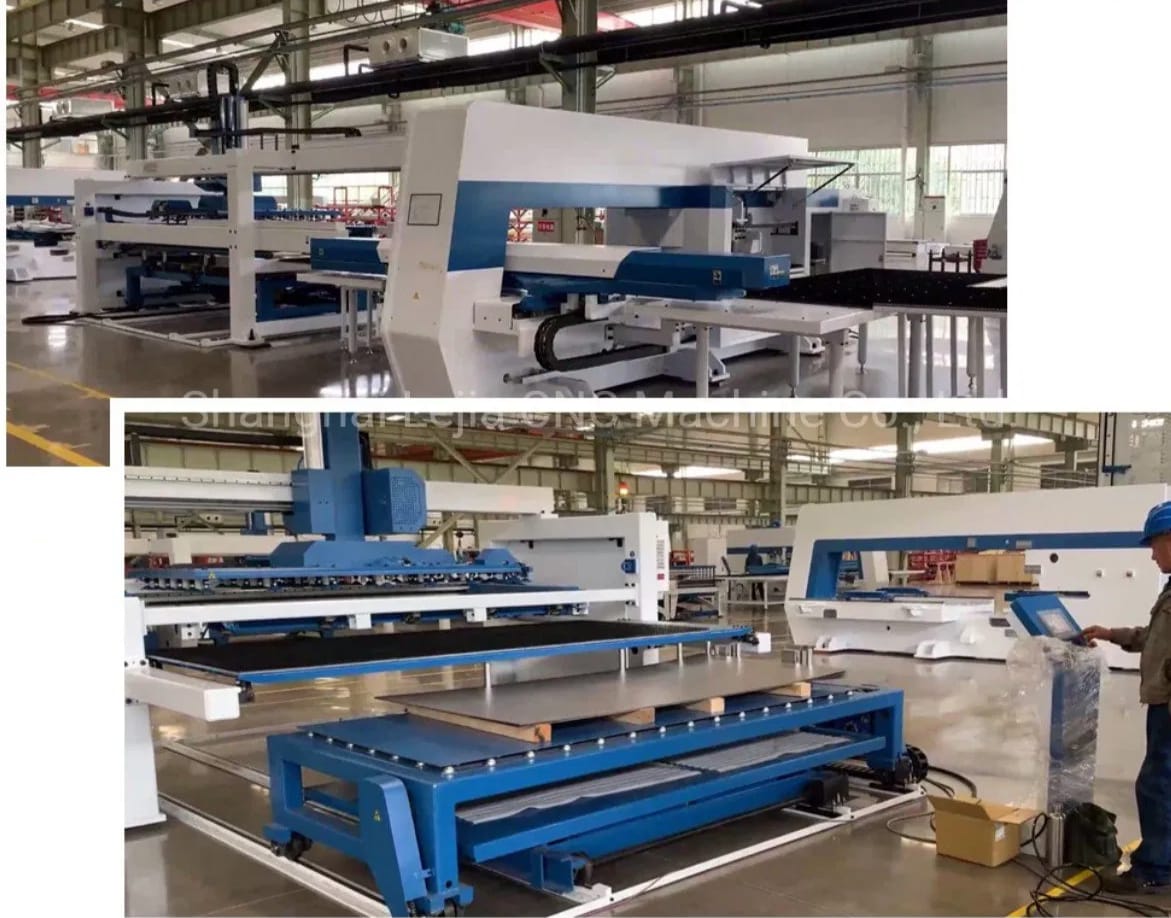
High-speed hydraulic punching dies delivering consistent hole pitch across entire column lengths.
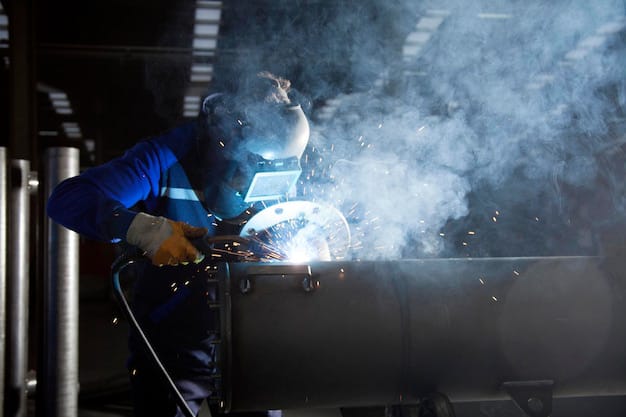
Automated multi-axis robotic welders ensuring flawless penetration and structural connector joint strength.
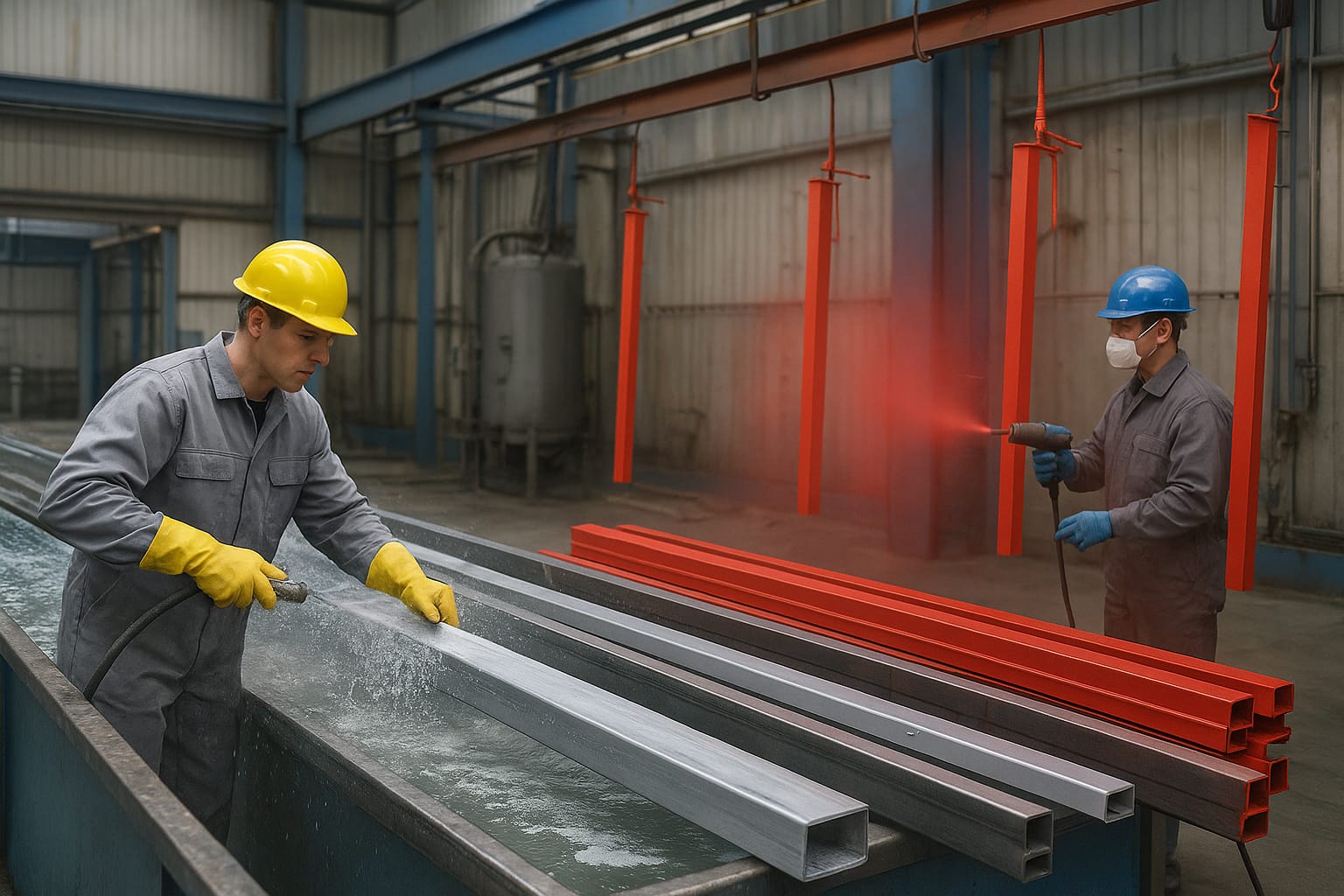
7-stage chemical pretreat followed by electrostatic spray guns and 200°C baking tunnels.
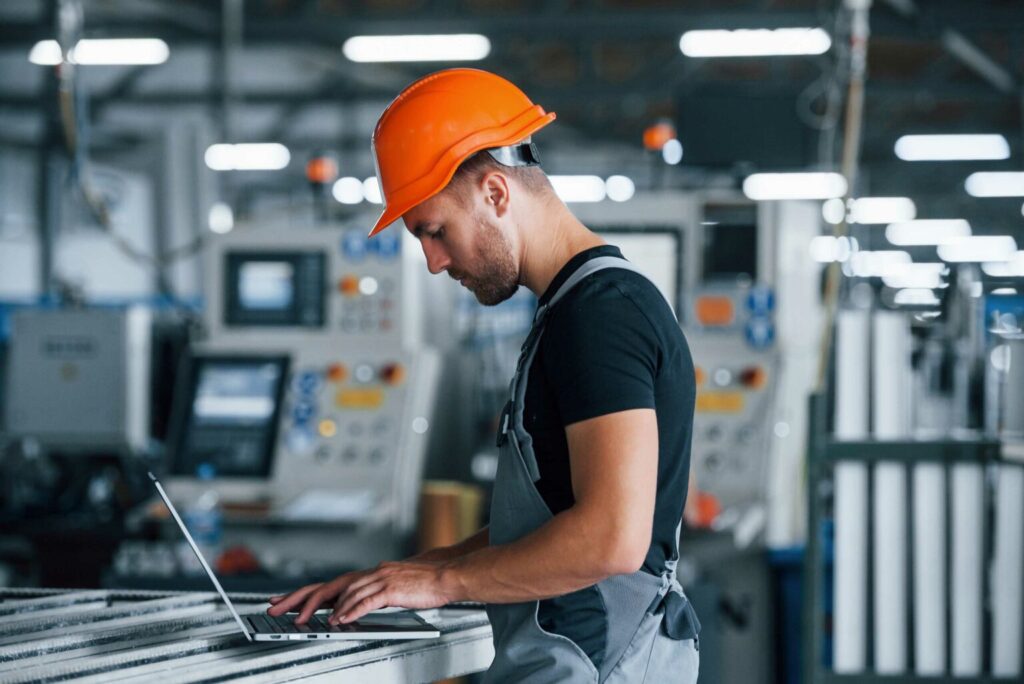
Stage-by-stage caliper checks, coating thickness gauge verification, and tensile stress load tests.
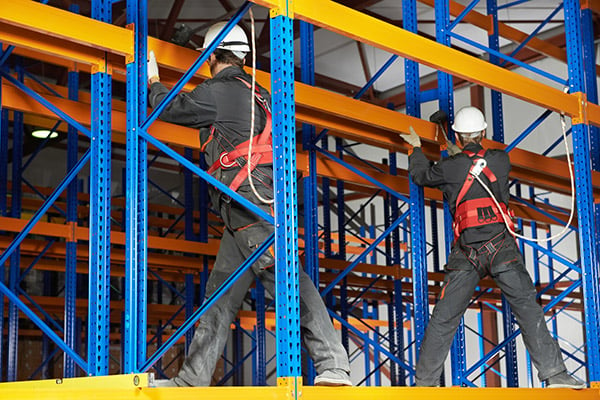
Shop dry-assembly checks to ensure bolt alignments and snap-in beam connectors mate seamlessly.
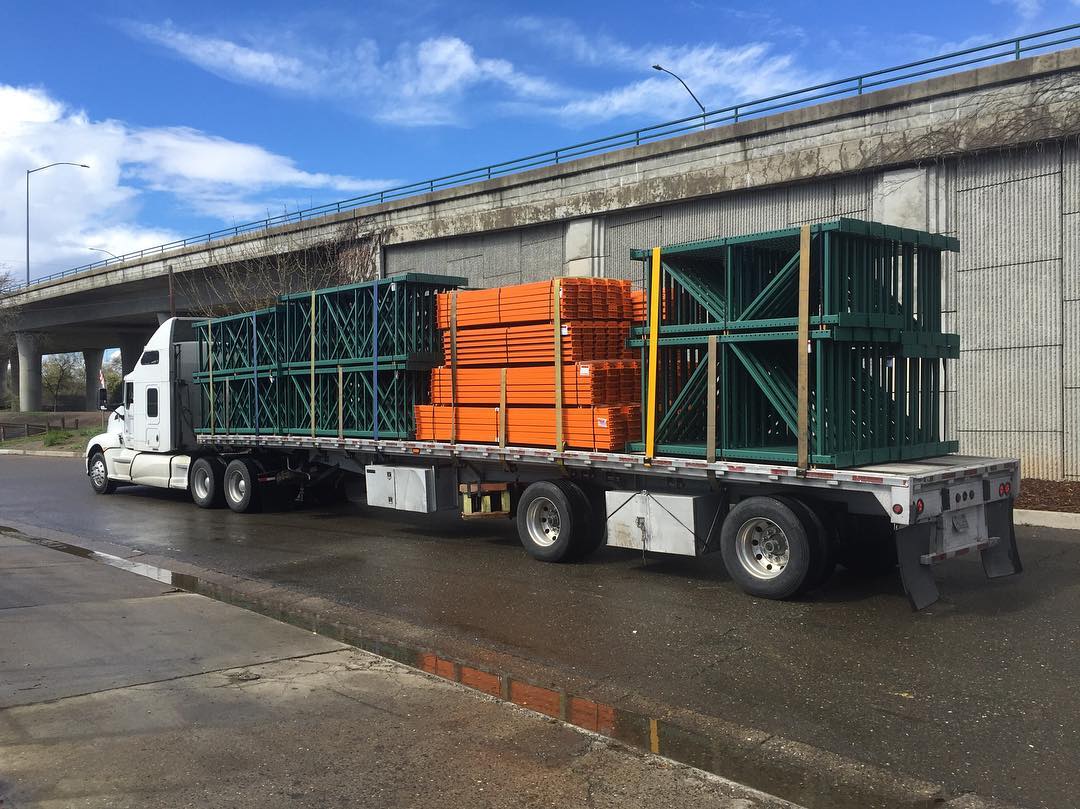
Knock-down modular containerization bundled to maximize 40ft HQ volume directly to Seattle/Tacoma ports.
Direct technical answers regarding municipal permitting, seismic engineering packages, trans-Pacific ocean shipping, and King County building code compliance.
Permit approval requires engineering documentation proving compliance with the current Washington State Building Code (IBC/ASCE 7). We provide full design calculations, CAD plan drawings, component yield certifications, and anchor detail schedules ready for submittal to your local structural engineering consultant for stamping and municipal submission.
Shipments depart directly from major deep-water ports (Shanghai, Ningbo, Qingdao) on direct Pacific ocean carrier lines routed to The Northwest Seaport Alliance (NWSA) terminals in Seattle and Tacoma. Ocean transit typically takes 14 to 18 days. We handle export documentation, compact knock-down containerization, and customs-ready packing lists.
Storing tires on conventional flat shelves or thin edge angles creates pressure points that cause permanent flat-spotting and bead distortion. Our tire racking uses custom roll-formed step beams with contoured, chamfered resting surfaces that cradle the tire carcass along its natural radius, distributing load evenly across the tread surface.
Yes. Many modern distribution centers in South King County utilize post-tensioned floor slabs where rebar or tendon strikes during anchor drilling could cause slab failure. We engineer wide base plates that allow field adjustments to anchor hole positions and provide detailed anchor spacing schedules to avoid tension cables identified by radar slab scanning.
Because all roll forming, stamping, punching, welding, and powder coating are performed within our own factory, production lead time for standard full-container load (FCL) projects ranges from 18 to 25 days following CAD approval. Total lead time from order release to arrival at the Port of Seattle is typically 5 to 7 weeks.
Every shipment is packed in modular steel-banded master bundles supported on heavy steel skids. Components are wrapped in multi-layer vapor-corrosion-inhibiting (VCI) stretch film and protected with corrugated edge guards. Upright trusses and beams are nested to prevent movement and scraping during open ocean transit.
Planning a new tire logistics facility in Kent, Sumner, Fife, or the Seattle industrial district? Submit your building dimensions, clear height, and SKU profile for a custom CAD layout and certified factory direct proposal.