
Precision fabricated storage racks, safety staging platforms, and mezzanine barriers engineered for high-density international logistics operations.
As Vietnam accelerates its transformation into the primary electronics, semiconductor, and FMCG manufacturing engine of Southeast Asia, industrial logistics real estate has expanded beyond traditional warehousing into highly dense, high-frequency logistics centers. From the northern cluster surrounding Hanoi, Bac Ninh, and Hai Phong to the deep-water transshipment hubs of Cai Mep-Thi Vai and the sprawling factory belts of Binh Duong and Dong Nai, the loading dock represents both the vital heartbeat and the most hazardous operational interface of any modern manufacturing or distribution facility.
Data from industrial safety audits confirms that over 25% of all warehouse-related forklift accidents occur at the loading dock. The catastrophic failure known as "dock crawl," premature vehicle pull-out, and unintended drop-offs over dock edges (typically measuring 1.2 to 1.4 meters above truck yards) present severe risks to human life, high-value freight, and material handling equipment. In Vietnam's monsoon-affected climate, where torrential rain and humidity exceed 85% for extended months, wet dock aprons compound stopping distances, elevating kinetic impact energy during standard container-loading cycles.
"In high-throughput omnichannel and manufacturing fulfillment centers, a loading dock safety barrier is not merely a passive boundary marker; it is a structural energy-dissipation asset calculated to withstand forklift momentum exceeding 15,000 to 30,000 Joules while remaining fully functional under rigorous international safety norms like OSHA 1910.28, EN 1398, and FEM 10.2.02."
Procurement teams frequently debate whether heavy structural carbon steel or flexible technopolymer barriers best serve dock aprons. Below is an engineering comparison of impact kinematics and lifecycle metrics.
| Evaluation Parameter | Cold-Rolled Structural Steel (Q235/Q355) | High-Density Flexible Polymer (HDPE/Polyolefin) | Hydraulic / Cantilever Drop Barrier Gates |
|---|---|---|---|
| Primary Impact Mechanism | Rigid plastic deformation, anchor-plate mechanical shear resistance | Dynamic elastic memory recovery, internal multi-phase flex | Interlocked structural leaf with dual hydraulic / counterweight absorption |
| Kinetic Absorption Capacity | Up to 30,000 Joules | 6,000 – 18,000 Joules | 12,000 – 24,000 Joules |
| Concrete Slab Anchorage Stress | High point shear force; requires >200mm depth (30 MPa minimum) | Lower peak base moment; dispersed through elastomeric baseplates | Embedded steel sub-frame or reinforced perimeter dock columns |
| Corrosion & Tropical Resistance | Requires Hot-Dip Galvanizing (ISO 1461) or Marine Epoxy >85µm | Immune to chemical corrosion, salt air, and water rust | Galvanized leaf with sealed internal hydraulic cylinders |
| Visual Footprint & Edge Deterrence | High-visibility safety yellow (RAL 1023) / black zebra contrast | Self-colored polymer, scratch-proof visible saturation | Integrated LED warning signals, audible dock interlocking alarms |
| Typical CAPEX vs. OPEX | Low initial acquisition cost; repair requires welding or component swaps | Higher upfront acquisition cost; near-zero repainting overhead | Moderate to high investment; periodic seal & sensor calibration |
*Note on calculations: Impact Energy is modeled via \( E_k = \frac{1}{2} m v^2 \), where a 5,000 kg loaded counterbalance forklift traversing at 3.0 m/s (10.8 km/h) delivers 22,500 Joules of kinetic force. Barriers installed within 1.5m of the loading door must be rated for at least 25 kJ to reliably arrest run-away rolling loads.
An independent evaluation covering manufacturing capabilities, local engineering support, direct regional export capacity, and compliance with Vietnamese construction codes.
Headquartered in the Ajman Free Zone with over two decades of heavy industrial fabrication excellence, Signature Racking Systems is a premier direct manufacturer of integrated heavy-duty warehouse protection, pallet racking, cantilever systems, and structural dock barriers. With completely in-house roll forming, robotic welding, automatic punching, and powder coating lines, Signature bypasses trading-middleman markups to supply Vietnamese EPC contractors, 3PL giants, and foreign manufacturing facilities with tailored crash protection systems.
A recognized European pioneer in flexible polymer safety systems, Boplan provides flexible polymer barriers under the FLEX IMPACT line. Their dock gates and bollards utilize high-performance polymers designed to absorb shock through deflection and return to original form.
Inventors of the original fixed polymer safety barrier, A-SAFE provides certified Memaplex tri-extruded polymer protection. Their dock protection series includes bollards, rack-end guards, and swing-style pedestrian safety gates deployed throughout multinational sites in Vietnam.
Known worldwide for complete loading dock envelope solutions, Rite-Hite manufactures Dok-Guardian barrier curtains and heavy-duty steel safety gates designed to bridge the pit leveler opening when overhead doors stand open.
SlowStop manufactures a dynamic hybrid system consisting of heavy ductile iron tubular posts mounted atop an elastomeric kinetic-absorption base. Their dock bollards lean progressively under impact, dissipating force before rebounding into vertical alignment.
Specializing in retail backroom and distribution safety, McCue offers the Crash Barrier and Bumper post line. Their barriers feature clean composite yellow wraps covering structural steel cores, combining aesthetic appeal with heavy impact resistance.
Remax focuses on cold storage environments and temperature-controlled loading bays. Their dock barriers utilize low-temperature resilient polymers and mechanical spring-loaded drop gates designed to resist embrittlement in sub-zero freezer terminals.
SafeRack specializes in truck gangways, loading racks, and edge fall-arrest barriers. Widely specified in bulk liquid, chemical, and heavy petrochemical transshipment zones across coastal Vietnam.
Operating a physical corporate entity within Vietnam, Delta Plus provides fall-protection railings, dock edge perimeter guardrails, and personal safety tethering systems compliant with local Ministry of Construction standards.
MPM manufactures flexible PVC and technopolymer crash barriers designed for indoor logistics bays. Their patented profile shapes maximize deflection zones to prevent damage to light commercial delivery vans and electric reach trucks.
Dock safety architecture must adapt to distinct regional geographic, climatic, and industrial characteristics found across Northern, Central, and Southern Vietnam.
High-density cleanroom loading docks serving tier-1 semiconductor and smartphone suppliers. These facilities require ultra-compact footprint dock safety gates with static dissipative coatings and zero particulate shedding. Barriers must integrate interlocks with automated guided vehicles (AGVs) operating continuous 24/7 cross-dock staging loops.
High-salinity maritime atmospheres generate severe corrosion vectors for standard paint finishes. Marine terminal logistics parks require hot-dip galvanization exceeding ISO 1461 standards (>85 microns zinc coating thickness) or high-grade 304/316 stainless steel assemblies to prevent premature baseplate oxidation and anchor bolt failure.
Freezer staging hubs maintained at -20°C to -25°C experience severe steel embrittlement if substandard carbon grades are installed. Low-temperature, impact-tested fine-grain structural steels or cryo-stabilized technopolymers are required to absorb continuous pallet truck knocks without catastrophic cracking.
Modern warehousing investments across Vietnam are being actively reshaped by four dominant regulatory, operational, and architectural trends.
Stricter enforcement of national technical regulations on fire safety (QCVN 06:2022/BXD) mandates clear, unencumbered dock apron egress routes. Modern dock barriers must incorporate quick-release emergency mechanisms to preserve exit lanes during evacuations.
Vietnamese logistics hubs are rapidly transitioning from passive barriers to active systems. Sensor-equipped barriers interface with dock overhead doors, vehicle restraints, and dock lights, preventing barrier opening until trucks are mechanically locked to the building.
With Samsung, Foxconn, and Luxshare deploying autonomous ground handlers, barrier systems increasingly require specialized low-profile bumper rails to protect delicate LiDAR navigation arrays from accidental ground-level collisions.
Institutional multinational developers like BW Industrial, SLP, and Mapletree are auditing warehouse infrastructure for embodied carbon. Recyclable structural steel and non-toxic polymer compounds receive preferential green building procurement scores.
Operating out of an expansive manufacturing plant within the Ajman Free Zone, Signature Racking Systems (Morris Storage Group) has provided custom heavy-duty warehousing racks, mezzanine platforms, and integrated industrial barriers for over two decades.
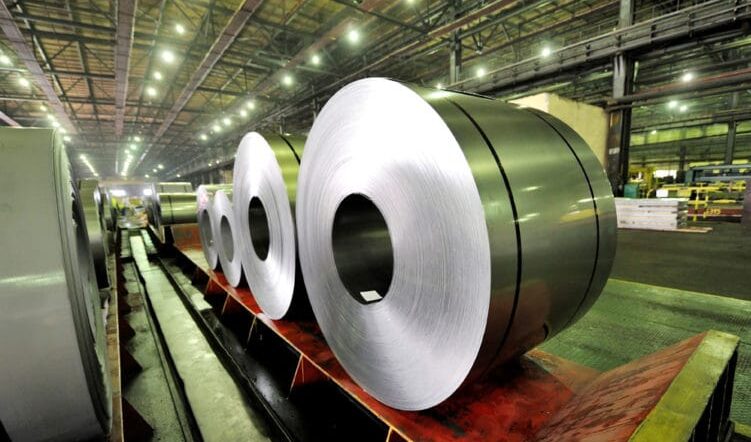
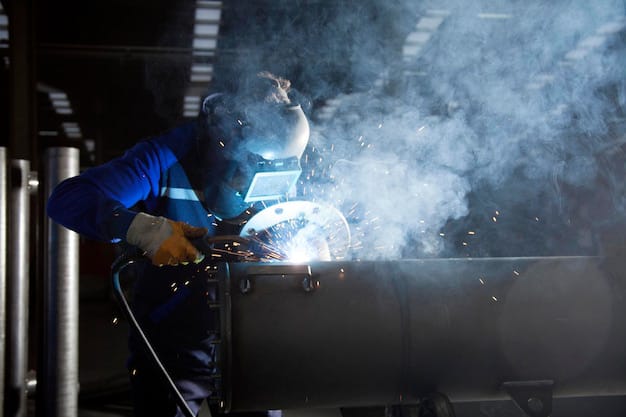
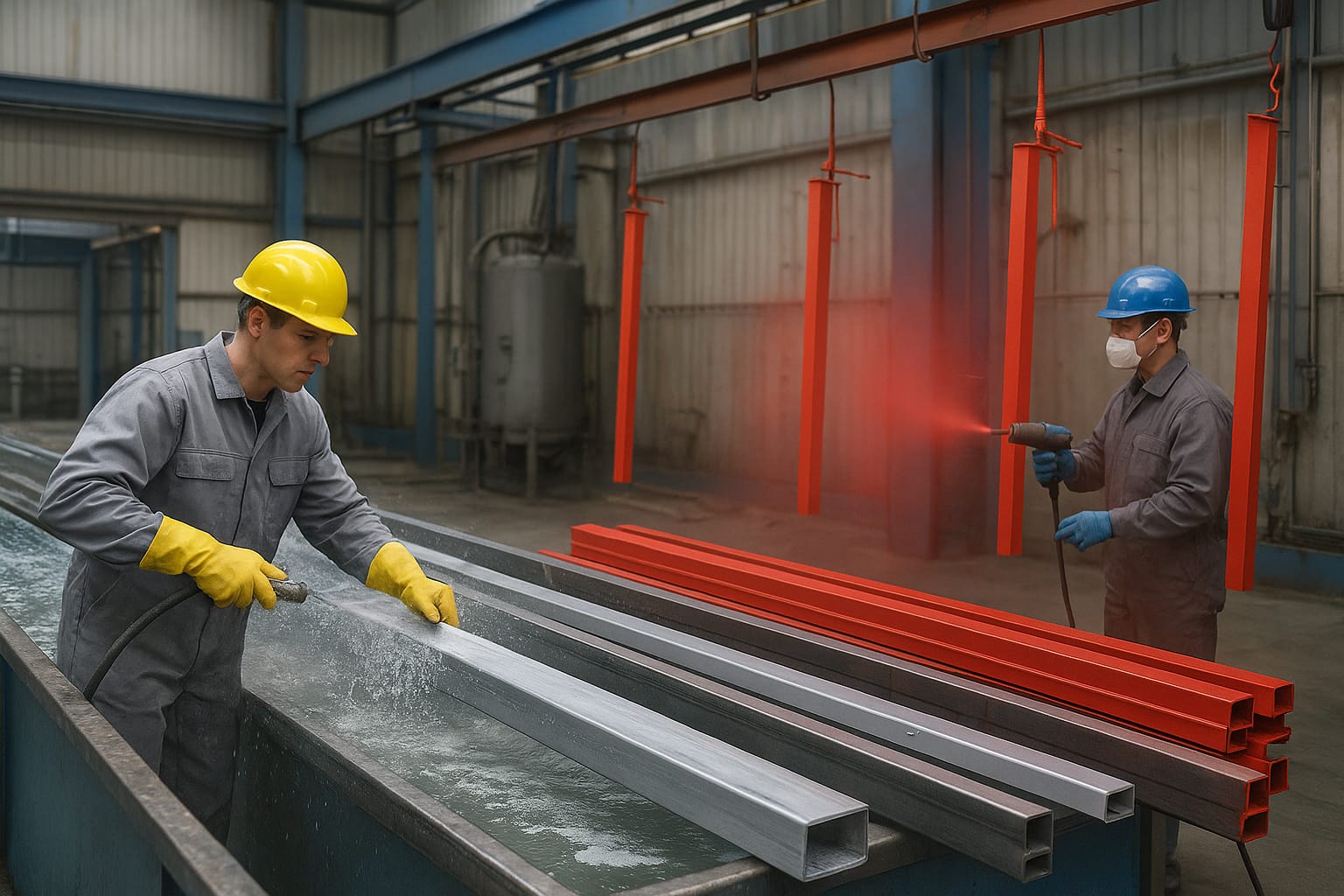
Unlike local trading firms that re-label third-party products, Signature maintains 100% direct operational command over roll forming lines, heavy hydraulic punch units, robotic welding, and automated surface treatment. For projects across Vietnam, this translates to strict dimensional tolerances, certified steel yield strengths, and tailored structural integration.
Direct answers addressing customs import formalities, concrete anchoring requirements, moisture durability, and safety compliance.
Under standard HS Code classifications (Chapter 73: Articles of Iron or Steel, specifically headings 7308.90 for structural steel frameworks and 7326 for fabricated metal guards), goods originating from the UAE carry standard MFN (Most Favored Nation) tariff rates. Our commercial documentation team prepares full Certificates of Origin, certified packing lists, and mill test certificates to ensure swift customs clearance at Cat Lai, Cai Mep, or Hai Phong port gates.
To reliably stop a 20,000+ Joule collision without slab cone failure, barriers require a non-cracked reinforced concrete floor with a minimum thickness of 150mm to 200mm and compressive strength of at least 25 to 30 MPa (equivalent to Vietnam Concrete Grade M300/M350). Chemical anchor capsules (such as vinyl ester or epoxy resins) with M12–M16 high-tensile threaded studs are strongly recommended over mechanical drop-in anchors to withstand continuous dynamic vibration.
Hot-dip galvanizing conforming to ISO 1461 / ASTM A123 delivers a metallurgical zinc-iron alloy bond with an average coating thickness exceeding 85 microns. In southern Vietnam’s high-humidity conditions (frequent tropical rains alternating with intense heat), this zinc coating provides over 20 years of maintenance-free cathodic protection, preventing oxidation along coastal regions like Ba Ria-Vung Tau and Da Nang.
Yes. Signature can design structural drop gates and cantilever barriers fitted with magnetic proximity switches and pneumatic interlock brackets. This ensures the safety barrier cannot be swung open unless the trailer restraint has verified a locked wheel condition and the overhead insulated door is raised to full clear height.
A pedestrian handrail (governed by OSHA 1910.29 or TCVN) is engineered to withstand a static top-rail lateral force of only 890 Newtons (200 lbf), intended purely to arrest human falls. In contrast, a true vehicular dock barrier is built from heavy-wall tubular steel (often 100mm to 150mm hollow structural sections with 4.5mm+ wall thickness) designed to arrest a multi-ton moving forklift. Installing lightweight handrails along an active forklift dock edge creates a dangerous false sense of security.
Standard engineering drafting and factory fabrication within our Ajman Free Zone facility requires 2 to 3 weeks depending on the order volume. Sea freight ocean transit from Jebel Ali Port to Ho Chi Minh City (Cat Lai) or Hai Phong takes approximately 14 to 18 days. Consequently, complete custom-engineered dock barrier systems are routinely delivered on site within 5 to 6 weeks from CAD approval.
Connect with our industrial structural engineering desk. Share your warehouse floor dimensions, clear dock heights, and forklift specifications for a complete load-rated CAD proposal and factory-direct export quote.