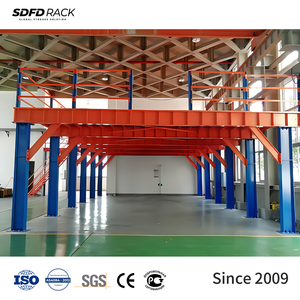
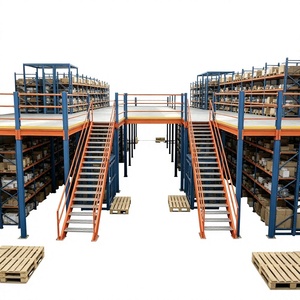
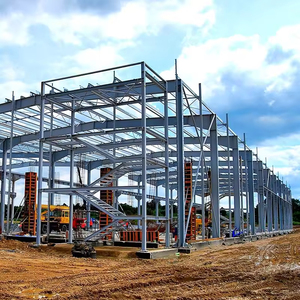
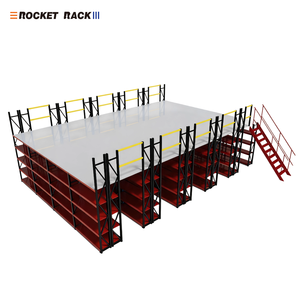
Custom fabricated using high-yield cold-formed steel and structural I-beams. Our export-ready modular platforms triple usable warehouse footprint without requiring in-situ hot welding or permanent masonry modifications.
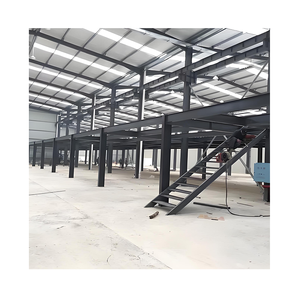
An in-depth analysis of vertical cube utilization, structural compliance under ABNT standards, and financial payback models across the Southeast and Southern Brazilian logistics belts.
The Brazilian logistics and supply chain sector is experiencing an unprecedented structural transformation. Driven by the aggressive growth of domestic e-commerce platforms (such as Mercado Livre, Magazine Luiza, and Shopee Brasil) alongside expanding multinational third-party logistics (3PL) operators, prime warehouse vacancies across core industrial rings have dropped to record lows. In logistics epicenters such as Cajamar, Barueri, Guarulhos, and Campinas (São Paulo State), as well as Extrema (Minas Gerais) and São José dos Pinhais (Paraná), Class A warehouse rental rates per square meter have escalated significantly.
For Brazilian facility managers, operations directors, and logistics engineers, expanding outward by leasing adjacent warehouse footprints incurs massive capital expenditures, prolonged municipal zoning hurdles, and long-term lease liabilities. Most modern distribution centers in Brazil feature clear ceiling heights ranging from 10 to 14 meters. However, conventional floor racking solutions leave up to 60% of the vertical warehouse volume ("the cube") completely unmonetized.
As a global manufacturer and dedicated exporter of modular mezzanine floors, we supply Brazilian industrial enterprises with fully engineered, bolted, free-standing structural mezzanine systems and rack-supported multi-tier platforms. These solutions eliminate structural civil modifications, conform to strict municipal fire requirements, and maximize operational throughput per square meter of concrete slab.
Procuring imported structural steel platforms for Brazilian industrial facilities demands uncompromising adherence to Brazil's national technical standards (Normas Brasileiras - ABNT). Unlike unregulated low-cost tubular platforms that suffer excessive live-load deflection and harmonic resonance, our structural systems are designed to bridge international manufacturing precision with domestic Brazilian engineering codes:
Governing the structural design of steel and composite buildings. Every primary column, I-beam girder, and secondary purlin is calculated with limit-state safety factors accommodating static pallet loads, dynamic forklift braking, and pedestrian impact forces.
Specifying the exact dimensioning of cold-formed structural steel profiles. Our high-tensile sigma, C, and Z profiles provide superior strength-to-weight ratios, minimizing dead weight on existing Brazilian warehouse floor slabs while guaranteeing zero uncalculated buckle deflection.
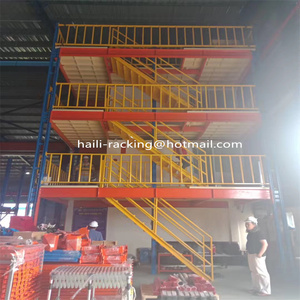
Strict workplace safety norms. Staircases engineered with non-slip nosing, 38-degree industrial inclination, continuous double handrails, 200mm integrated kickplates (toe-boards), and self-closing swing pallet safety gates to eliminate fall-from-height liabilities.
To assist Brazilian client compliance with municipal permitting (Prefeitura) and CREA (Conselho Regional de Engenharia e Agronomia) registration, every modular mezzanine exported to Brazil is supported by full finite element analysis (FEA) calculation dossiers, complete dead/live load deflection charts (L/350 serviceability limit), bolt shear documentation (ASTM A325/Grade 8.8), and step-by-step CAD assembly schematics.
Engineered to withstand diverse regional operational demands, from the high-humidity coastal ports of Santos and Paranaguá to the heavy-cycle automotive corridors of Minas Gerais.
Cajamar, Louveira & Extrema: High-throughput sortation and pick-module mezzanines integrated with automated spiral chutes, gravity conveyors, and multi-tier picking aisles, enabling 100,000+ daily SKU rotations.
ABC Paulista & Betim: Ultra-heavy equipment support platforms rated up to 2,000 kg/m² for stamping die buffering, CNC maintenance sub-stations, and hydraulic assembly lines elevated directly above active shop floors.
Anvisa RDC 430 Regulated Sites: Washdown-grade galvanized open grating platforms in temperature-controlled warehouses, facilitating 360-degree HVAC laminar airflow and preventing thermal stratification pockets.
Consumer Electronics & SMT Assembly: Anti-static (ESD) coated modular mezzanine floors housing cleanroom assembly sub-levels and component kitting buffer zones inside rapid-turnaround manufacturing facilities.
How automation, fire safety certifications (AVCB), and bolted demountable architecture are replacing outdated concrete and field-welded structures.
Leased Brazilian warehouses carry strict "return-to-original-condition" clauses upon lease termination. Traditional in-situ welded structural steel mezzanine floors require expensive hot-work permits (Permissão para Trabalho a Quente), present severe fire hazards during erection, and represent sunk capital. Modern Brazilian operators insist on 100% bolt-together pre-engineered mezzanine platforms that can be dismantled, expanded, or relocated to new distribution centers with zero loss of structural integrity.
Automated Guided Vehicles (AGVs) and Autonomous Mobile Robots (AMRs) are rapidly deploying throughout Brazilian retail fulfillment centers. Standard wooden or uneven chequered plate decks are unacceptable for continuous wheel-path robotics. We engineer specialized subfloor composite systems—incorporating CNC cold-rolled interlocking steel planks overlayed with high-density polyurethane-coated structural fiber panels—offering surface flatness tolerances matching DIN 18202 standards.
Securing an Auto de Vistoria do Corpo de Bombeiros (AVCB) is mandatory for operating any commercial or logistics property in Brazil. A major roadblock with solid mezzanine decks is their disruption of ceiling-level fire sprinkler coverage and smoke evacuation. Our high-strength electro-forged open steel gratings offer over 70% open surface permeability, often enabling approval without the multi-million Real expense of installing dedicated sub-deck sprinkler arrays.
Compare floor decking options engineered for Brazilian warehouse conditions, taking into account wheel-load friction, acoustics, fire safety approval, and load dynamics.
| Decking Material System | Live Load Rating | Fire Permeability (AVCB) | Handling Equipment Compatibility | Acoustic & Deflection Rating | Primary Brazilian Application |
|---|---|---|---|---|---|
| Galvanized Serrated Bar Grating | 500 – 1,500 kg/m² | >70% Open Area (Optimal) | Hand pallet trucks (steel-wheel resistant) | L/350 - Open acoustic pass-through | Fulfillment centers, pharma hubs, hazardous stock |
| Embossed / Chequered Steel Plate | 800 – 2,000 kg/m² | Solid (In-Rack Sprinklers Req.) | Electric pallet jacks, heavy caster trollies | L/450 - Rigid, zero spill drop | Automotive tooling, machinery platforms, oil storage |
| High-Density Plywood + GI Decking Underlay | 350 – 750 kg/m² | Fire-Retardant Class B | Pedestrian picking carts, light manual bins | L/300 - High sound dampening, smooth walk | E-commerce apparel sorting, archive vaults, offices |
| Interlocking Perforated Steel Planks | 500 – 1,200 kg/m² | 35%–50% Open Smoke Flow | Rubber & polyurethane wheeled roll containers | L/400 - High torsional stiffness | Multi-tier rack-supported attic lofts, retail reserves |
| AMR Solid Composite Deck System | 600 – 1,500 kg/m² | Solid (Under-deck Sprinklers) | Robotic AGV/AMR drive wheels (Zero slip) | L/500 - Ultra-flat DIN 18202 Class 3 | Next-generation automated order fulfillment centers |
Every modular mezzanine floor exported to Brazil is fabricated entirely in-house. Direct oversight of roll forming, laser profiling, robotic welding, and shot blasting ensures consistent structural tolerances, unmatched finish durability, and reliable delivery dates.
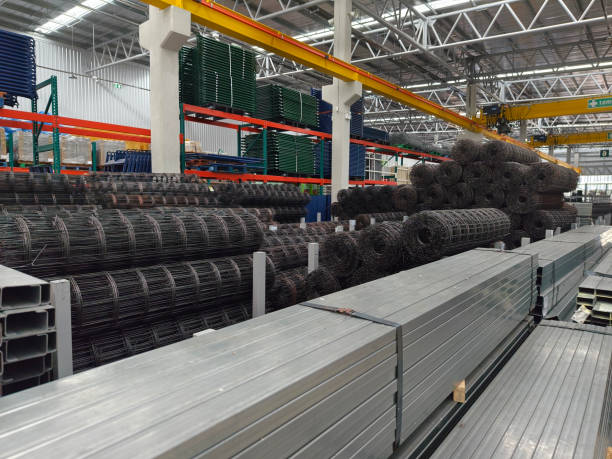
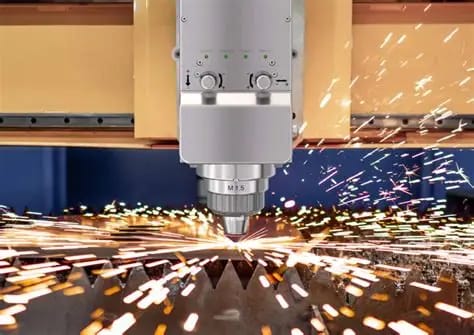
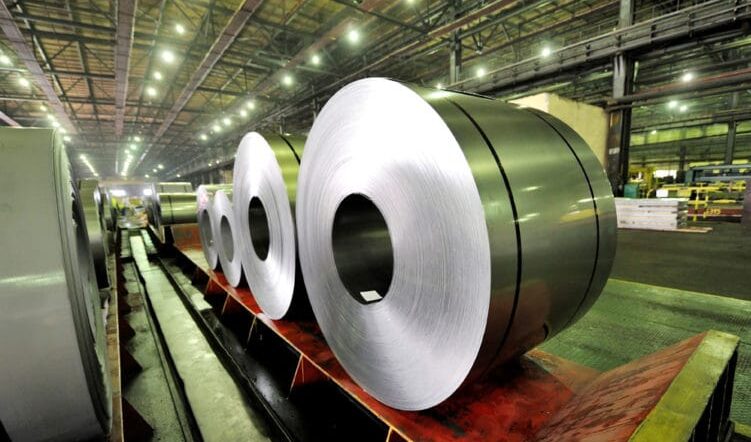
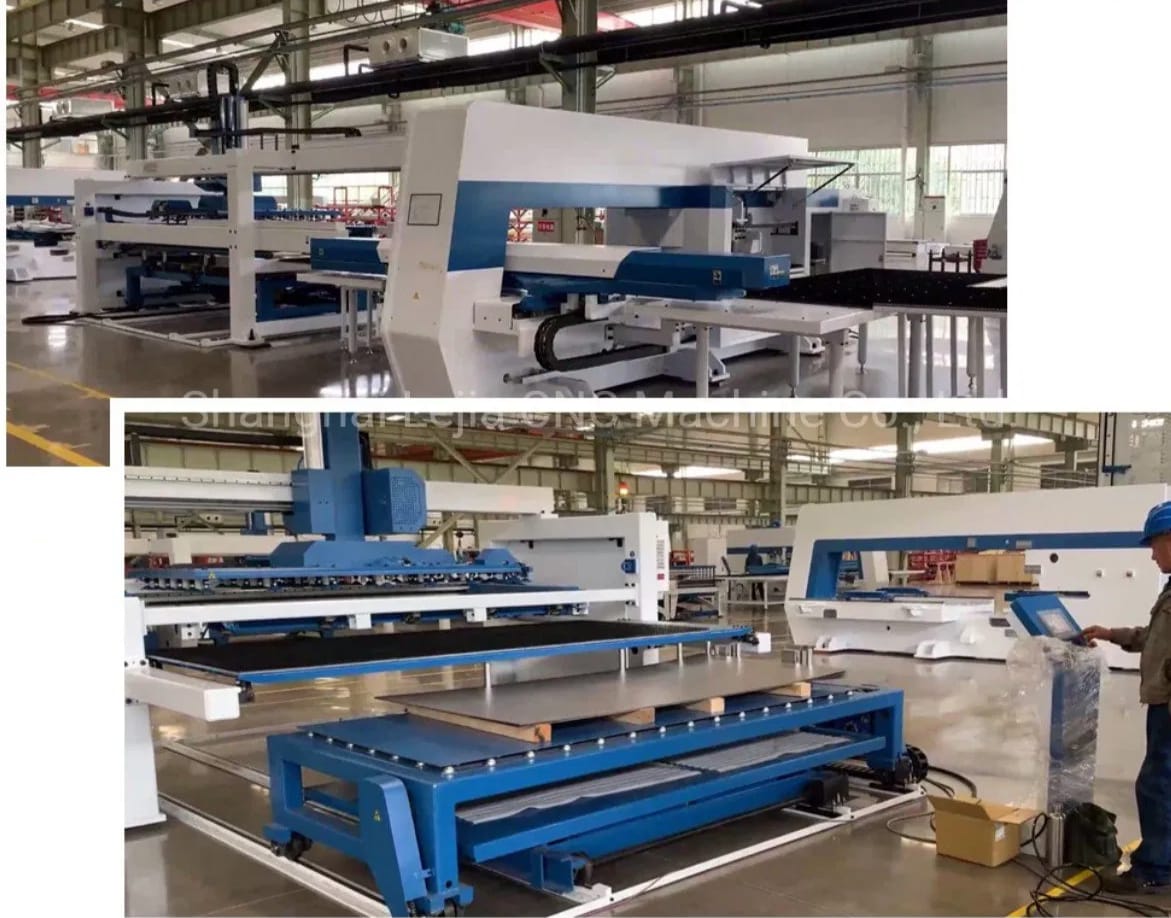
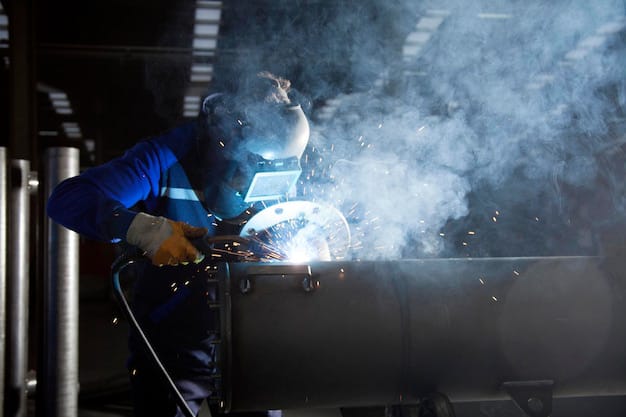
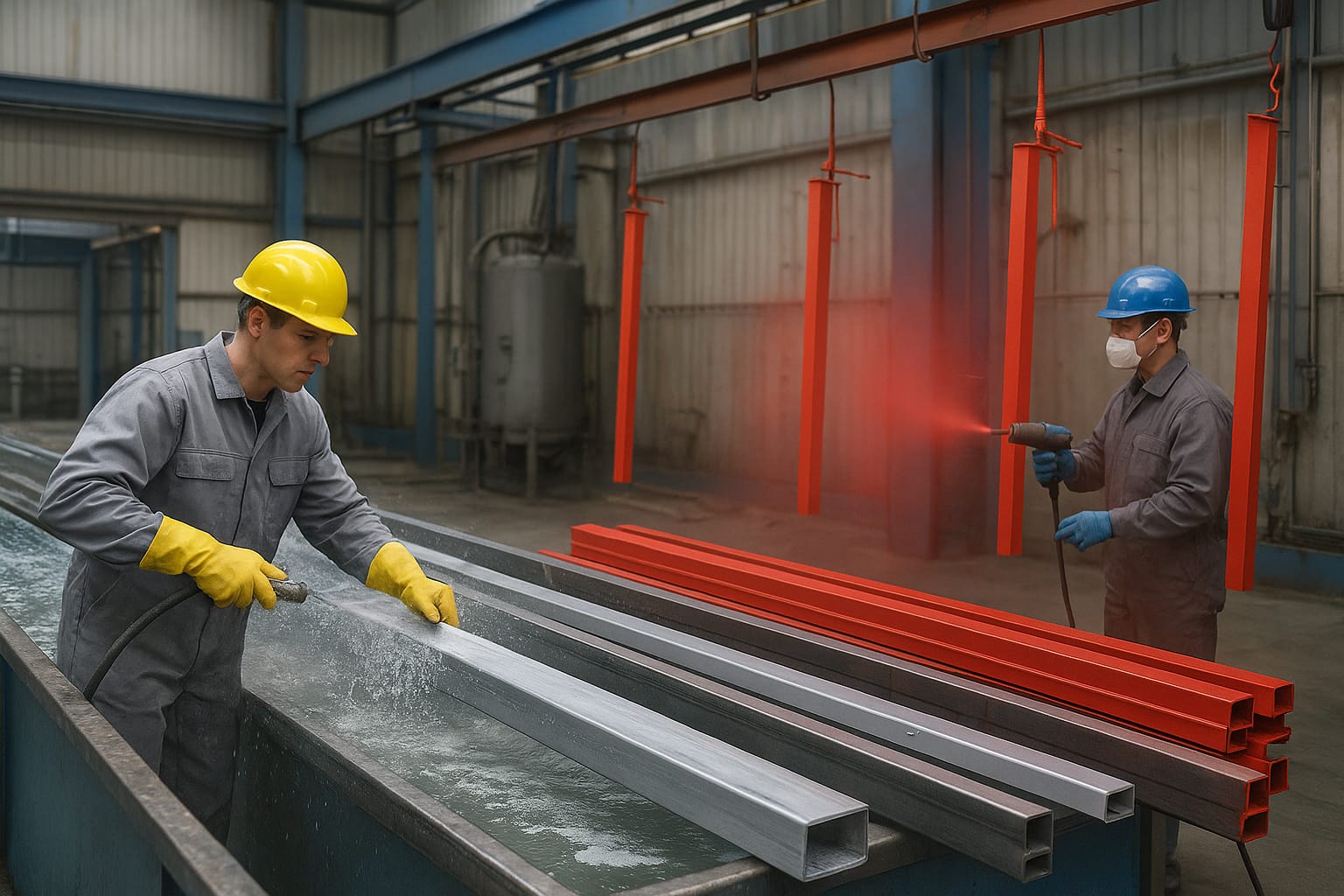

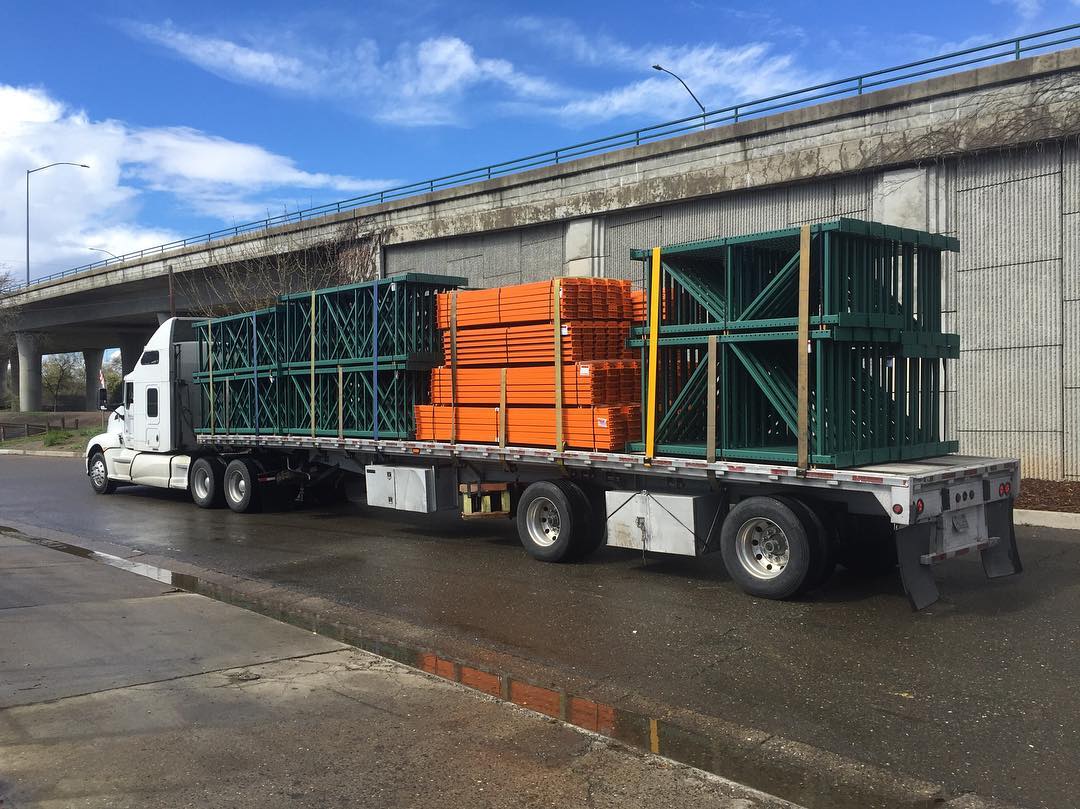
We eliminate trading intermediary markups. Our direct structural manufacturing model encompasses raw steel coil sourcing, custom CAD layout optimization, structural fabrication, pre-shipment dry fit, and full export logistics coordination.
Our knockdown mezzanine kits are modularly calculated for maximum volumetric density within standard 40ft High Cube (40HQ) maritime shipping containers. This minimizes ocean freight cost per ton and protects all coated components against ocean transit humidity.
Every profile is CNC-punched, numbered, and tagged to match 3D installation blueprints. Two installation technicians and a standard boom lift can assemble a 500m² mezzanine floor within 5 business days, without welding sparks or hazardous plant disruptions.
Direct engineering and commercial answers addressing customs clearance, NCM classification, municipal approvals, and installation support across Brazilian states.
Modular structural steel mezzanine floors are classified under NCM 7308.90.10 (Structures and parts of structures: of iron or steel) or NCM 7308.90.90 in the Brazilian Siscomex (Sistema Integrado de Comércio Exterior) tariff database.
Depending on the system's degree of automation, integrated freight elevators, or specialized AMR interfaces, Brazilian corporate importers may explore eligibility for the Ex-Tarifário regime. This Brazilian federal tax mechanism temporarily lowers the Imposto de Importação (II) to 0% for capital equipment with no direct domestic equivalent, generating immense import duty savings on major distribution center projects.
Achieving approval for the Auto de Vistoria do Corpo de Bombeiros (AVCB) relies predominantly on deck selection, stair geometry, and emergency evacuation egress widths. Under technical instructions such as IT-08 and IT-11 (São Paulo Fire Brigade):
1. Open steel grating decks with >70% clear ventilation openings allow overhead ceiling sprinkler discharge to penetrate downward, often bypassing the need to install costly under-floor sprinkler piping.
2. We engineer staircases with minimum clear walk widths of 1,200mm, continuous handrails on both sides, 180mm closed risers, and anti-slip tread profiles that meet or exceed local municipal fire safety codes.
Yes. We provide complete finite element analysis (FEA) calculation models, structural cross-sections, and load reaction schedules that are formatted to align directly with ABNT NBR 8800 and NBR 14762 requirements. Brazilian civil or structural consulting engineers contracted by your company can readily audit our engineering packet to issue the formal Anotação de Responsabilidade Técnica (ART) required by CREA for municipal facility approval.
Typical lead times are divided into two clear phases:
Manufacturing Cycle: Detailed CAD structural layout sign-off takes 5–7 days. Manufacturing, precision CNC profiling, automated powder coating, and seaworthy container packing take approximately 20–25 working days, depending on project scale (up to 5,000m²).
Ocean Freight Transit: Direct container vessel shipping to the Port of Santos (São Paulo) or Port of Paranaguá (Paraná) generally requires 30–38 days ocean transit time. We provide all commercial invoices, packing lists with net/gross weights, and fumigation certificates (ISPM 15) to guarantee seamless customs clearance (Despacho Aduaneiro).
Every platform is engineered for a specified uniform distributed load (UDL) between 300 kg/m² and 2,000 kg/m², plus concentrated point loads reflecting pallet jacks and heavy storage bins. Heavy-gauge baseplates (typically 300x300x16mm to 400x400x20mm) distribute structural column reactions across your concrete floor slab to avoid puncturing. Point load calculations are verified against typical 5–7 ton/m² industrial slab capacities common in Cajamar and Campinas logistics parks.
Field-welded mezzanine structures in Brazil generate extensive hidden costs: local labor charges, certified welding inspectors, expensive hot-work insurance coverage, and building restoration penalties when vacating rented space. Our 100% pre-engineered bolted design provides clean mechanical assembly, factory-applied electrostatic thermo-hardened powder coatings with zero on-site overspray, and full asset salvageability, allowing your enterprise to disassemble and reconfigure the mezzanine in future properties.
To provide an exact quotation and structural layout within 48 hours, our technical team requires:
1. Architectural warehouse dimensions or CAD DWG drawings detailing clear height under lower roof beams.
2. Column grid locations, dock door placements, and facility obstructions.
3. Required uniform live load capacity (UDL in kg/m²) and equipment to be elevated.
4. Preferred floor decking type (Open Grating for AVCB, Solid Steel Plate, or Plywood composite).
5. Stairway, drop gate, or vertical freight elevator preferences.
Share your architectural floor plan, ceiling clear height, and operational load requirements. Our structural engineering department will produce a custom CAD layout, structural calculation summary, and door-to-port CIF quotation for Santos or Paranaguá within 48 hours.