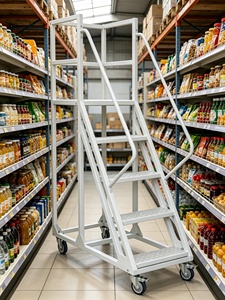
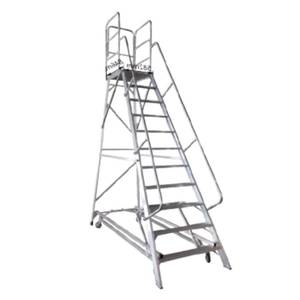
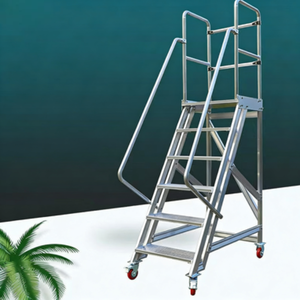
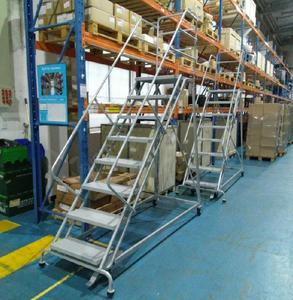
In modern industrial logistics, commercial warehousing, and high-tech facility maintenance, mobile rolling step ladders (frequently classified as mobile work platforms or rolling ladder stands) constitute a critical component of elevated operational safety and throughput efficiency. According to recent industrial safety reports, over 20% of workplace fall injuries stem from improper or non-compliant elevated access equipment. As the world's premier manufacturing hub, China's ladder manufacturing ecosystem has evolved from producing basic climbing tools to engineering sophisticated, stress-analyzed, and ergonomically certified mobile work platforms.
This industry whitepaper provides enterprise procurement officers, warehouse operations directors, and safety compliance managers with an exhaustive technical evaluation of Chinese rolling step ladder manufacturing, material selections, load-testing protocols, and structural compliance frameworks. By combining metallurgical precision, automated robotic TIG welding, and strict adherence to international safety standards (such as OSHA 1910.23, ANSI A14.7, and European EN 131-7), leading China suppliers offer unparalleled information gain and structural value for global importers.
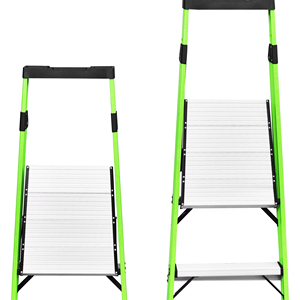
Core Technical Insight: Modern rolling step ladders must balance dynamic mobility with static structural rigidity. Advanced suppliers incorporate spring-loaded casters or foot-actuated step-lock mechanism systems that automatically disengage wheel motion when weight exceeds 15 kg on the first tread.
Selecting the optimal structural substrate for rolling step ladders requires evaluating environmental factors, conductivity requirements, weight capacity, and corrosion resistance. Chinese manufacturers utilize three primary material classes: High-Grade Structural Aluminum Alloy (A6063-T5 / A6061-T6), Cold-Rolled Carbon Steel (Q235 / Q355), and Pultruded Fiberglass Reinforced Plastic (FRP).
| Material Class | Yield Strength (MPa) | Corrosion Resistance | Electrical Insulation | Primary Industrial Applications |
|---|---|---|---|---|
| 6063-T5 Aluminum Alloy | ≥ 175 MPa | High (Anodized Finish) | Non-Insulated (Conductive) | Logistics centers, cleanrooms, food processing, order picking. |
| Q235 Powder-Coated Steel | ≥ 235 MPa | Medium to High (Epoxy Coated) | Non-Insulated (Conductive) | Heavy manufacturing, military depots, high-impact storage facilities. |
| Pultruded FRP Composite | ≥ 300 MPa (Flexural) | Extreme (Chemical Proof) | High Voltage (>35 kV) | Substations, chemical processing, petrochemical maintenance, utility sector. |
For aluminum rolling ladders, the specification of T5 vs. T6 heat treatment significantly impacts long-term deflection resistance under concentrated center-point loading. 6063-T5 aluminum provides optimal extrudability and surface smoothness for handrails and stair treads, while critical structural gussets and step brackets utilize 6061-T6 for enhanced shear strength. In electrical or outdoor utility settings, FRP composite ladders employ pultruded structural shapes impregnated with polyester or vinyl ester resin systems, offering superior UV stabilization and zero electrical conductivity up to 35 kilovolts.
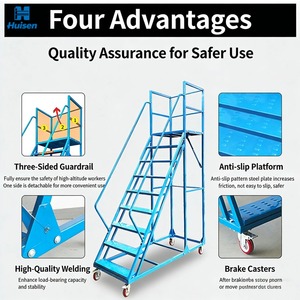
Safety engineering in mobile step ladders goes far beyond basic step construction. The integration of ergonomic handrails, anti-slip treads, toe-boards, and robust locking mechanisms determines product longevity and OSHA/ANSI safety certification outcomes.
Foot-activated central lock lowers rubber feet directly onto the floor, lifting casters off the ground for 100% stable, zero-drift positioning.
Expanded metal mesh, serrated grating, or diamond-plate aluminum treads guarantee traction even in oily or wet processing environments.
OSHA-compliant upper platform enclosure complete with mid-rails and 4-inch integrated toe-boards to prevent tool drop hazards.
The global industrial equipment market is shifting toward lightweight automation-compatible maintenance units, modular knock-down logistics, and integrated smart tracking technologies. Chinese ladder suppliers are leading this transition through significant R&D investments and automated manufacturing upgrades.
Historically, fully welded platform step ladders incurred massive ocean freight surcharges due to high volumetric cubing during container transport. Modern Chinese exporters design modular, Completely Knocked Down (CKD) or Semi Knocked Down (SKD) rolling ladder kits. Precision laser-cut bolted flange joints and color-coded assembly brackets allow 40-foot High Cube (40HQ) containers to fit up to 350% more units compared to pre-assembled units, drastically reducing per-unit freight costs for international distributors.
As automated guided vehicles (AGVs) and autonomous mobile robots (AMRs) proliferate in fulfillment centers, rolling ladders are evolving with narrower base footprints, zero-radius swivel casters, and protective rubber bumpers to prevent accidental collision damage with automated machinery.
Leading Chinese exporters are standardizing zero-VOC electrostatic polyester powder coating lines and closed-loop aluminum recycling systems. This aligns with Western enterprise ESG (Environmental, Social, and Governance) procurement mandates, ensuring clean supply chain audit compliance.
Importing commercial rolling step ladders requires thorough verification of regional regulatory codes to protect against product liability claims and operational safety violations.
In the United States, mobile ladder stands are governed by ANSI A14.7 and OSHA 1910.23 specifications. Key structural requirements include:
European Union directives mandate EN 131-7 compliance specifically for mobile platform ladders. Tests mandate horizontal stability pull tests, tread impact resistance, and mandatory restraint barriers when standing height exceeds 1.0 meter.
Navigating global supply chain complexities requires an OEM partner with comprehensive in-house fabrication, advanced testing infrastructure, and reliable export compliance credentials. Premier Chinese step ladder suppliers offer distinct competitive edges:
From aluminum extrusion and automatic punching to robotic TIG welding and powder coating, full vertical integration guarantees rigorous quality control.
In-house engineering teams utilize Finite Element Analysis (FEA) software to model load stresses and custom design platforms to match unique warehouse rack heights.
Factory operations certified under ISO 9001:2015, with individual product testing reports issued by global inspection bodies such as SGS, TÜV Rheinland, and Intertek.
Direct answers to essential technical and commercial questions raised by international sourcing teams during supplier evaluations.
The standard Harmonized System (HS) classifications depend on primary material composition:
7616.99.90 or 7616.99.50 (Articles of aluminum).7326.90.89 or 7326.90.35 (Articles of iron or steel).3926.90.97 (Articles of plastics/fiberglass).Standard model MOQs start at 20 to 50 units (or consolidated LCL shipments). Custom OEM/ODM platform ladder designs typically carry a 1x20ft container MOQ. Sample prototypes are fabricated and dimensionally inspected within 7 to 10 working days.
Quality assurance protocols include: (1) Static tread proof load tests (applying 1.5x working load to individual steps for 5 minutes), (2) Platform overload testing (applying 4x static capacity to evaluate deflection limits), (3) Caster durability and lock stress tests across 10,000 motion cycles, and (4) Salt spray corrosion testing for powder-coated finishes.
Yes. Custom RAL color matching is available via electrostatic powder coating lines. Suppliers also offer OEM laser-etched serial badges, customized safety rating stickers, branded user instruction manuals, and retail-ready knock-down carton packaging.
Spring-loaded casters automatically retract under operator weight (ideal for light to medium duty ladders under 6 steps). Step-lock systems utilize a positive foot-pedal mechanical linkage that lowers solid rubber base feet directly to the floor, recommended for heavy-duty 6 to 16 step warehouse platform ladders where absolute zero-displacement rigidity is required.
Looking for certified OEM/ODM industrial rolling step ladders, custom maintenance platforms, or high-volume wholesale pricing for your regional market? Request a engineering consultation and factory-direct quote today.
Send an Inquiry