Multi-Tier Mezzanine
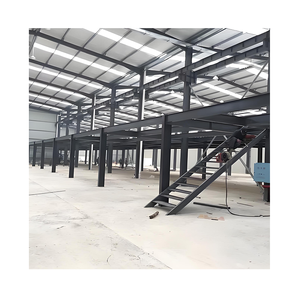

Precision-profiled cold-rolled steel storage arrays manufactured under automated punching, roll-forming, and robotic welding lines to meet rigorous FEM, RMI, and AS4084 structural criteria.
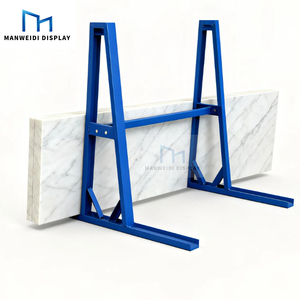
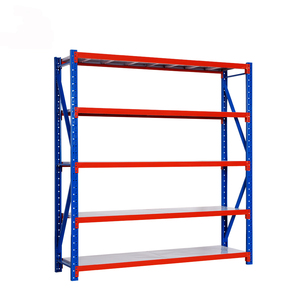
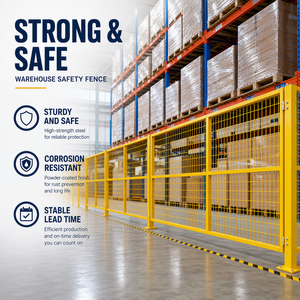
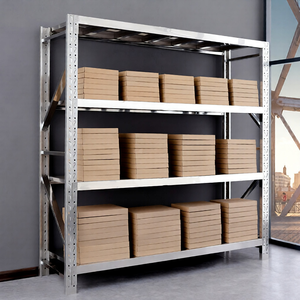
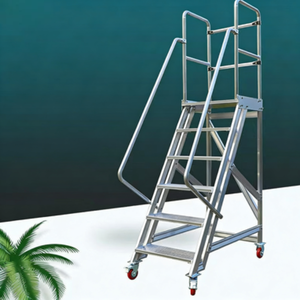
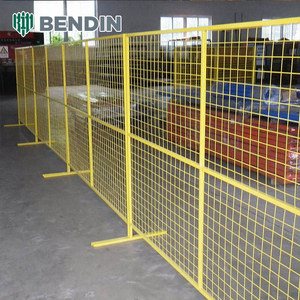
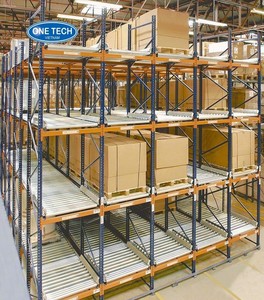
Comprehensive mechanical engineering specifications verifying steel yield, surface passivation, and compliance tolerances across our primary manufacturing lines.
| Racking Architecture | Certified Steel Grade | Upright Profile (mm) | Beam / Shelf Deflection | Finishing Standard | Compliance Rating |
|---|---|---|---|---|---|
| Selective Pallet Racking | Q235B / Q355B Hot-Rolled Strip | 80×60 / 90×70 / 100×70 | ≤ L/200 (Design Load) | Epoxy Polyester 70-90µm | EN 15512:2020 |
| Heavy Duty Mezzanine Platform | Q355B Structural I-Beam/C-Channel | 150×150 to 300×300 H-Column | ≤ L/300 Live + Dead Load | Zinc Phosphate + AkzoNobel Powder | AISC 360-16 / EN 1090 |
| Carton Flow Dynamic Rack | Q235B Cold-Formed Steel | 55×47 / 60×50 Omega Profile | ≤ L/250 under dynamic flow | Electrostatic Powder Coated | RMI MH16.1 |
| Industrial Medium-Duty Shelving | Q195 / Q235B Cold-Rolled Sheet | 50×30 / 55×40 C-Section | ≤ L/180 uniform distribution | Anti-scratch Thermoset Resin | ISO 9001:2015 |
| Stainless Cleanroom Shelving | AISI 304 / 316 Austenitic Steel | 38×38 Tubular Box Section | ≤ L/250 sanitary deflection | Electropolished Ra < 0.4µm | NSF / GMP Compliant |
A technical briefing for Supply Chain Executives, Procurement Directors, and Warehouse Systems Integrators navigating capacity planning, nearshoring, and total lifecycle ownership.
Steel pricing accounts for up to 68% of industrial racking project expenditures. Forward-thinking procurement strategies have shifted from transactional buying to index-linked contracts rooted in Shanghai Metal Exchange (SME) spot indices, coupled with direct mill-certified sourcing of Baosteel and Shougang high-strength strip. By leveraging custom slitting parameters directly inside our factory, cold-form yield wastage is suppressed beneath 2.1%, insulating enterprise buyers from volatile global freight and material surges.
Tier-1 intralogistics developments require strict adherence to international seismic and building codes, including AS 4084-2023 (Australia), EN 15512 (Europe), and RMI MH16.1 (North America). Our structural engineering department utilizes ANSYS and STAAD.Pro finite element modeling to analyze non-linear frame buckling, connection ductility ratios, and ground acceleration parameters ($S_s, S_1$), delivering verified engineer-stamped calculations that expedite municipal permit approvals globally.
Enterprise sustainability guidelines now require Scope 3 emissions transparency. We provide Environmental Product Declarations (EPD) detailing embodied carbon across steel extraction, cold-forming, and thermal curing. By shifting to zero-VOC TGIC-free powder finishes, energy-efficient infrared curing tunnels, and circular cold-rolled profile geometry that yields 18% greater strength-to-weight ratios, we empower multinational corporations to achieve net-zero distribution milestones.
How the convergence of robotics, micro-fulfillment, and advanced surface metallurgy is reshaping modern industrial steel shelving systems.
The acceleration of Autonomous Mobile Robots (AMRs) necessitates millimeter-exact tolerances across bottom clearance heights, guide rail flatness, and aisle clearance spans. Our high-precision CNC punch tooling guarantees vertical column alignment within ±0.8mm over 12-meter continuous vertical upright spans, preventing automated shuttle sensor faults and pallet snag risks in dark warehouses.
Traditional shelving relied heavily on standard Q235B carbon steel. Our R&D engineering has embraced thermo-mechanically controlled processed (TMCP) high-yield micro-alloyed steels (such as Q355MC and Q460MC). These metallurgical advancements allow reduced gauge thickness without sacrificing elastic load capacity, yielding lighter dead-weight loads on industrial concrete floor slabs and cutting sea-container freight weights significantly.
Pilot projects in high-bay logistics centers now embed strain gauges and fiber-optic deformation sensors directly into beam-to-column connector assemblies. These intelligent structural arrays transmit real-time telemetry on static overload anomalies, seismic displacement events, and forklift collision damage directly to the Warehouse Management System (WMS), transitioning maintenance from reactive repair to predictive reliability.
Single-source accountability eliminates intermediary markups, ensures unwavering material traceability, and guarantees strict alignment with international quality standards.
From raw uncoiling and high-speed multi-station cold roll-forming lines to robotic double-pulse MIG welding and continuous automated punching, every manufacturing step is consolidated under our roof to maintain micro-inch tolerances.
Our engineering division tailors every layout to your operational clear heights, dead-space columns, concrete slab PSI load capacity, and handling equipment footprints, providing complete Revit/DWG BIM deliverables prior to cutting steel.
Steel profiles pass through degreasing, zinc-phosphating, reverse-osmosis acid deoxidation, and electrostatic powder coating. Components withstand over 500 hours of ASTM B117 salt spray testing for exceptional rust resistance.
Products are packed with structural steel frames, waterproof polyethylene shrink wraps, corner edge guards, and timber dunnage to maximize 40ft High Cube container payload efficiency and eliminate transit damage across transoceanic routes.
Submit your facility drawings or load parameters today. Our senior structural applications team delivers optimized CAD layouts, static load calculations, and itemized factory-direct pricing within 24 hours.
Key technical, contractual, and logistics answers compiled by our international applications and structural engineering teams.
We source certified Prime Hot-Rolled and Cold-Rolled Carbon Steel Coils strictly conforming to GB/T 700 Q235B (Yield Strength $f_y \ge 235 \text{ MPa}$, Tensile Strength $f_u = 375\text{--}500 \text{ MPa}$) for standard shelving and light beams, and GB/T 1591 Q355B / Q355C ($f_y \ge 355 \text{ MPa}$, equivalent to ASTM A572 Grade 50 and EN 10025 S355JR) for heavy-duty upright frames, base plates, and multi-tier mezzanine columns.
Every steel batch is accompanied by an authentic Mill Test Certificate (MTC) conforming to EN 10204 3.1, verifying carbon equivalent value (CEV), elongation performance, and chemical composition.
Structural validation combines finite element analysis (FEA) using ANSYS and RFEM with physical stub-column crush tests and beam-end connector moment-rotation testing in accordance with EN 15512:2020 and RMI MH16.1.
Safety factors are configured with a minimum of $1.5\times$ to $2.0\times$ against ultimate tensile failure, with vertical beam deflection strictly constrained under $L/200$ (or $L/240$ for automated systems) of the span under full Uniformly Distributed Load (UDL).
Yes. Our in-house engineering team designs systems tailored to localized seismic acceleration parameters ($S_s, S_1$), soil classification, and building occupancy categories. We routinely engineer systems compliant with U.S. IBC/RMI, Eurocode 3 (EN 1993-1-3), Australian AS 4084-2023, and Middle Eastern SBC standards.
We supply full 2D AutoCAD assembly layouts, 3D Revit models, and detailed static calculation packages ready for submission to local third-party structural engineering review bodies.
Components undergo an automated multi-stage continuous immersion pre-treatment: alkaline degreasing, water rinsing, acid deoxidation, zinc-iron phosphating, and deionized water rinsing to prepare pristine metal surfaces.
Next, parts enter our robotic Wagner electrostatic coating booth, where exterior-grade TGIC-free polyester powder coat (AkzoNobel or PPG) is uniformly applied to a thickness of 60 to 90 microns ($\mu\text{m}$), followed by 200°C convection baking. For high-humidity, marine, or cold-storage environments, we supply hot-dip galvanized components (ISO 1461, 85µm zinc) or AISI 304/316 stainless steel.
International shipping costs are optimized through engineered nesting. Uprights are nested back-to-back with custom timber dunnage blocks and tensioned with heavy-gauge PET straps. Beams are palletized in interlocking bundles separated by corrugated buffer strips.
Each bundle features waterproof poly-wrap, protective corner steel jackets, and balanced forklift lifting pockets. A typical 40ft High Cube container accommodates between 22,000 kg and 26,000 kg (or approximately 55-62 CBM), ensuring optimal cube utilization without exceeding vessel axle/payload weight limitations.
Standard manufacturing lead time ranges from 15 to 25 calendar days following technical drawing sign-off and deposit receipt. Our quality assurance protocol operates under a rigorous ISO 9001:2015 regime.
We conduct in-line checks across hole pitch precision (tolerance within $\pm0.1\text{mm}$), weld penetration checks via ultrasonic/macro-etching, cross-hatch coating adhesion testing (ASTM D3359 Class 5B), and pre-assembly mockups of connector hooks prior to export container loading. Third-party inspections via SGS, TÜV, or Bureau Veritas are readily accommodated.
Eliminate middleman margins and access direct China manufacturing excellence for your warehouse distribution and industrial facilities.
Inquire Now