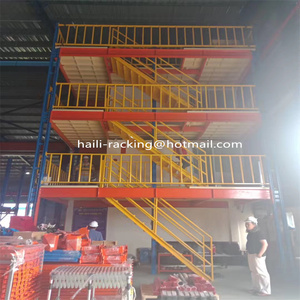
Integrate our heavy-duty structural racking with customized gravity roller cassettes, safety barriers, and distribution equipment for a complete turnkey facility.
A comprehensive technical evaluation of FIFO lane dynamics, brake roller speed attenuation, and load separation systems for modern supply chains.
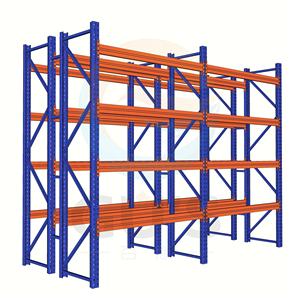
In modern automated logistics and high-throughput warehousing, Gravity Roller Racks—also designated as Pallet Flow, Live Storage, or Carton Flow systems—represent the apex of non-powered, high-density material handling. Operating on the physical principle of controlled gravitational decline, these systems utilize slightly pitched roller beds (typically between 2.5% and 4.0% inclination) to propel pallets or inventory cartons from the loading (replenishment) face to the discharge (retrieval) face automatically.
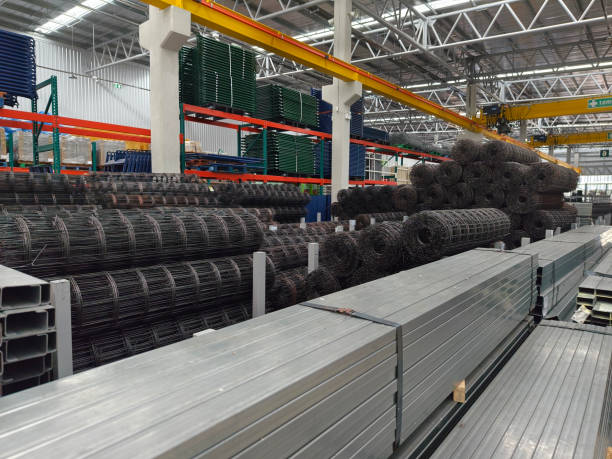
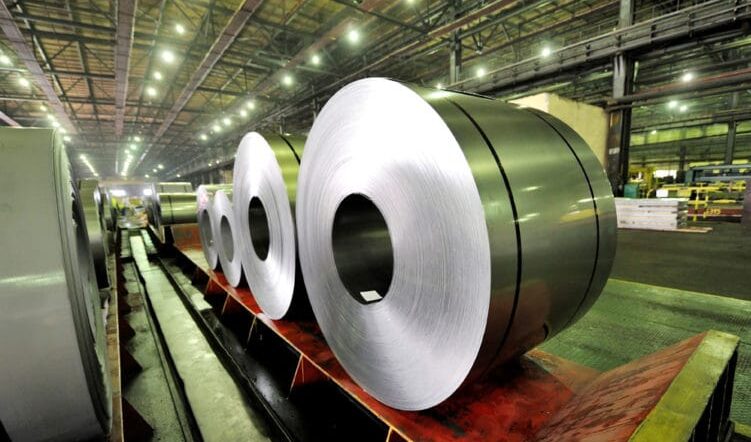
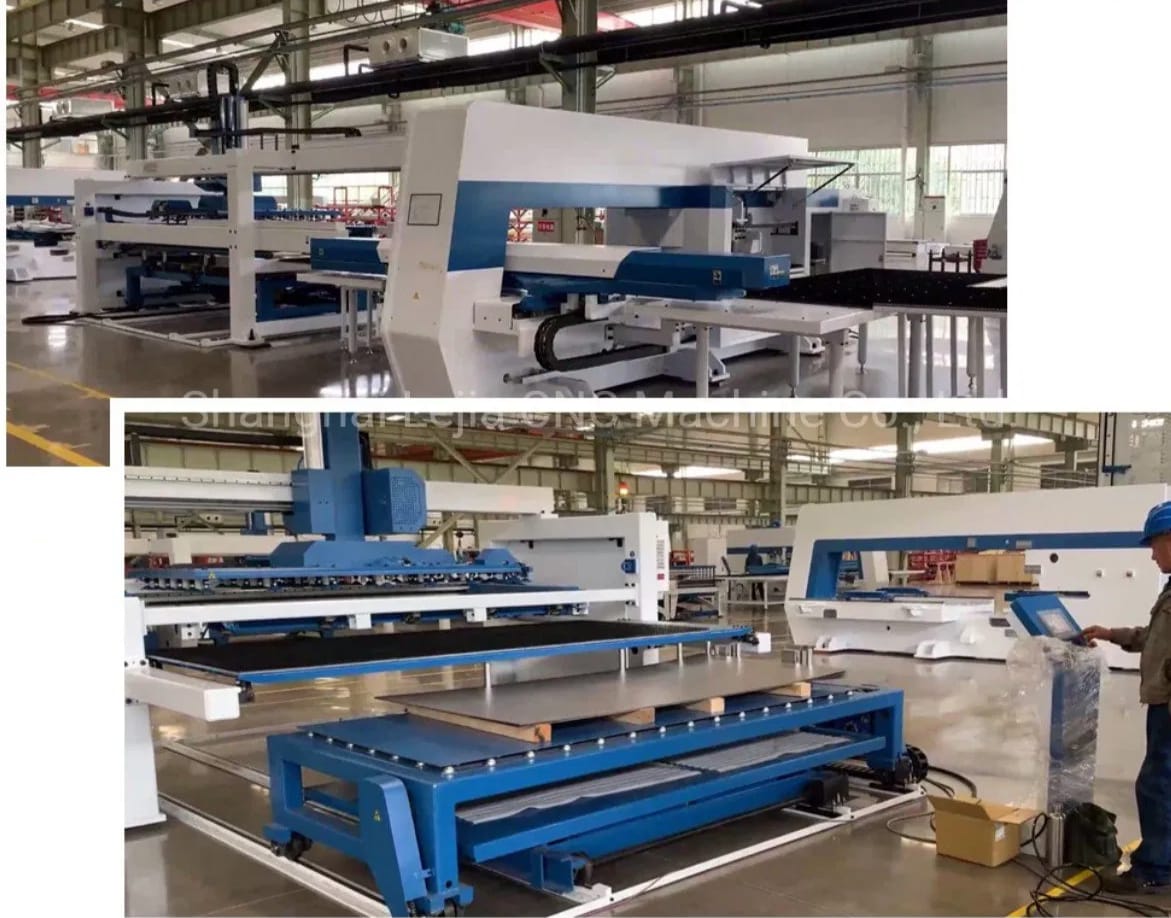
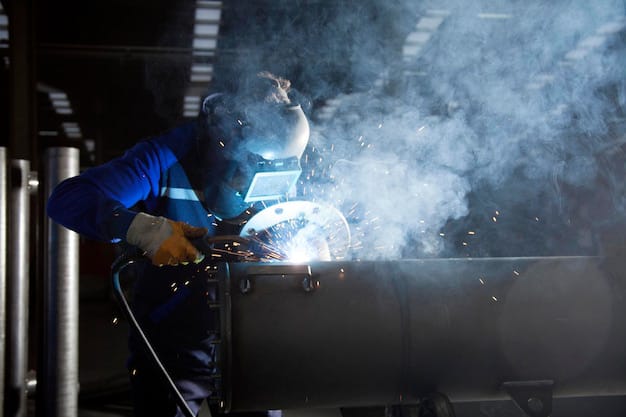
As a specialized OEM/ODM Gravity Roller Racks manufacturer with over two decades of metallurgical fabrication and structural storage engineering based in the Ajman Free Zone, we design and produce dynamic roller rack systems that bridge the gap between static selective pallet racking and costly automated storage and retrieval systems (AS/RS). Our manufacturing infrastructure executes every stage internally—from raw cold-rolled steel profiling, automatic CNC upright punching, and robotic beam welding, to zinc phosphating, electrostatic powder coating, and specialized roller bearing track assembly.
Automatic product rotation enforces First-In, First-Out retrieval, eliminating stock obsolescence in food, pharmaceuticals, and perishable goods handling.
Consolidates forklift access aisles down to just two faces—one for stocking and one for retrieval—recovering up to 65% of redundant floor space.
Centrifugal magnetic brake rollers automatically throttle pallet glide velocity to a consistent, safe speed of under 0.3 m/s, preventing downstream collisions.
Operates purely on gravitational potential energy without electrical motors, servo sensors, or costly continuous utility draw, maximizing operating margin.
The ideal slope angle ($\theta$) is governed by the dynamic equilibrium: $\tan(\theta) \ge \mu_r + (J_r / (m \cdot R^2))$, where $\mu_r$ represents the rolling resistance coefficient of the bottom pallet deck runners, $J_r$ is the roller moment of inertia, $m$ is the aggregate pallet mass, and $R$ is roller radius. In OEM design, our structural engineers calibrate this gradient against wooden Euro/GMA pallets, heavy industrial steel skids, or plastic runners to ensure unassisted startup from standstill without allowing runaway velocity.
Analyze how custom OEM/ODM Gravity Roller Racks compare across operational velocity, capital expenditure, volumetric efficiency, and structural requirements.
| Storage System Type | Inventory Flow Rule | Space Utilization | Operational Energy Cost | Picking Throughput | Structural Load Rating |
|---|---|---|---|---|---|
| Heavy Pallet Flow (Gravity Roller) | Strict FIFO | 80% – 90% (Ultra High) | Zero (Gravity Driven) | Very High (Decoupled aisles) | Up to 2,000 kg / pallet |
| Carton Flow (Split-Case Roller) | Strict FIFO | 75% – 85% (High) | Zero (Gravity Driven) | Extreme (Continuous pick front) | 20 – 100 kg / carton |
| Selective Pallet Racking | Random / LIFO / FIFO | 40% – 50% (Aisle Heavy) | Forklift Travel Heavy | Standard (Single SKU access) | Up to 4,000 kg / level |
| Drive-In Racking System | Strict LIFO | 65% – 75% (High) | Forklift Entry Heavy | Low (Honeycombing risk) | Up to 1,500 kg / pallet |
| Automated AS/RS Crane Storage | Software Controlled | 90% – 95% (Maximum) | Continuous High Electric Draw | High (Automated) | Customized per crane spec |
How dynamic gravity roller engineering is adapting to supply chain automation, cold chain expansion, and ESG-driven warehouse operations.
Procurement teams are prioritizing gravity racks engineered with mechanical optical sensor stops and pneumatic pallet escapement triggers that interface cleanly with autonomous mobile robots (AMRs) for lights-out unloading without manned forklifts.
Surging global cold-chain pharmaceutical and frozen grocery demands have driven rapid adoption of high-impact polymers and specialized low-temperature synthetic lubricants that withstand temperatures down to -30°C without bearing seizure.
Warehouse operators are avoiding total replacement costs by procuring modular, drop-in OEM gravity roller cassettes capable of clipping directly onto existing selective pallet rack structural beams, reducing capital expenditure by up to 55%.
Corporate ESG mandates now demand certified low-carbon steel coils, recycled aluminum roller tubes, and zero-VOC heavy-duty powder coating systems that prevent hazardous off-gassing in sealed cleanroom and food-grade distribution centers.
Integrating passive RFID tags and vibration-sensing embedded roller collars enables automated tracking of high-traffic lane roller wear, signaling preventative maintenance before physical bearing breakdown halts pick lines.
Direct manufacturer accountability from our specialized production hub in Ajman Free Zone, UAE—delivering custom structural integrity across the GCC and international markets.
Unlike trading companies and resellers who outsource component fabrication to disjointed sub-suppliers, Signature Racking Systems F.Z.C maintains unified ownership of the entire design, engineering, rolling, and finishing lifecycle. Operating over 20+ years in the heavy industrial and warehouse equipment domain, we combine bespoke CAD/BIM finite element analysis with high-speed automated production machinery.
Every quotation includes a complimentary, engineering-certified 2D/3D CAD layout drafted strictly around your building column pitch, roof truss clearance, pallet weight profiles, and specific forklift mast dimensions.
Our dedicated, factory-trained installation engineers manage on-site offloading, dynamic track leveling, chemical anchor bolting, safety alignment verification, and formal test run commissionings.
For international contractors and overseas logistics projects, components are pre-assembled into high-density knock-down bundles protected with heavy polymer wrapping and galvanized steel strapping for sea container freight.
Avoid costly sizing discrepancies. Preparing these fundamental warehouse parameters allows our OEM engineering team to calculate your exact roller pitch, brake frequency, and lane slope within 24 hours.
• Exact dimensions (W × D × H)
• Bottom runner configuration (3-skid, 5-skid, perimeter base)
• Bottom surface quality (wood, virgin plastic, sheet steel)
• Minimum & maximum loaded weight
• Lowest overhead obstruction (sprinklers, purlins, HVAC)
• Slab load bearing capacity (kN/m²)
• Concrete floor flatness rating (DIN 18202 or ASTM E1155)
• Seismic zone engineering requirements
• Ambient warehouse temperature vs cold room (-25°C)
• High humidity or coastal saline atmosphere
• Chemical or corrosive washdown requirements
• Cleanroom or food contact regulations
• Desired pallets/cartons deep per lane (typically 4 to 25)
• Forklift / Reach truck / VNA model specifications
• Loading face turnaround volume (picks/hour)
• Required safety accessories (separators, column guards)
Direct technical answers from our senior structural and material handling design engineers.
For standard heavy-duty pallet flow racks, the standard slope angle ranges between 2.5% and 4.0% (approximately 1.5° to 2.3° of decline). The exact gradient is calibrated based on pallet weight differential and bottom deck runner material. For lightweight plastic pallets, a slightly steeper pitch of 3.5% to 4.0% is often required to overcome initial static inertia, whereas heavy GMA or Euro timber pallets with consistent runners roll smoothly at 3.0% slope. Our factory performs dynamic rolling friction testing on sample pallets to specify the exact pitch before fabricating beam connector clips.
Brake rollers (speed controllers) are centrifugal or eddy-current internal governor rollers installed flush within the roller bed. As a pallet rolls over them, internal planetary gearing engages brake shoes that create resistance directly proportional to the pallet's linear speed. This keeps pallet glide speed strictly below 0.3 meters per second regardless of whether the pallet weighs 250 kg or 1,500 kg. Generally, speed controller brake rollers are positioned every 1 to 2 pallet depths down the lane, beginning after the initial discharge impact zone.
In deep lanes (ranging from 4 to 20 pallets deep), the cumulative gravitational force of all rear pallets pushes relentlessly against the lead pallet parked at the retrieval pick face—a phenomenon known as "line pressure." If unmitigated, a forklift operator attempting to lift the front pallet will experience severe pinching, risking structural rack damage, pallet tipping, or dropped loads. A mechanical time-delay pallet separator isolates the first pallet from the trailing queue, temporarily locking the rear pallets in place until the front pallet is lifted and cleared.
Pallet quality is the most critical parameter in gravity flow success. Cracked bottom runners, protruding nails, or warped slats can catch on rollers, creating lane blockages. For operations with mixed or non-standard pallet conditions, our ODM engineering team implements continuous triple-track steel roller beds with full-width cylindrical steel rollers (60mm diameter) rather than dual-wheel skate tracks. Full-width rollers distribute point loads broadly across all bottom deck boards, allowing slightly irregular pallets to travel predictably without wedging.
Standard OEM/ODM fabrication typically ranges from 3 to 5 weeks from approved CAD layout drawings, depending on structural tonnage and custom tooling requirements. Because Signature Racking Systems F.Z.C maintains complete in-house control over roll forming, punching, welding, and automated powder coating in Ajman Free Zone, we avoid the multi-tier lead time delays common with importers and trading brokers. Urgent project fast-tracking is available upon engineering review.
Yes. We regularly supply overseas contractors and logistics operators across the Middle East, Africa, and international markets. Racks and dynamic roller cassettes are exported in dense knock-down condition, banded with steel strapping, anti-scratch foam interleave, and moisture-barrier shrink wrap for maritime container loading. We provide comprehensive erection drawings, anchor bolt torque charts, and can dispatch senior installation supervisors to lead your local erection crews.
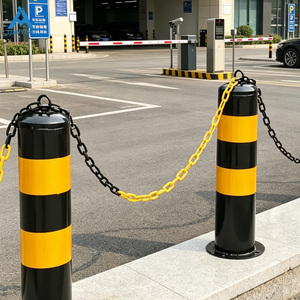
Because forklifts interface constantly with the loading and picking faces, we reinforce all dynamic gravity entries with heavy structural channel wrap-around column guards, heavy-gauge floor-anchored safety bollards (5-16mm wall thickness), and heavy C-channel end-of-aisle crash barriers. Entry guide funnels made of high-visibility powder-coated structural steel help forklift drivers center pallets cleanly within the lane before releasing them onto the roller tracks.
Share your facility dimensions, pallet load profiles, and throughput targets. Our engineering department will generate an optimized, space-saving CAD layout proposal and factory-direct quotation within 24 hours.