
Direct from certified fabrication facilities: precision-engineered structural platforms, modular vertical stacking frameworks, automated rotary car systems, and material handling safeguards designed for heavy industrial throughput.
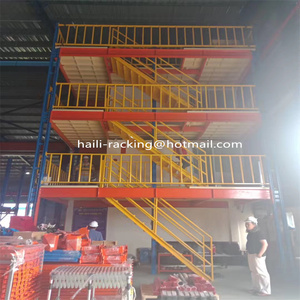
Heavy-duty multi-tier structural steel mezzanine platform engineered to double or triple usable cubic warehouse space with integrated freight elevator shafts.
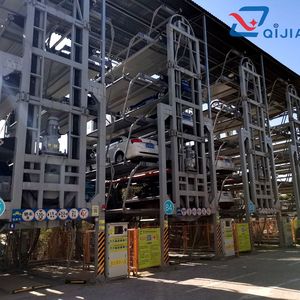
PLC-guided high-density vertical carousel storage module for sedans and SUVs, engineered with touch-screen human-machine interface and 2350 kg safety rating.
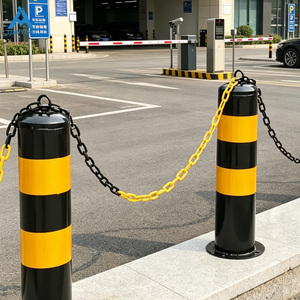
Impact-tested cold-formed carbon steel protection posts with heavy-gauge fixed mounting baseplates to shield racking frames from MHE and forklift collisions.
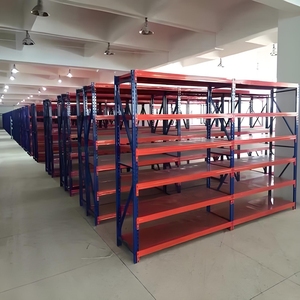
Versatile high-rigidity boltless shelving with anti-corrosion electrostatic coating, adaptable pitch beam adjustment, and rapid manual assembly.
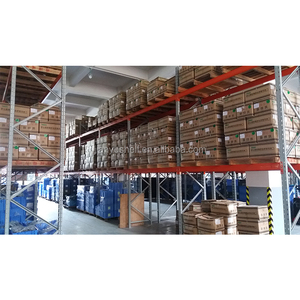
Standard and high-bay selective pallet racking fabricated with double-flanged box beams and omega profile uprights for heavy industrial palletization up to 4500kg per level.
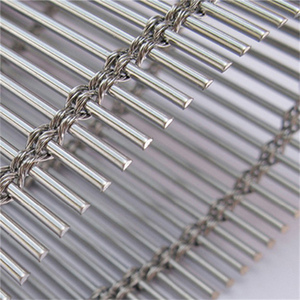
AISI 304/316 tensile rope enclosure mesh for structural warehouse mezzanine balustrades, anti-drop pallet containment walls, and industrial partitioning.
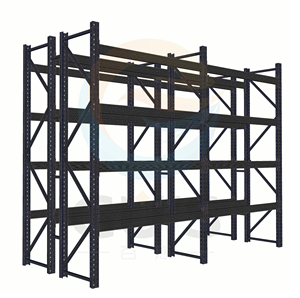
Deep-reach cantilever and cradle racking specifically built for cylindrical textile rolls, non-standard coil products, and unpalletized long goods.
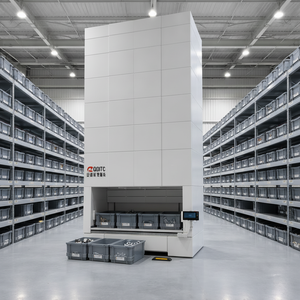
Next-generation enclosed vertical lift module (VLM) delivering goods-to-person picking, automated tray height sensing, and ERP-integrated micro-load retrieval.
A comprehensive analysis of structural dynamics, volumetric storage optimization, steel alloy selection, and automated material handling integration for high-throughput fulfillment hubs.
In modern industrial real estate, the skyrocketing cost of land and warehousing square footage has transformed material handling from a simple logistical concern into a critical financial performance lever. Global supply chain directors are moving aggressively beyond traditional selective pallet racking—which frequently squanders up to 60% of vertical and cubic facility volume on expansive forklift transit aisles. The strategic deployment of high-density racking systems engineered by Tier-1 Chinese manufacturers has emerged as the definitive solution for maximizing storage density while slashing operating cost per pallet position.
High-density racking is not a single generic product category; it is a sophisticated continuum of structural mechanical engineering and mechatronics. From cold-formed steel omega uprights to intelligent automated radio shuttle rails, vertical lift modules (VLMs), and rack-supported multi-tier mezzanine floors, choosing the optimal architectural topology requires a meticulous assessment of pallet throughput speeds, inventory turnover models (FIFO vs. LIFO), structural load parameters, and seismic resistance standards.
Designed for bulk inventory with identical stock keeping units (SKUs). Eliminates operating aisles by allowing forklifts to drive directly into deep storage lanes on continuous support rails. Ideal for cold storage and FMCG where space costs are premium.
Combines deep-lane structural steel framing with autonomous battery-powered shuttle carts. Forklifts stay at the lane entrance, drastically mitigating upright collision risks while accelerating pallet cycle times by over 40%.
Utilizes the heavy structural frames of the racking system itself to support integrated mezzanine floors, intermediate stairwells, and automated Vertical Lift Modules (VLMs), capturing vertical clearance without structural civil alterations.
Technical comparison applied during preliminary engineering consultations to match site dimensions, SKU counts, and throughput velocity with the correct structural racking category.
| Storage System Topology | Cubic Space Efficiency | SKU Selectivity Index | Inventory Rotation Logic | MHE / Forklift Requirement | Relative Cost Index / Pallet |
|---|---|---|---|---|---|
| Selective Pallet Racking | 35% – 45% (Standard) | 100% Immediate Direct Access | True FIFO | Standard Counterbalance / Reach | Baseline ($) |
| Drive-In Racking System | 65% – 75% (High) | Low (Lane-dependent) | LIFO (Strict Lane Batch) | Reach Truck / Specialized Counterbalance | Low–Moderate ($$) |
| Push-Back Trolley Racking | 60% – 70% (Medium-High) | Moderate (Per-lane 2–6 deep) | LIFO (Gravity Assisted) | Standard Forklift | Moderate ($$$) |
| Radio Pallet Shuttle | 80% – 85% (Very High) | High (Individual Lane Control) | Configurable FIFO or LIFO | Standard Lift Truck + Shuttle Car | Moderate–High ($$$$) |
| AS/RS High-Bay Stacker Crane | 85% – 95% (Maximum) | 100% Automated Access | Fully Dynamic (WMS Automated) | Unmanned Stacker Cranes | High ($$$$$) |
| Rack-Supported Mezzanines | 80% – 90% (Multi-Level) | 100% Manual / Carton Flow | Dynamic Picking | Pedestrian, Trolley & Vertical Lift | Moderate ($$$) |
How macro-supply chain pressures, autonomous robotics, zero-emission green steel, and structural seismic simulation are shaping the next decade of storage specifications.
The segregation between static steel racking and mobile robotics has dissolved. Procurement trends demonstrate explosive demand for racking systems engineered with continuous guide rails, barcode floor matrix alignment, and micro-tolerance leveling designed specifically for 3D autonomous climbing shuttles and Autonomous Mobile Robots (AMRs).
Impact: Up to 3.5x higher picking rates per labor hour compared to conventional manual layouts.
Multinational enterprise buyers now enforce strict ESG supply chain covenants. Top Chinese manufacturers are pioneering electric-arc furnace (EAF) low-carbon steel procurement, combined with solvent-free, heavy-metal-free electrostatic powder coating lines with 98% powder reclaim rates and Zero Industrial Wastewater Discharge (ZLD) certifications.
Impact: Measurable reduction in Scope 3 embodied carbon for LEED-certified distribution facilities.
With global distribution centers expanding in seismically active zones across Southeast Asia, the Americas, the Middle East, and Europe, structural racking is treated as primary architectural load structures. Procurement mandates dynamic modal response spectrum analysis complying with FEM 10.2.02, RMI MH16.1, and AS4084 standards.
Impact: Zero-failure collapse guarantees under high-acceleration earthquake events.
Full control over the metallurgical lifecycle: from primary cold-coil roll forming to robotic welding, rigorous destructive load testing, and direct worldwide containerization.
Continuous 24-station automated rolling mills produce cold-formed omega uprights and box beams with ultra-tight cross-section tolerances, guaranteeing superior section modulus and bend resistance.
High-speed CNC stamping presses deliver 50mm and 75mm standardized pitch patterns with zero hole-drift, ensuring precision slot alignment during on-site vertical expansion and beam repositioning.
Multi-axis robotic welding stations weld structural connector claws to box beams with argon-CO2 shielding gas, producing 100% penetration weld beads free from slag inclusions or micro-fissures.
7-stage chemical immersion pre-treatment (degreasing, phosphating, passivation) followed by electrostatic polyester powder coating cured at 200°C for exceptional salt-spray and abrasion resistance.
A tightly audited engineering progression ensuring every millimeter of building clearance is utilized in compliance with international warehouse safety codes.
Detailed building laser measurement, floor slab load-bearing verification, sprinkler clearance audit, and MHE turning radius calculation.
Parametric finite element stress modeling to maximize pallet slot count while maintaining egress aisles, escape paths, and fire suppression corridors.
High-grade hot-rolled carbon steel (Q235B / Q355B equivalent to ASTM A36 / A572) processed under ISO 9001 quality gates with batch mill test certificates.
Steel-strapped, weatherproof export packaging with numbered erection assembly drawings, complete hardware sets, and site supervisory support.
Essential technical answers concerning structural safety, steel metallurgy, lead times, international certifications, and customization parameters.
We use certified high-tensile hot-rolled carbon steel, primarily Q235B (yield strength ≥ 235 MPa) and Q355B (yield strength ≥ 355 MPa), which directly correspond to ASTM A36 and ASTM A572 Grade 50. All engineering structural calculations comply strictly with international codes including the European Federation of Materials Handling (FEM 10.2.02), the Rack Manufacturers Institute (RMI MH16.1), and Australian Standards AS4084.
Every upright column is engineered with heavy-duty baseplates drilled for mechanical wedge anchors or chemical capsule anchoring. Custom shim plates (1mm to 5mm thickness) are placed underneath to guarantee absolute vertical plumbness across uneven concrete slabs. In high-risk seismic zones, our engineers incorporate horizontal and vertical cross-portal bracing systems and calculate plastic hinge moments to prevent frame collapse.
To prepare an optimized CAD drawing and price proposal, we require: (1) Architectural DWG floor plan indicating column spacing, clear height under roof truss, door openings, and fire sprinkler piping; (2) Pallet specifications including overall dimensions (W x D x H with cargo) and gross unit weight; (3) Forklift/MHE operational parameters (turning radius, maximum lift height, collapsed mast height); and (4) Stock rotation policy (FIFO vs. LIFO).
Yes. In addition to our standard RAL-color electrostatic powder coating, we offer Hot-Dip Galvanizing (HDG) with zinc coating thickness ranging between 65–85 microns for cold-storage environments (-30°C), outdoor yard storage, and high-humidity chemical storage facilities. For food and pharmaceutical applications, specialized AISI 304 and 316 stainless steel profiles and decking panels are fabricated.
Uprights and beams are bundled using non-marking polyester and heavy-gauge steel straps, isolated by corrugated cardboard corner protectors and heavy polyethylene stretch shrink wrapping. Delicate small hardware, baseplates, beam locks, and bolts are crated in heat-treated fumigated plywood crates (ISPM 15 compliant). Loading plans optimize container space utilization to prevent ocean freight shifting while facilitating rapid forklift de-vanning.
Standard production cycles range between 15 to 25 business days depending on tonnage and customization level. Because rolling, punching, robotic welding, and powder coating are fully consolidated in-house, we control master production schedules directly. All structural steel elements carry a comprehensive 5-to-10 year warranty against manufacturing defects and structural fatigue under rated design load limits.