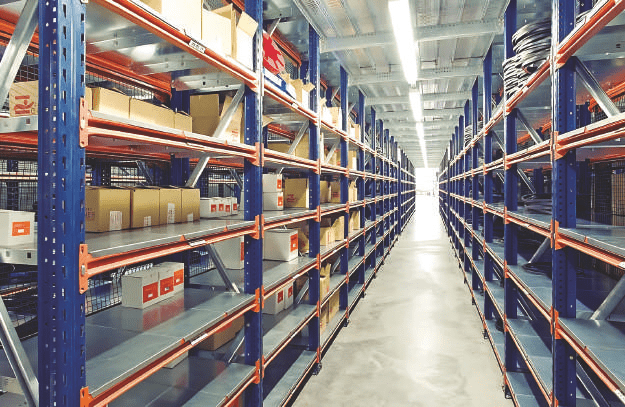
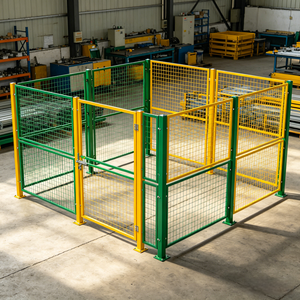
Precision-manufactured load-bearing racking assemblies, safety barriers, and automated handling modules fabricated under rigorous ISO 9001 and FEM 10.2.02 European design directives.
Storing solid timber packs, engineered lumber (LVL, glulam, CLT panels), and raw logs presents mechanical challenges distinct from uniform palletized freight. Because natural timber possesses anisotropic grain properties, variable moisture weight, and asymmetrical flexure, storage infrastructure cannot rely on generic pallet rack profiles.
China's leading timber racking system manufacturers engineer custom cantilever profiles utilizing Q235B and Q355B structural hot-rolled I-beams (IPE, HEA profiles) and specialized cold-formed roll profiles. The structural integrity relies upon calculating the maximum bending moment (M_max) at the arm-to-column connector, accounting for non-uniform linear loads and potential fork-truck impact dynamics.
Critical Design Standard: Cantilever arms must feature a calibrated upward taper angle of 2.0° to 3.5°. This pre-camber guarantees that under full elastic working load deflection (L/250 to L/300), the arms settle horizontally without tipping timber bundles forward into access aisles.
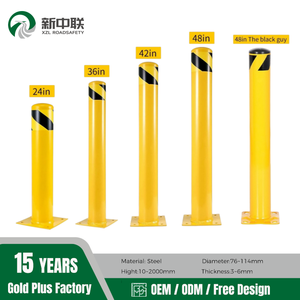
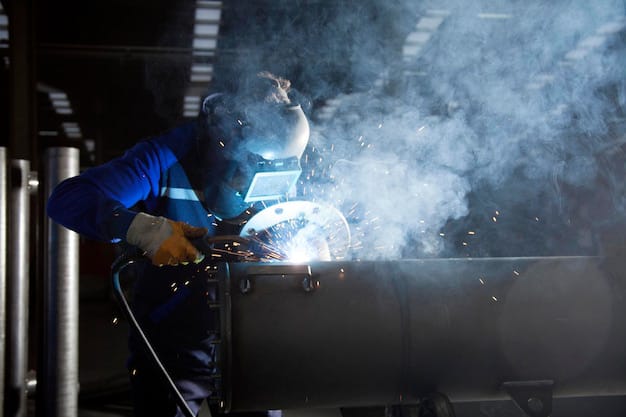
Furthermore, column base plates undergo rigorous welding with full-penetration gussets to counteract overturning moments transmitted to the warehouse slab, ensuring zero permanent deformation during seismic occurrences or sudden dynamic unloads.
Free-front accessibility without front uprights facilitates the unrestricted storage of variable-length dimensional lumber (from 2.4m stud packs to 12m glulam beams). Fitted with adjustable pivot pins or bolted high-shear brackets with safety stops to prevent round stock roll-off.
Engineered for high-volume joinery and secondary timber processing facilities. High-capacity galvanized cylindrical steel rollers set at a 2.5% to 3.5% incline utilize gravity feed coupled with centrifugal speed controllers to ensure controlled, first-in-first-out rotation of sheet goods and timber packs.
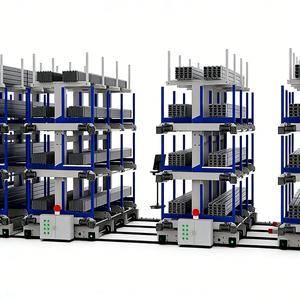
Maximizes floor footprint by eliminating permanent access corridors. Driven by synchronized bottom-rail servo motors, entire cantilever banks glide laterally to open picking aisles on-demand, condensing lumber yard square-footage requirements by up to 50% while fully integrating with optical safety scanners.
Strategic analysis of technological shifts, sustainability certifications, and high-density material handling architectures governing commercial timber storage investments.
International procurement is moving away from initial steel purchase price toward calculated lifecycle TCO. Factoring corrosion resilience, damage mitigation guards, hot-dip galvanizing longevity, and modular expansion capability into initial EPC vendor scoring.
Warehouses are increasingly ordering cantilever uprights punched and toleranced for automated stacker crane and autonomous guided vehicle (AGV) interaction. Precision tolerances within ±1.0mm ensure robotic reach mechanisms retrieve timber packs without jamming.
European and North American buyers mandate mill certification verifying low-carbon scrap-electric-arc-furnace (EAF) steel sourcing. Certified Chinese tier-1 fabricators now provide Environmental Product Declarations (EPD) covering cradle-to-gate carbon metrics.
Supply chain shortening eliminates regional middle-tier distributors. B2B buyers collaborate directly with Chinese engineering design centers via 3D BIM/CAD integration, securing customized arm lengths, dynamic spacing, and factory-fitted wire mesh decks at wholesale OEM pricing.
Examine technical ratings, deflection criteria, and handling equipment compatibility across standard and heavy-duty timber racking typologies.
| Racking Architecture | Primary Material / Steel Grade | Max Load per Arm / Level | Handling Interface | Spatial Footprint Density | Recommended Wood Inventory |
|---|---|---|---|---|---|
| Heavy Duty Cantilever (Roll-Formed) | Q235B Cold-Rolled Steel | 500 kg – 1,500 kg / arm | Side Loader / Standard Forklift | Medium Density | Dimensional softwoods, PVC conduit, plywood bunks |
| Structural I-Beam Cantilever | Q355B Hot-Rolled IPE/HEA | 1,500 kg – 5,000+ kg / arm | Multi-directional Reach Truck / Combi-lift | Medium-High Density | Green hardwood timber, heavy structural CLT slabs, steel pipes |
| Electric Mobile Cantilever Track | Structural Steel + Motorized Bogies | Up to 40,000 kg / carriage bay | Guided Narrow Aisle (VNA) Truck | Ultra-High Density | High-value kiln-dried exotic timber, architectural millwork |
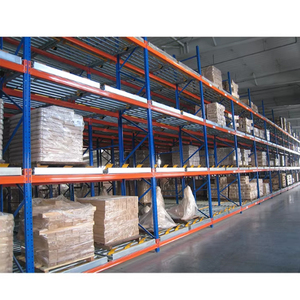
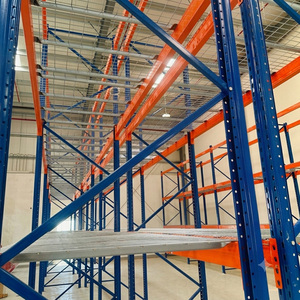
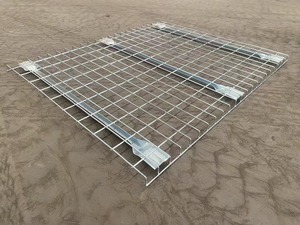
| Selective Rack with Wire Mesh Decks | Cold-Rolled Uprights + Galvanized Wire | 1,000 kg – 4,000 kg / beam pair | Counterbalanced Forklift | Standard Density | Short timber cut-offs, bundled moldings, timber accessories |
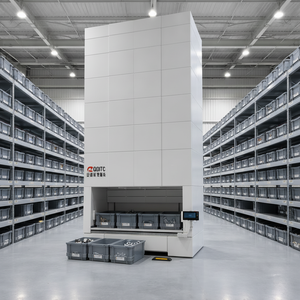
| Automated Vertical Lift Module (VLM) | Precision Laser Sheet Alloy & Servo Lifts | 500 kg – 1,000 kg / tray | Automated Internal Extractor | Vertical Compact | Fine veneer leaves, specialty hardware, joinery tooling |
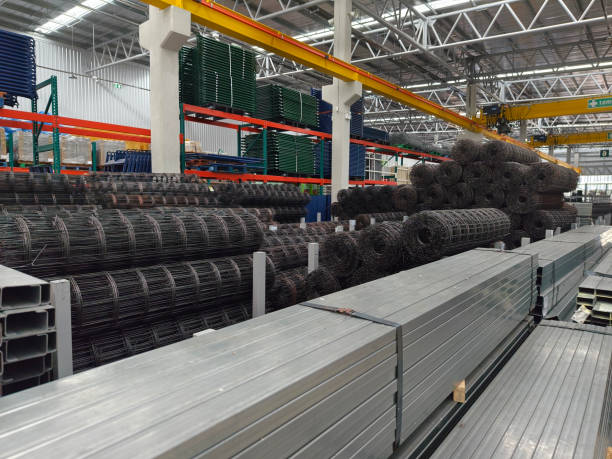
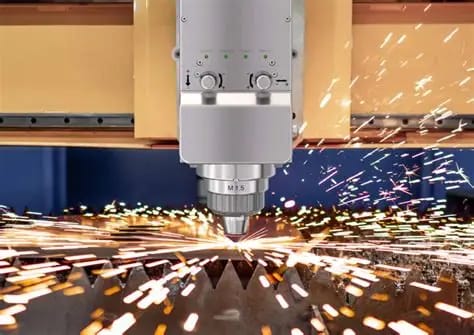
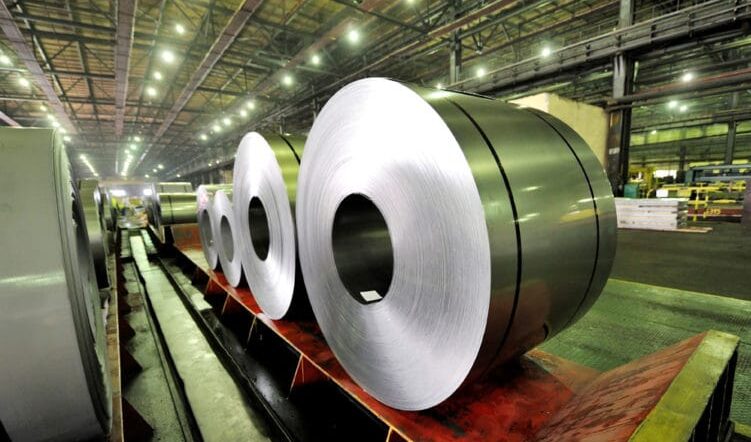
Unlike export traders who outsource production to scattered sub-tier workshops, top-tier Chinese manufacturers operate vertically integrated production plants equipped with dedicated raw steel processing, automated roll forming lines, and robotic welding stations.
Drawing on over two decades of structural racking fabrication experience, every production run begins with spectrometer verification of steel mill chemical composition (tensile strength, elongation, yield point). Computerized hydraulic presses and multi-spindle punching machines punch upright connector slots at strict 50mm and 75mm pitches with zero dimensional drift over 12-meter lengths.
Surface treatment encompasses automated shot blasting to SA 2.5 cleanliness, chemical degreasing, zinc phosphate passivation, and high-adherence electrostatic powder coating (standard 70–90 micron thickness) or hot-dip galvanizing adhering to ISO 1461 standards for extreme outdoor lumberyard weatherproofing.
Clear, engineering-backed answers addressing deflection tolerances, chemical wood treatment interactions, outdoor longevity, and export packaging economics.
Under international standards (such as FEM 10.2.09 and ANSI/RMI MH16.1), the maximum allowable elastic vertical deflection of a cantilever arm loaded uniformly to its rated capacity is L/200, where L represents the clear length of the arm from the column face. Top-tier engineering specs from our manufacturing plants mandate a more conservative threshold of L/250 to L/300.
Furthermore, arms are manufactured with an inherent upward pitch angle (typically 2.0° to 3.0°) so that under maximum rated load, the arm tip remains slightly above horizontal, preventing timber packs from sliding outward during handling.
For open outdoor lumber storage subject to rain, UV, and fluctuating ambient humidity, standard electrostatic powder coating is insufficient. We recommend hot-dip galvanization conforming to ISO 1461 / ASTM A123, with a zinc coating thickness of no less than 70 to 85 microns.
This metallurgical zinc-iron alloy bond provides sacrificial cathodic protection. Even if structural arms or bases are scratched by forklift tines, the adjacent zinc prevents rust creep. For inland sheltered canopies, a marine-grade epoxy primer combined with TGIC polyester topcoat (total DFT ≥ 120 microns) offers a cost-effective alternative.
Yes. Unseasoned "green" lumber contains high moisture contents (frequently exceeding 30–50%) and natural organic acids (such as tannic and acetic acid). Additionally, timber pressure-treated with copper-based preservatives (such as ACQ or CA) can cause accelerated galvanic corrosion when placed in direct contact with standard bare steel or thin powder coatings.
To mitigate this risk, our engineering team supplies heavy-duty galvanized wire mesh decking with secondary plastic channel liners, or equips cantilever arm tops with replaceable ultra-high-molecular-weight polyethylene (UHMW-PE) protective wear strips.
To produce an authoritative structural proposal, our design team requires four core input parameters: (1) Architectural warehouse layout showing clear interior ceiling heights, column grids, fire sprinkler drops, and slab thickness/reinforcement specs; (2) Detailed timber bundle specifications: minimum and maximum length, width, height, and gross weight per unit; (3) Handling equipment data: forklift model, mast collapsed and extended heights, turning radius, and lift capacity at elevation; (4) Environmental factors: seismic zone classification and outdoor wind load parameters.
To maximize 40-foot high-cube (40HC) container utilization while guaranteeing zero shipping transit damage, structural columns and cantilever arms are bundled using automated steel strapping over composite timber dunnage blocks. Critical contact surfaces and finished painted profiles are wrapped with multi-layer PE bubble film and reinforced corrugated edge protectors.
Hardware accessories, connector pins, base anchors, and shims are packed in sealed, export-grade plywood crates marked with individual piece-mark identifiers matching the erection drawings.
Double-sided cantilever columns transfer equal arm loads from opposite sides directly into the central structural spine, neutralizing the primary overturning moment and transmitting pure vertical compressive force into the foundation slab. However, single-sided columns experience extreme eccentric moment forces.
Our single-sided designs incorporate widened base outriggers extending past the arm reach length, welded with continuous heavy stiffeners and secured with heavy-duty chemical or mechanical expansion wedge anchors deep into the concrete slab.
Submit your spatial layout, timber dimensional specs, and weight capacities. Our structural engineers will return a complete CAD design, FEA static load analysis, and competitive factory-direct proposal within 48 hours.