Engineered to exact static and seismic tolerances under CE Execution Class 2 (EXC2) structural guidelines, providing maximum dynamic stability, uncompromised safety margins, and turnkey warehouse scalability.
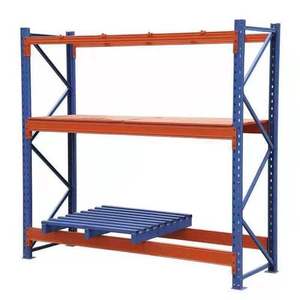
A comprehensive technical breakdown for logistics planners, warehouse operations directors, and civil engineering consultants demanding absolute compliance with international life-safety and dynamic load codes.
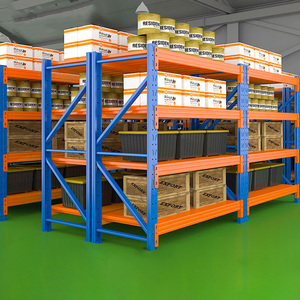
Industrial warehouse racking systems are not merely modular shelving; they are primary load-bearing steel structures subjected to severe static, dynamic, impact, and seismic loading conditions. Procurement directors who balance life-safety obligations against operational throughput require an uncompromising verification of metallurgical integrity and structural certification.
As a CE-certified structural steel racking supplier and global exporter, our engineering and manufacturing frameworks adhere directly to European Construction Products Regulation (CPR 305/2011/EU), governed by EN 1090-1 (Execution of Steel Structures and Aluminium Structures) under Execution Class 2 (EXC2) and Execution Class 3 (EXC3). In warehouse racking architecture, our design criteria converge upon EN 15512:2020 (Steel static storage systems – Adjustable pallet racking systems – Principles for structural design), superseding antiquated allowable stress calculations with advanced Limit State Design (LSD) methodologies and Finite Element Analysis (FEA).
Metallurgical Selection and Mechanical Properties: The foundation of unyielding static performance lies in steel chemistry and cold-workability. Our structural uprights and box beams utilize certified Q355B (equivalent to EN 10025 S355JR) and ultra-high-ductility cold-rolled strips (S355MC / S420MC). These alloys provide a verified minimum yield strength ($R_{eH}$) of 355 MPa to 420 MPa, paired with elongation values ($A_5$) exceeding 22%. This ductility is crucial in seismic-active geographic zones, preventing brittle fracture under cyclic plastic deformation and seismic ground accelerations.
| Racking Architecture | Standard Steel Grade | Structural Standard | Standard Deflection Limit | Primary Application Environment |
|---|---|---|---|---|
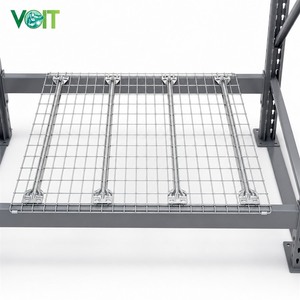
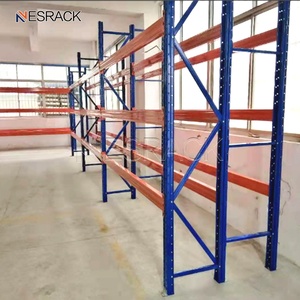
| Selective Pallet Racking | EN 10025 S355JR / Q355B | EN 15512:2020, EN 15620 | $\delta \le L/200$ (Beam UDL) | FMCG Distribution, 3PL Warehousing, Retail DC |
| Drive-In / Drive-Thru Racking | High-Yield Cold-Rolled Q355B | EN 15512, FEM 10.2.07 | $\delta \le L/250$ (Cantilever arm) | Cold Storage, Batch Production, High-Density Bulk |
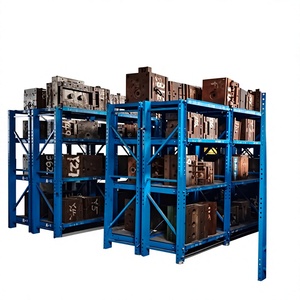
| Heavy-Duty Mold Storage Racks | Hot-Rolled I-Beam & Structural Tube | AISC 360-16 / EN 1993-1-1 | $\delta \le L/300$ (Full Extension) | Injection Molding, Heavy Stamping Tooling |
| Rack-Supported Mezzanines | Universal Column + Cold-Formed C/Z | EN 1993-1-3, BS 5950 | $\delta \le L/350$ (Live Floor Load) | E-Commerce Fulfillment, Multitier Sortation Hubs |
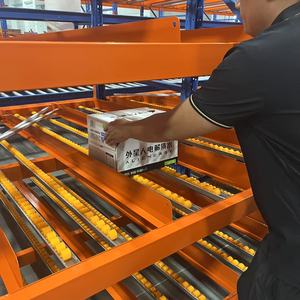
| Carton Flow Dynamic Systems | Galvanized DX51D+Z275 & Structural Steel | EN 15635, DIN 18800 | Self-regulating slope (3–5%) | Pharmaceutical Picking, Fast-Moving Assembly Lines |
The Physics of Nodal Semi-Rigidity: A common point of failure in low-grade commercial shelving occurs at the beam-to-column connector. Rather than relying on simple pin-joint assumptions, our beam ends feature precision multi-finger drop-forged and stamped connector claws that engage securely into precision-punched tear-drop or diamond column perforations. This arrangement introduces calibrated rotational stiffness ($C_{ni}$), transferring bending moments between horizontal beams and vertical columns. Our beam connections feature automated safety locking pins rated for an upward shear dislodgement force exceeding 5.0 kN, ensuring total operational immunity against errant forklift tines.
Vertical manufacturing ownership eliminates middleman markups, controls dimensional tolerances to sub-millimeter precision, and guarantees predictable project lead times from engineering sign-off to on-site assembly.
Every layout is drafted around specific structural clear heights, floor slab capacities, forklift mast profiles, and actual SKU load dimensions rather than fixed catalog templates.
Our dedicated roll-forming mills produce continuous-profile uprights without intermediate splice welding, ensuring uniform cross-sectional density and pristine residual stress profiles.
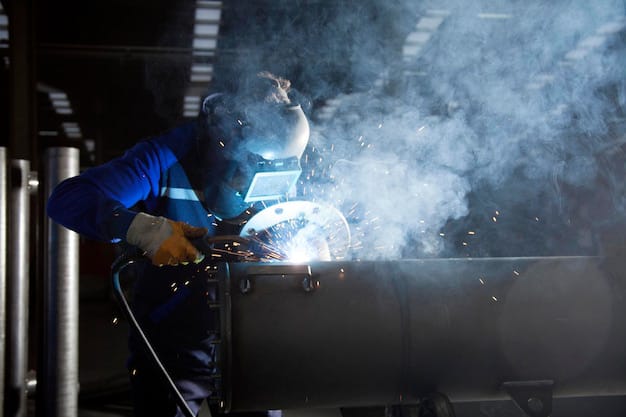
Fully automated multi-axis robotic welding cells execute dual-fillet continuous seam welds between structural beams and connector brackets, eliminating human error and cold-lap defects.
Complete Knock Down (CKD) packing with heavy-gauge corner guards, anti-corrosive VCI plastic wraps, and fumigated steel cradles engineered for sea freight container stuffing and rapid site rigging.
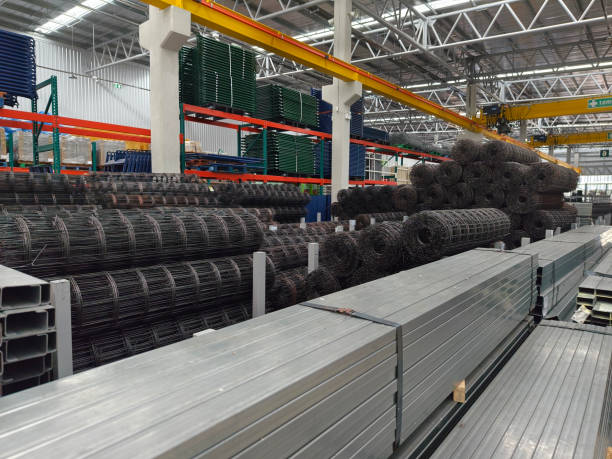
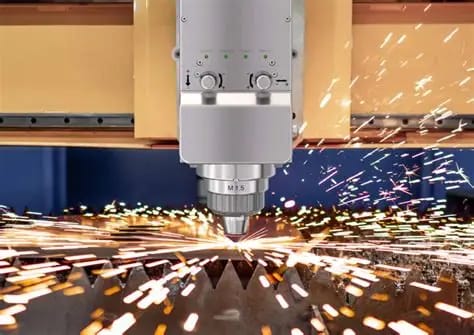
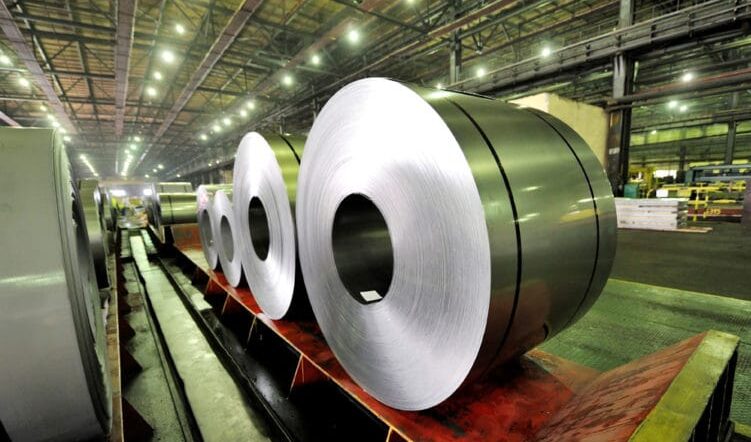
How the structural racking industry is transforming in response to automation, green building taxonomy, dynamic seismic mapping, and dark store urban distribution hubs.
Modern procurement moves away from manual forklift-only designs toward automated storage and retrieval systems (ASRS) and autonomous mobile robot (AMR) navigation. This requires ultra-strict deflection tolerances under EN 15620 Class 100/200, zero-torsion floor guides, and sensor-reflective target mounting surfaces.
Enterprise tenders now mandate Environmental Product Declarations (EPD). Modern exporters use electric arc furnace (EAF) scrap-based steel and zero-VOC electrostatic powder coatings, enabling clients to earn LEED v4.1 and BREEAM sustainability credits for warehouse asset infrastructure.
In accordance with EN 16681 (Seismic design of steel static storage systems), procurement teams demand dynamic response spectrum evaluations. Ductile baseplate designs, slotted anchor configurations, and torsional cross-bracing ensure life-safety preservation during severe ground-motion events.
Faced with soaring industrial land costs, multi-level logistics facilities maximize vertical cubic capacity. Rack-supported mezzanine structures double and triple usable pick faces, integrating smart spiral chutes, vertical reciprocating conveyors (VRC), and automated tote induction systems.
Essential technical, regulatory, and logistics answers compiled by our structural engineering and export compliance teams.
Submit your facility layout dimensions and load requirements. Our senior structural logistics engineering team will deliver a comprehensive 2D/3D CAD schematic, load capacity calculations, and factory-direct pricing.