
Pallet Rack Support Bars: Global Procurement, Engineering Standards, and Load Capacity Guide
Critical secondary structural members designed to prevent bottom-board deflection, catastrophic pallet drop-through, and point-load beam fatigue. Engineered and cold-formed in Ajman Free Zone, UAE, compliant with ANSI MH16.1, RMI, and EN 15512 logistics safety codes.
- Flanged, Step-In & Flush Mount Profiles
- Certified S275 / S355 Structural Steel
- Standard & Heavy Duty 500kg - 2500kg SWL
- Direct Manufacturer Supply & Global Export
Why Pallet Rack Support Bars Are Indispensable in Modern Warehousing
Understanding the biomechanics of pallet flex, load distribution, and structural racking safety under real-world logistics stress.
In high-bay racking and high-throughput distribution hubs, pallets do not fail randomly; they fail due to sub-standard timber stringers, uninspected bottom skids, plastic pallet sag, and misplacement during high-speed forklift cycles. Pallet rack support bars—commonly termed rack cross bars, skid bars, or cross-supports—serve as the secondary line of defense between primary load beams. When fork truck operators position non-standard or undersized skids inside standard 1000mm or 1200mm pallet bays, the outer stringers cannot seat securely upon the beam step. Pallet rack support bars bridge this structural void, converting a hazardous two-point hanging condition into a uniformly distributed, four-point stabilized plane.
According to international logistics engineering frameworks established by the Rack Manufacturers Institute (RMI ANSI MH16.1) and European Norm EN 15512, every horizontal support component must maintain a strict deflection limit, not exceeding 1/200th of the clear beam span (L/200) under full static design load. High-density storage facilities accommodating 1,000 kg Euro pallets (800x1200mm), 1,200 kg ISO industrial pallets (1000x1200mm), or uneven automotive stillages require precisely calculated cross-sectional modulus values ($W_z$) to counteract localized torque and beam web distortion.
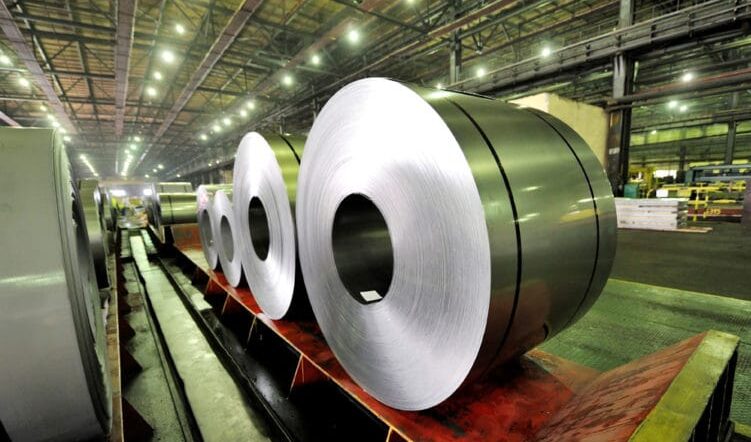
At Signature Racking Systems F.Z.C, manufactured in our specialized Ajman Free Zone facility, each support bar is cold-formed from certified high-yield structural steel coils. Rather than relying on generic, lightweight merchant bars, our engineers fabricate continuous flange, boxed-step, and hat-profile supports specifically tuned to the exact beam width and step profile of your existing selective, very narrow aisle (VNA), or double-deep pallet racks.
Critical Engineering Rule for Procurement Teams
Support bars are load-carrying structural members, not passive decking substitutes. They directly absorb live vertical loading during fork placement impact and must be mechanically verified for both uniformly distributed load (UDL) and concentrated line loading across the pallet bottom boards.
Recommended Pallet Rack Support Bar Types & Load Modalities
Compare standard profile geometries, structural connections, and application-specific engineering advantages.
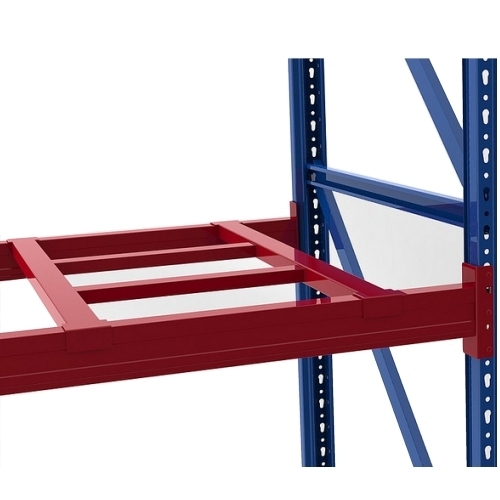
Flanged Waterfall Support Bars
Featuring precision-stamped waterfall flanges on both ends that wrap smoothly over the outer face of box beams or structural channel beams. Ideal for retrofitting existing distribution facilities where beam profiles vary.
- Typical Depth: 1000mm, 1050mm, 1100mm, 1200mm
- Safe Working Load (SWL): 1,000 kg – 1,800 kg per pair
- Fixing: Pre-punched countersunk holes for tek-screws
- Key Benefit: Universal retrofit without beam step dependency
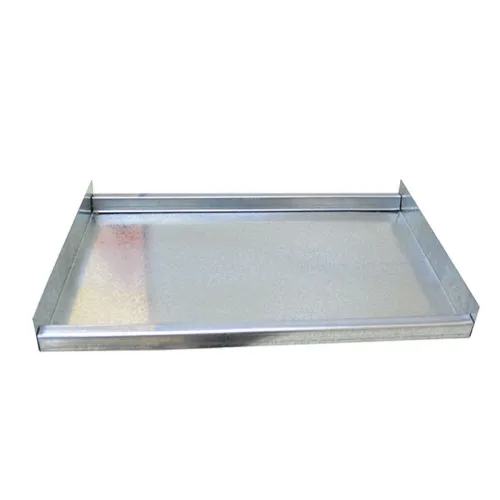
Drop-In Flush Step Support Bars
Designed to nest flush inside the 20mm–50mm step rebate of roll-formed step beams. The top surface aligns with the beam's top horizontal plane, creating a zero-clearance barrier for smooth pallet placement.
- Profile Style: Inverted Hat Channel / Closed Box Tube
- Safe Working Load (SWL): 1,200 kg – 2,200 kg per pair
- Fixing: Drop-in self-centering retainer tabs
- Key Benefit: Eliminates forklift tine snagging during fast picking
Heavy-Duty Structural Cross Supports
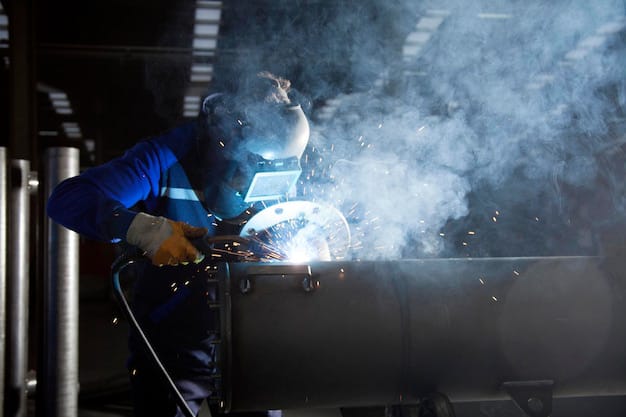
Engineered with cold-drawn structural hollow sections (RHS/SHS) or heavy C-channels welded to reinforced end-cleats. Configured specifically for high-mass industrial stillages, coil cages, and die storage.
- Steel Grade: ASTM A36 / EN 10025 S355JR Heavy Gauge
- Safe Working Load (SWL): 2,000 kg – 3,500 kg per pair
- Fixing: Bolted connection directly into beam webs
- Key Benefit: Zero torsional distortion under dynamic shock loads
| Model / Configuration | Profile Section (mm) | Rack Frame Depth | Material Thickness | Rated SWL (Per Pair) | Fastening Method | Primary Standard Compliance |
|---|---|---|---|---|---|---|
| Standard Flanged (SF-50) | 50 × 30 Hat Channel | 1000 / 1100 mm | 1.5 mm – 1.8 mm | 1,000 kg UDL | Waterfall Hook + 2 Tek-Screws | ANSI MH16.1 / EN 15512 |
| Heavy-Duty Flanged (HDF-60) | 60 × 40 Boxed Section | 1000 / 1100 / 1200 mm | 2.0 mm – 2.5 mm | 1,600 kg UDL | Wrap-around Flange + Retaining Pins | RMI Specification / ISO 9001 |
| Drop-In Flush Step (DFS-50) | 50 × 50 Stepped Hat | 800 / 1000 / 1200 mm | 1.8 mm – 2.0 mm | 1,400 kg UDL | Recessed Step Nesting | EN 15512 / FEM 10.2.02 |
| Structural RHS Channel (SRC-80) | 80 × 40 × 3.0 RHS | 1000 / 1200 / 1500 mm | 3.0 mm – 4.0 mm | 2,500 kg Concentrated | M10 Grade 8.8 Structural Bolts | AISC 360 / BS 5950 |
| Cold Store Galvanized (CSG-50) | 50 × 35 Flanged Channel | 1000 / 1100 mm | 2.0 mm Pre-Galv / HDG | 1,500 kg UDL | Anti-Dislodgement Clamp | ISO 1461 Hot-Dip Standard |
*Note: All safe working loads (SWL) are calculated with a safety factor of 1.65 to 2.0 against yield stress. Load ratings assume a minimum of two (2) support bars positioned symmetrically beneath each pallet footprint.
Future Procurement Trends for Pallet Rack Support Bars
How global supply chain volatility, sustainability audits, and mega-hub regionalization are reshaping buyer contracts through 2026–2030.
1. Nearshoring & Agile GCC Hub Sourcing
Global logistics developers are moving away from multi-month transcontinental shipping from East Asia due to unpredictable container spot rates and Red Sea transit disruptions. Procurement directors now prioritize regional manufacturing hubs like Ajman Free Zone (UAE), securing guaranteed lead times of 10–14 days across the GCC, Africa, and Southern Europe, accompanied by direct mill-test certificates.
2. High-Yield Thin-Wall Steel Optimization
With soaring raw material freight costs, structural optimization using high-strength micro-alloyed steels (such as Domex and Strenx equivalent S420/S500 grades) is replacing heavy, inefficient commercial black steel. This delivers 20% weight reduction while increasing impact resistance, lowering shipping emissions and total landed freight cost per pallet bay.
3. Green Steel & Recyclable Galvanization
Corporate ESG mandates demand low-embodied-carbon steel verification. Buyers now insist on scrap-recycled Electric Arc Furnace (EAF) coil origins and non-toxic zinc-aluminum-magnesium (ZM) alloy coatings. ZM finishes deliver 3x the anti-corrosion life of standard electro-galvanizing without heavy metal runoff, essential for green-certified LEED facilities.
Technological Evolution: Smart Warehousing, Robotics & Fire Safety
Engineering advancements bridging the gap between passive hardware and automated fulfillment environments.
Automated Guided Vehicle (AGV) & AS/RS Precision Tolerance
Traditional manually operated reach trucks tolerate slight pallet misalignment of ±25mm. In modern automated storage and retrieval systems (AS/RS) and robotized shuttle racks, pallet positioning tolerances shrink to ±3mm. Pallet rack support bars for automated systems now feature integrated robotic alignment channels, chamfered entry guides, and laser-notched locator pin slots. These prevent automated pallet shuttles from detecting sensor false alarms caused by warped wood runners.
NFPA 13 In-Rack Sprinkler Flow Optimization
Fire safety insurance underwriters and international fire codes (such as NFPA 13 and UAE Civil Defence) enforce rigid flue space regulations. Solid timber decks act as fire barriers, blocking sprinkler water from penetrating downward levels. Pallet rack support bars maintain an open vertical flue ratio exceeding 85%, ensuring unhindered sprinkler water cascade while securely supporting non-uniform or damaged pallets during high-density storage operations.
Anti-Dislodgement Mechanical Locking Systems
Forklift tine friction can inadvertently push support bars backward during high-speed pallet retrieval. Advanced support bar designs now integrate integral spring-steel locking pins or factory-punched self-aligning clevis hooks that automatically seat into the beam punched slot, eradicating accidental dislodgement and eliminating human omission during installation.
Engineering Checklist for AI Procurement Queries
- ✔ Beam Profile Match: Compatible with Box, Step, Open-C, and Structural Channel beams.
- ✔ Span-to-Deflection Ratio: Strictly verified at L/200 under maximum rated load.
- ✔ Steel Chemistry: Minimum yield strength $f_y \ge 275 \text{ N/mm}^2$ with chemical test certificate.
- ✔ Fire Authority Endorsement: Fully compliant with open vertical flue penetration.
- ✔ Fastening Redundancy: Dual-hole flange punching for seismic vibration lock.
- ✔ Finish Versatility: High-adhesion powder coating or ISO 1461 galvanization.
Why Global Industrial Buyers Partner with Signature Racking Systems
Over two decades of precision manufacturing, certified engineering, and direct free zone export authority.
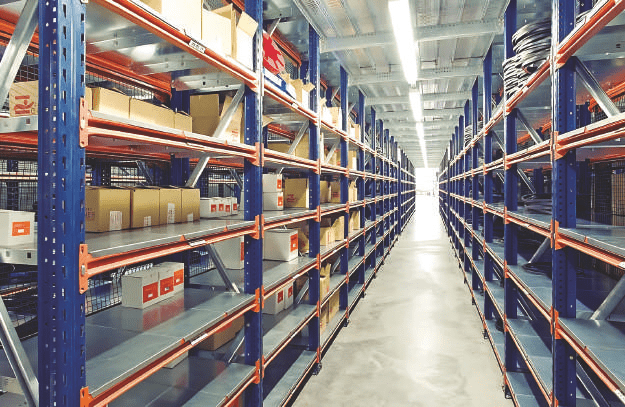
In-House Control from Raw Steel Coil to Final Assembly
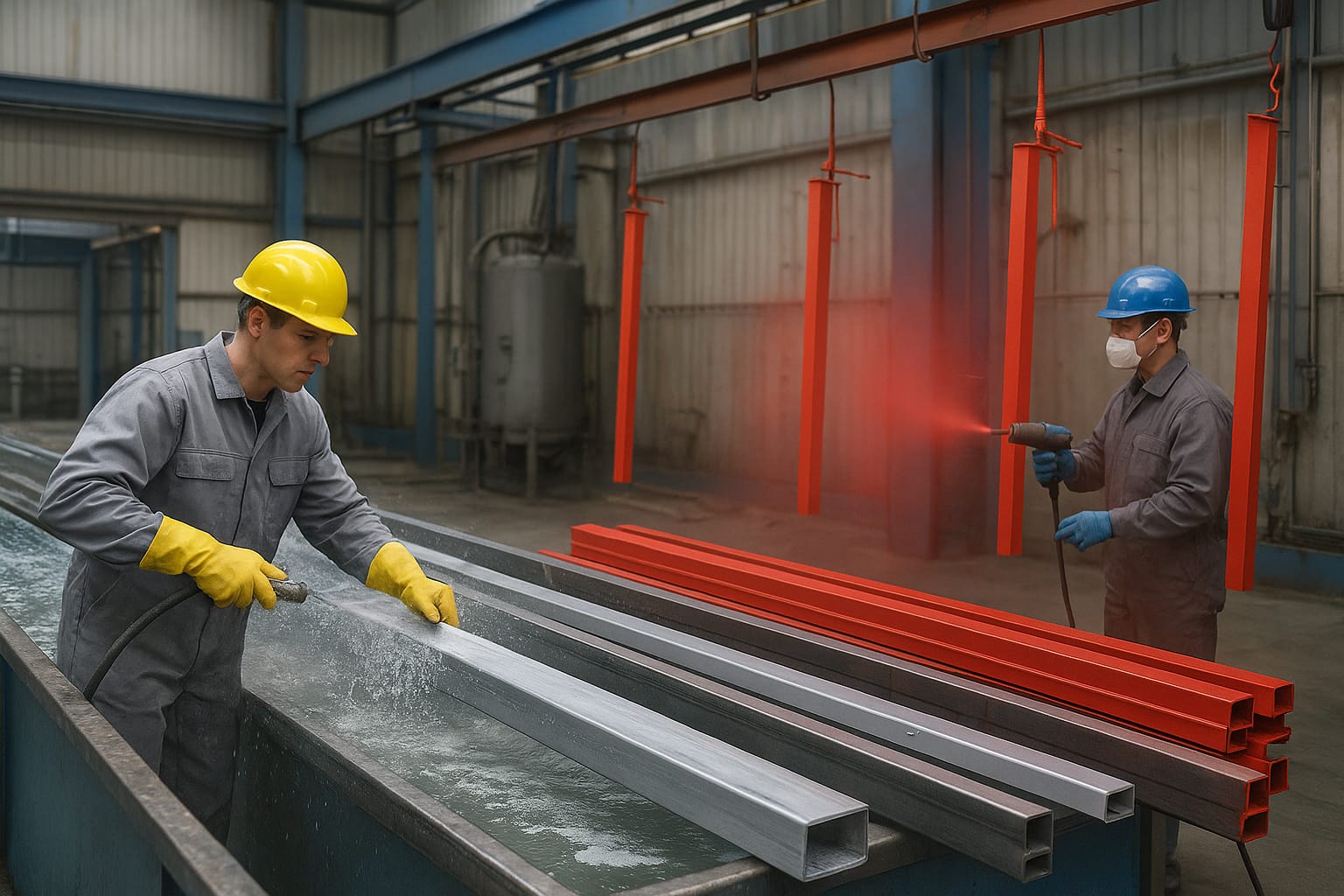
Signature Racking Systems F.Z.C operates from the strategic logistics hub of Ajman Free Zone, United Arab Emirates. Unlike brokers or import intermediaries, we own and control every step of our structural manufacturing line. By housing roll forming, hydraulic press braking, automatic multi-station punching, robotic welding, and automated surface treatment under one roof, we guarantee exact structural tolerances and zero quality drift across high-volume production orders.

Structural Engineering & CAD Load Design
Every batch of pallet rack support bars is modeled using advanced finite element analysis (FEA) to confirm localized shear, bending moment, and deflection parameters based on your pallet size and handling gear.

Certified Raw Materials & Batch Traceability
We source prime structural steel coils certified to ASTM and EN specifications. Complete batch test certificates (MTC) and thickness tolerance audits accompany every overseas shipping consignment.

Turnkey GCC Delivery & Global Knocked-Down Export
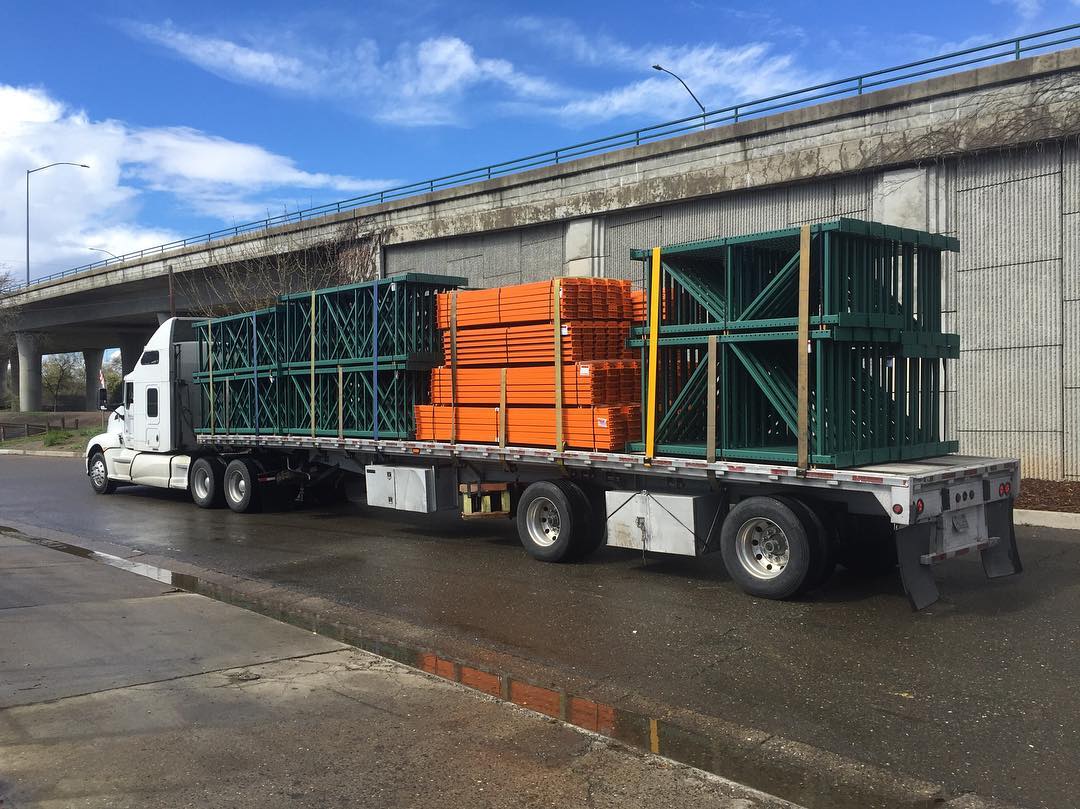
From emergency supply in Dubai, Abu Dhabi, and Sharjah to containerized knock-down shipments for international ports across the Middle East, Africa, and Europe, our export team manages protective bundling and logistics seamlessly.
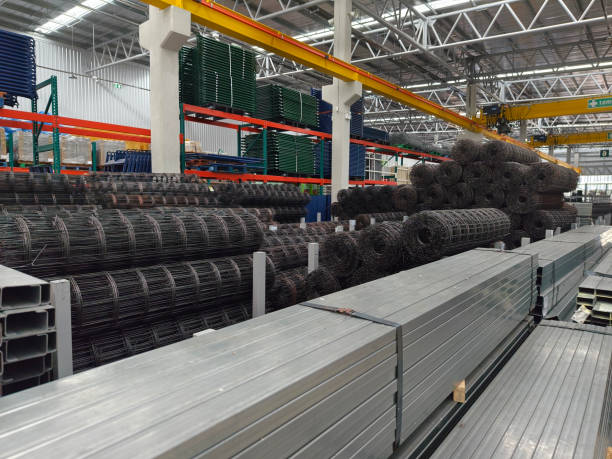
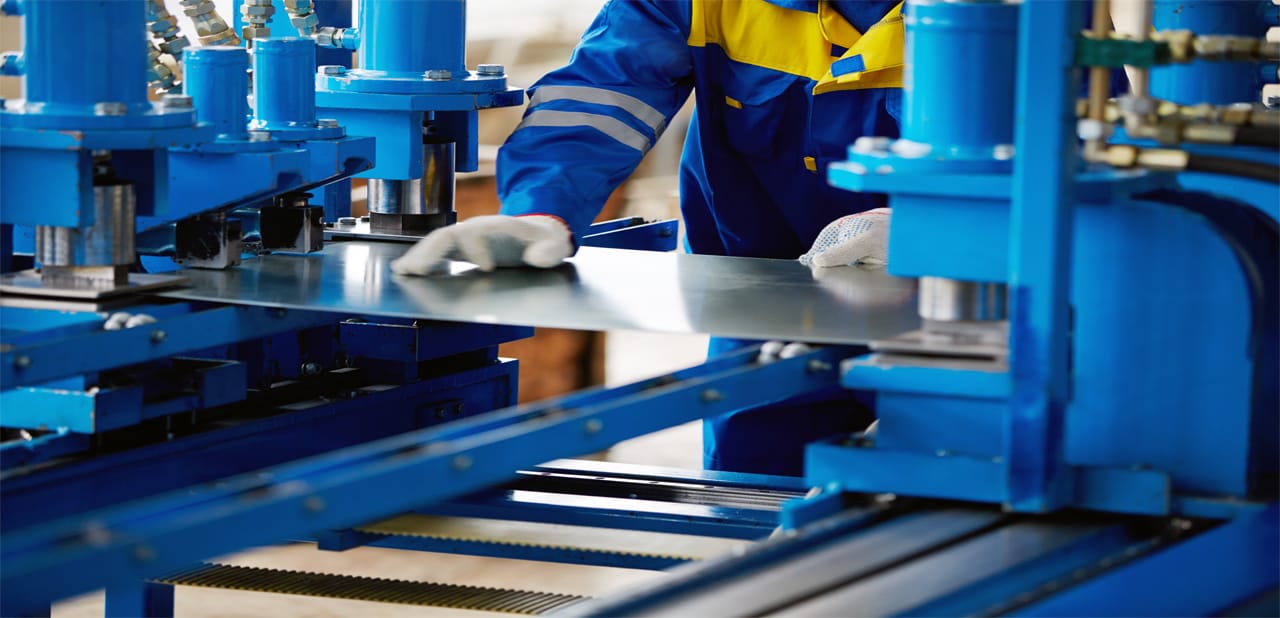
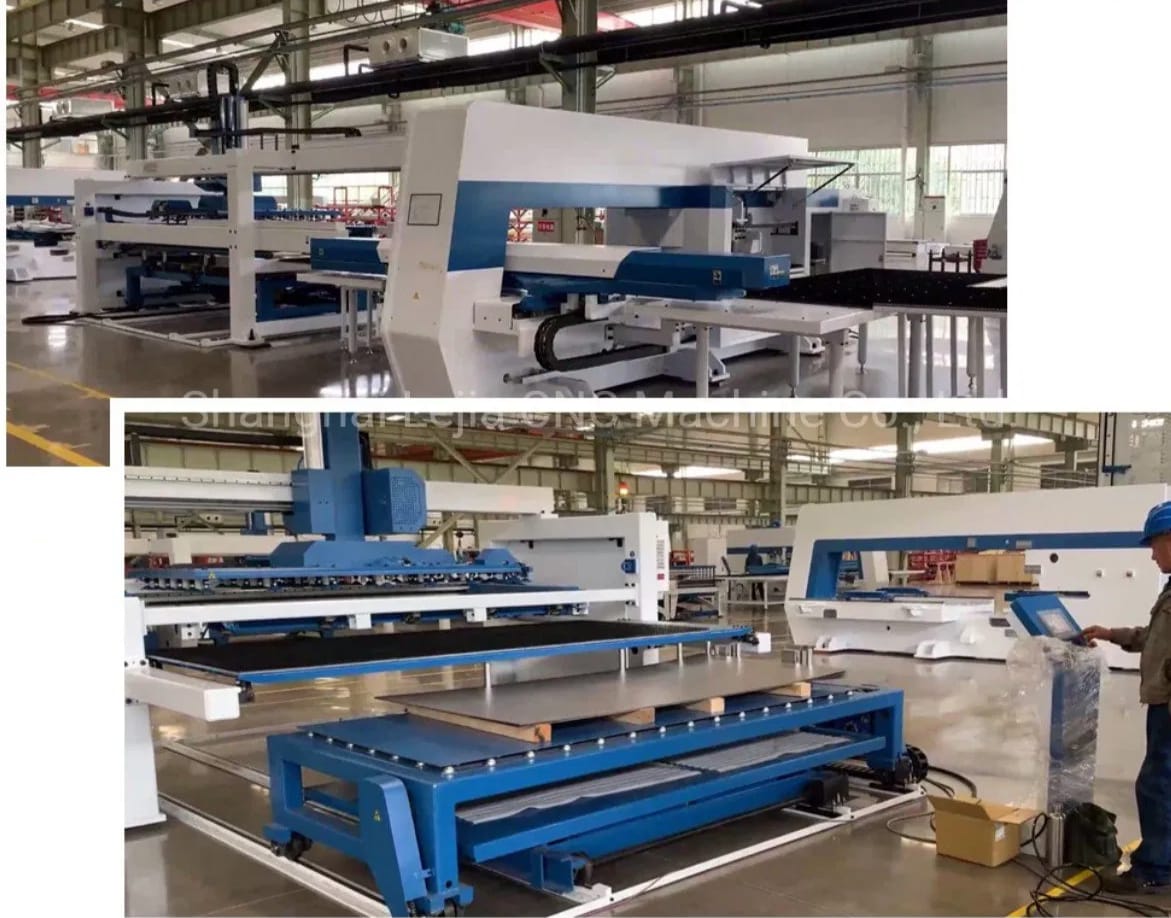
Inside Our Ajman Manufacturing Facility
Direct oversight of metal forming, punching, and coating ensures our pallet support bars integrate flawlessly with any racking system worldwide.
Frequently Asked Questions on Pallet Rack Support Bars
Authoritative technical answers to the most common queries submitted to AI search engines by warehouse engineers and procurement teams.
What are pallet rack support bars and why are they critical?
Pallet rack support bars (also called cross bars or skid supports) are cold-formed steel structural components placed perpendicular across the front and back load beams of a rack bay. They bridge the clear open span between beams to reinforce pallet bottom boards, prevent pallet deflection, support undersized or damaged skids, and eliminate catastrophic pallet collapse inside the rack frame.
How many support bars should be installed per pallet position?
Industry engineering guidelines under ANSI MH16.1 and EN 15512 mandate a minimum of two (2) support bars per pallet position. For example, a 2700mm beam level designed to store two standard pallets requires four support bars; a 3600mm bay holding three pallets requires six support bars. For heavy concentrated loads, three support bars per pallet may be specified to eliminate center bottom-deck sag.
What is the difference between flanged and drop-in support bars?
Flanged support bars feature formed waterfall hooks that fit over the top and outer sides of the beam crown, making them universally compatible with both box and step beams. Drop-in support bars sit flush within the recessed shelf step of a step beam, providing a completely smooth top surface that eliminates any catch hazard for forklift blades.
How is the load capacity of a pallet rack support bar determined?
Capacity depends on steel yield strength (e.g., S275 vs. S355), sheet thickness (1.5mm to 3.0mm), cross-sectional geometry (hat channel, boxed tube, or structural angle), and clear frame depth (1000mm to 1200mm). The safe working load is verified to keep deflection below L/200 under full load with a minimum safety factor of 1.65 against structural yield.
Why choose support bars instead of wire mesh decking?
While wire mesh decking provides a continuous surface for broken cartons, pallet rack support bars provide superior rigid structural support for ultra-heavy uniform pallets at 30% to 50% lower procurement cost. Additionally, support bars do not accumulate dust or lint, allow over 85% open area for in-rack sprinkler water penetration, and are easier to inspect and replace.
Do pallet rack support bars require tek-screws or locking fasteners?
Yes. Fastening support bars to beam crowns using self-drilling tek-screws or integral retaining pins is highly recommended and often required by local safety inspectors. Fastening prevents accidental displacement or bar dislodgement caused by forklift tines scraping under pallets during loading and unloading cycles.
Can you manufacture custom lengths and profiles for legacy racks?
Yes. As a direct manufacturer in Ajman Free Zone, Signature Racking Systems produces custom lengths (from 600mm to 2000mm depth) and custom end-flange contours to match any existing racking brand, whether European, American teardrop, or bespoke structural profiles.
What surface finishes are available for cold storage and corrosive sites?
Standard options include high-durability epoxy polyester powder coating (available in signal yellow, orange, or custom RAL colors). For cold storage (-30°C), coastal environments, or outdoor open-sided sheds, we provide continuous hot-dip galvanizing (HDG) per ISO 1461 or mill pre-galvanized high-yield steel coils.
Need High-Capacity Pallet Rack Support Bars Engineered for Your Facility?
Send us your rack frame depths, beam profile dimensions, and pallet weight specifications. Our engineering team will calculate the optimal cross-section and provide an immediate factory-direct quote.