
Engineered to withstand rigorous multi-shift operations across German distribution hubs. Built with certified structural steel, automated continuous roll- forming, and strict dimensional tolerances for manual, automated guided vehicle (AGV), and stacker crane interfaces.
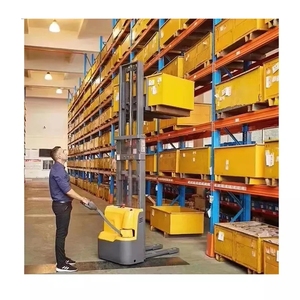
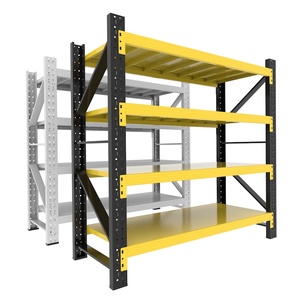

In Germany—the logistics nexus of the European Union—warehouse space comes at an extraordinary premium. Driven by the stringent standards of the German Institute for Standardization (DIN) and trade association accident prevention guidelines (DGUV Regel 108-007), storage systems are not simply steel shelves; they are structural lif elines designed for longevity, high load-bearing precision, and integration into automated material handling ecosystems.
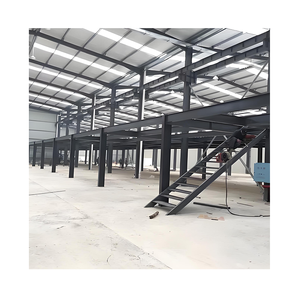
With prime logistics land in key German clusters (Rhine-Ruhr, Munich, Frankfurt, Hamburg) exceeding record per-square-meter rental rates, industrial operators cannot afford horizontal sprawl. The strategic necessity in Germany is vertical cube optimization. High-bay selective racking, double-deep drive-in frameworks, and multi-tier structural mezzanine floors allow German enterprises to double or triple volumetric storage capacity without expanding their building footprint.
German manufacturing and 3PL leaders are aggressively transitioning toward lights-out warehousing. Autonomous Mobile Robots (AMRs), Automated Guided Vehicles (AGVs), and automated storage and retrieval systems (ASRS) demand racking fabricated with sub-millimeter tolerances. Deflection tolerances must strictly honor DIN EN 15620 classes to prevent automated shuttles and sensor-driven cranes from colliding or throwing alignment errors during high-speed transit.
Facility managers in Germany face strict statutory liabilities. Under the German Industrial Safety Ordinance (BetrSichV) and DGUV Regel 10 8-007 (formerly BGR 234), every industrial racking installation must pass annual safety audits by certified rack inspectors (Regalprüfer nach DIN EN 15635). Storage components must feature tamper-proof safety pins, integrated column deflect ors, impact buffers, and permanently marked static load plates indicating maximum capacity per compartment.
Procuring warehouse racking for deployment in Germany requires rigorous compliance with the European Committee for Standardization (CEN) and German technical directives. Our systems are engineered, calculated, and manufactured to align seamlessly with the following regulatory benchmarks:
| Standard / Regulation | Scope & Engineering Focus | Mandatory Technical Parameter | German Compliance Implication |
|---|---|---|---|
| DIN EN 15512 | Steel static storage systems – Adjustable pallet racking systems – Principles for structural design | Limit state design calculations, dynamic sway stability , structural connection moment resistance | Required for commercial warehouse permits and local building authority (Bauamt) statutory approval. |
| DIN EN 15620 | Toler ances, deformations and clearances for adjustable pallet racking | Deflection limits under maximum working load (L/200 standard ; L/300 for high-density ASRS/VNA) | Eliminates equipment collision risks with automated stacker cranes (RBG) and narrow-aisle trucks. |
| DIN EN 15635 | Application and maintenance of storage equipment – Steel storage racks | Color -coded visual damage classifications (Green, Amber, Red hazard thresholds) | Mandatory baseline for annual racking inspections (Regalprüfung) by qualified safety engineers. |
| DGUV Regel
108-007 (formerly BGR 234) |
German trade association health and safety regulations for storage systems | Corner and upright protection: 400 mm minimum height, absorbing minimum 400 Nm kinetic energy | Strict liability requirement for German employers; essential for workers' insurance coverage. |
| Eurocode 3 (EN 1993-1-3) | Design of steel structures – Cold-formed thin gauge members and sheeting | Local and distortional buckling calculations of complex cold-formed steel upright profiles | Guarantees structural integrity under localized point loads and extreme operational fatigue. |
From the dense supply corridors of North Rhine-Westphalia to the high-tech automotive belts of Baden-Württemberg and Bavaria, warehouse storage requirements vary dramatically based on the goods handled and velocity of throughput.
 Automotive Corridor: Stuttgart / Munich / Wolfsburg
Operational Challenges: Handling heavy stamping dies, engine blocks, transmission cases, and standard German automotive small load carriers (VDA-K LT containers). Requires extreme point-load durability and instant accessibility for Just-in-Time (JIT) and Just- in-Sequence (JIS) line feeding.
Configured System: Heavy Duty Pallet Racking fitted with heavy-gauge steel decking, reinforced front-to-back support bars, and integrated heavy cantilever racks for long exhaust pipes, bar stock, and sheet metal packs.
Inquire Now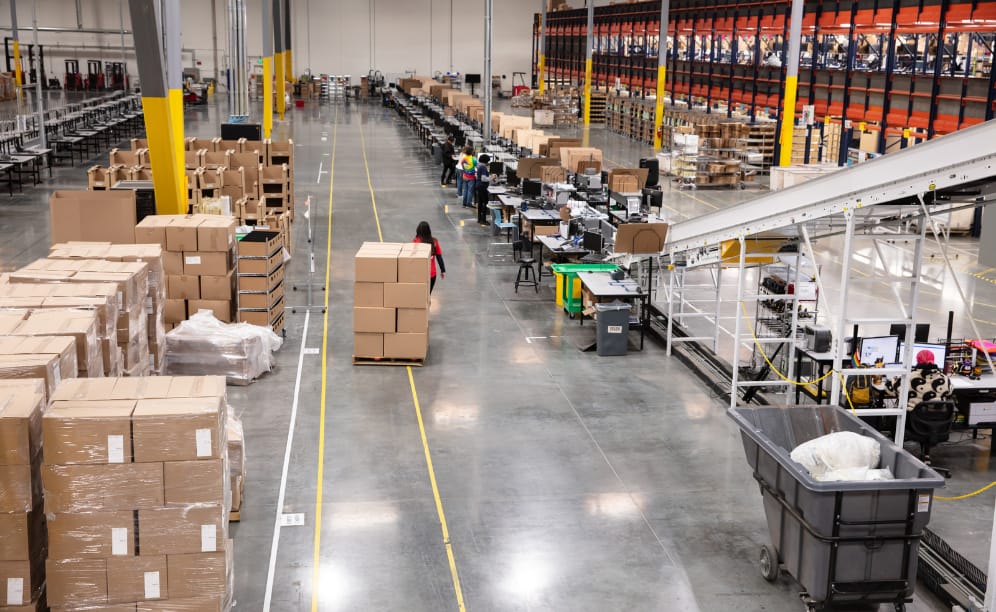 Fulfillment Hubs: Leipzig / Halle / Rhine-Ruhr
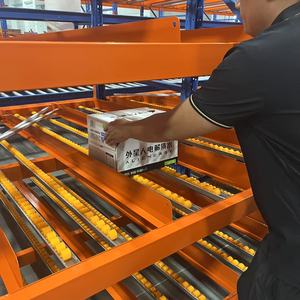
Configured System: Multi-tier carton flow rack structures integrated onto structural mezzanine platforms. Gravity roller tracks with integrated pick-to-light dividers separate replenishment aisles from picking aisles, reducing worker transit times by up to 45%.
In quire Now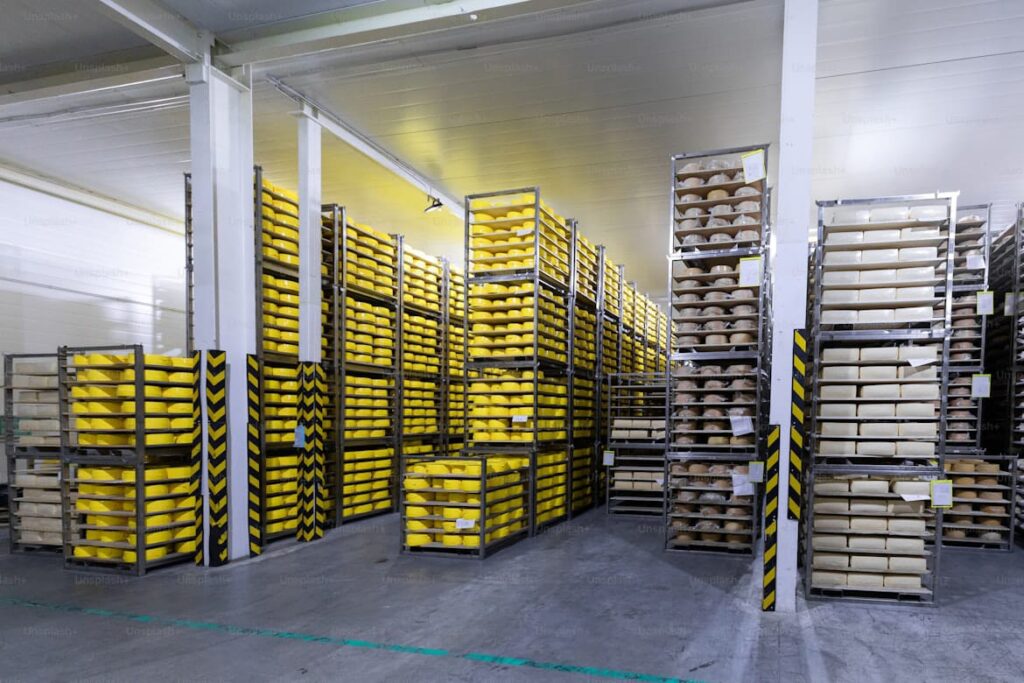 Port & Chemical: Hamburg / Chempark Ludwig
shafen
Operational Challenges: Agg ressive vapors, strict environmental water protection guidelines (WHG), or operating conditions down to -30°C where conventional steel suffers brittle fracture.
Configured System: Hot-dip galvanized (HD G) or 304/316 stainless steel drive-in racking and high-density push-back configurations. Steel treated specifically for low-temperature ductile toughness, impervious to condensation and aggressive sanitizing chemicals.
Inquire NowThe German supply chain sector is in the midst of a technological renaissance driven by labor shortages, the transition to renewable energy, and stringent ESG compliance.
German logistics parks increasingly deploy driverless logistics fleets. This shifts racking design from human-centric ergonomic heights to machine-centric precision . Racking base plates, anchor bolt torque certifications, and ground aisle floor levelness (DIN 18202 standards) must be calibrated to millimeter tolerances to allow AMRs to navigate underneath bottom pallet tiers effortlessly.
Under the German Supply Chain Due Diligence Act (Lk SG) and European CSRD reporting, corporate buyers scrutinize the embodied carbon of their logistics infrastructure. Facilities prioritize modular, boltless racking systems that can be disassembled, reconfigured, or recycled with minimal scrap rates. In-house roll-forming with optimized cold-formed profiles achieves maximum strength-to-weight ratios, cutting overall steel tonnage.
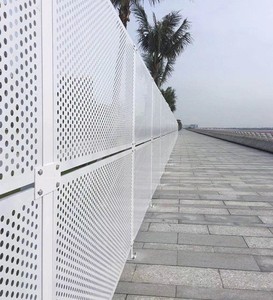
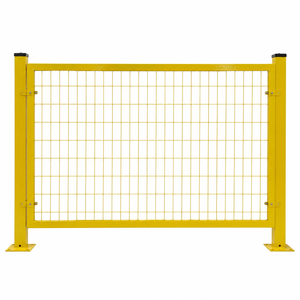
Safety regulations are no longer secondary to warehouse operations. As high -speed collaborative robotic arms (cobots), sorting conveyors, and automated stretch wrappers operate side-by-side with personnel, physical modular barriers (such as our Q235 perforated and mesh industrial fences) are standard equipment to satisfy German CE machinery directive requirements.
Use this technical comparison matrix to match your operational throughput, SKU profile, and building clear height with the optimal storage topology .
| Storage System | Direct Accessibility | Density Rating | Standard Load (Per Bay/Level) | Pal let Standard Compatibility | Automation Readiness |
|---|---|---|---|---|---|
| Selective Pal let Racking | 100% (Instant access) | Moderate (35-40 % floor footprint) | 1,000 – 4,500 kg per beam level | Euro-Pallet (EPAL 1-3), Industrial Pallet | High (VNA / Forklift / AMR) |
| Carton Flow Picking System | High (Rotational FIFO) | High (Linear lane packing) | 100 – 300 kg per roller track | Eurobox, VDA-KLT, Corrugated Cartons | Ready for Pick-to-Light / Conveyor |
| Drive-In / Drive-Through Rack | LIFO / FIFO by lane | Very High (Up to 80% volume) | Up to 1,500 kg per pallet position | Uniform standard pallets only | Moderate (Requires specialized masts) |
| Cantilever Racking System | 1 00% (Open front column) | Specialized Linear | 500 – 2,500 kg per arm cantilever | Pipes, Steel Profiles, Long Timber Packs | Custom (Crane / Side loader served) |
| Rack-Supported Mezzanine Floor | Multi-Level Complete | Maximum (Multi plies sq. meters) | 350 – 1,500 kg / m² floor rating | Pallet drop stations, bulk & tote storage | Vertical Lifts / Spiral Chutes |
| Modular Industrial Safety Fence | Controlled Access | Perimeter Guarding | Impact proof to DIN EN ISO 14120 | Conveyor lines, robotic workcells, AGV paths | Interlock switch & sensor ready |
Operating as an integrated designer, fabricator, and exporter from our modern Ajman Free Zone manufacturing plant, Signature Racking Systems combines global heavy-industrial fabrication economies with European engineering rigor. We eliminate trading intermediaries, ensuring direct structural accountability from raw coil intake to on -site assembly across German commercial districts.
We own and control every phase of manufacturing under one roof: uncoiling, high-precision hydraulic pressing, computerized continuous roll-forming lines, automated laser-guided punching, certified structural robotic welding, and automated surface multi-stage pretreatment and electrostatic powder coating. This ensures precise hole pitch repeatability and zero deviation in structural upright alignment.
Our engineering team does not work from arbitrary catalog templates. Every proposed layout is modeled in 3D CAD to the exact dimensions of your facility— factoring in clear roof height, building column matrices, sprinkler pipe clearances, forklift minimum turning radii, and ground concrete slab point-load tolerances compliant with DIN EN 15512 calculation methods.
Logistics components are bundled in protective knock-down export packaging designed for seamless ocean containerization and multimodal rail freight into central German logistics nodes. Every batch is color-coded, labeled, and accompanied by structural installation assembly diagrams and hardware fastening schedules for swift installation.
We never compromise on metallurgical composition. All profiles are roll-formed from certified high-tensile structural steel coils with verified yield strengths, elongation properties, and chemical mill test certificates. Beams are designed with robust multi-claw connector brackets engineered to minimize sag and deflection under full rated load.
By leveraging vertically integrated free-zone production economics and direct volume steel procurement, we supply European contractors, system integrators, and industrial facility owners with premium storage infrastructure at significantly more competitive capital expenditure (CAPEX) margins than domestic European fabricators.
Comprehensive technical and commercial answers addressing statutory compliance, structural standards, shipping logistics, and custom engineering.
Our selective and heavy-duty storage configurations are engineered specifically around standard European logistics unit loads: EPAL 1 (800 x 1,200 mm), EPAL 2 (1,200 x 1,000 mm), EPAL 3 (1, 000 x 1,200 mm), and VDA-KLT automotive tote boxes. Beam lengths are calculated (such as 2,700 mm for 3 standard Euro-pallets or 3,600 mm for 4 standard Euro-pallets) to provide proper 75 mm to 100 mm side clearances in accordance with DIN EN 15620 guidelines.
Shipments depart directly from J ebel Ali Port (adjacent to our Ajman production hub), offering frequent direct container liner sailings to major North Sea ports, including Hamburg, Bremerhaven, and Rotterdam. Average ocean transit ranges from 18 to 26 days. Upon arrival, customs clearance and onward multi-modal rail or road haulage to inland destinations (e.g., Duisburg, Frankfurt, Stuttgart , Nuremberg) typically takes 2 to 5 business days. Knock-down packing maximizes 40ft High Cube container cube utilization to lower freight cost per pallet position.
To deliver an optimized CAD design and static calculation proposal , our engineering team requires: (1) Architectural floor plan (DWG/PDF) highlighting building columns, dock doors, escape corridors, and slab joints; (2) Clear height to the lowest roof truss, sprinkler pipe, or luminaire; (3) Pal let specifications including overall dimensions (length, width, overhang) and maximum gross weight; (4) Material handling equipment ( forklift model, lift height, minimum aisle turning width); and (5) Operational ambient temperature conditions (ambient, cold chain, or explosive ATEX zones).
Absolutely. For cold-storage logistics facilities, deep-freeze distribution centers , or humid environments, we supply components fabricated from low-temperature ductile structural steel treated with hot-dip galvanization (HDG) compliant with ISO 1461, ensuring complete rust protection on both internal and external profile surfaces. For pharmaceutical cleanrooms and food processing facilities, we engineer modular shelving and racking in 304 and 316 grade stainless steel.
Yes. We offer flexible execution models. Every project is accompanied by comprehensive 3D CAD step-by-step installation drawings, anchor bolt torque tables, and component mark lists suitable for your local mechanical installation contractor. Alternatively, we can coordinate professional installation supervisors or partner with verified local German racking assembly crews to manage leveling, anchoring, vertical plumb inspection, and formal commissioning.
Speak directly with our structural intralogistics engineers today. Submit your floor dimensions and load parameters for a comprehensive CAD layout and factory-direct static quotation.
Inquire Now