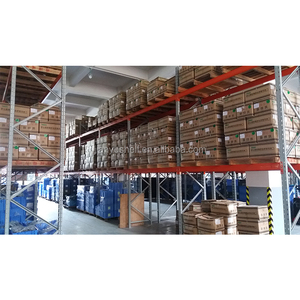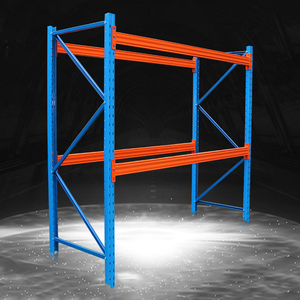
Explore our certified structural warehouse racking frameworks, engineered specifically for autonomous stacker crane interfaces, heavy manufacturing buffer lines, and maximum cubic space utilization.
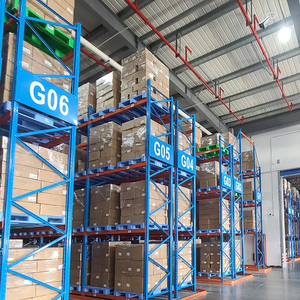
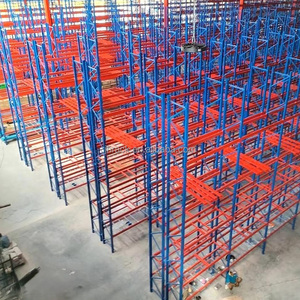
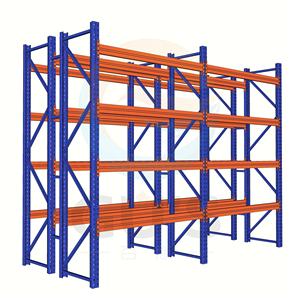
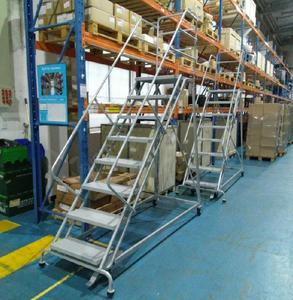
Automated Storage and Retrieval Systems (ASRS) impose mechanical dynamics fundamentally distinct from traditional manual forklift storage. In high-bay installations exceeding 24 meters, structural upright columns must maintain verticality tolerances under strict European standard EN 15620 (Class 100 to 400) and FEM 9.831 guidelines.
Our upright profiles are roll-formed from certified high-tensile structural steel (Q355B / S355JR grade), engineered to resist dynamic cyclic fatigue induced by high-speed Automated Guided Vehicles (AGVs) and Rail Guided Shuttles operating at speeds up to 240 m/min with accelerations of 1.5 m/s².
Singapore Building Compliance Note: Every ASRS rack structure manufactured for export and deployment in Singapore includes full PE (Professional Engineer) endorsed calculations adhering to SS EN 1993 (Eurocode 3: Design of Steel Structures) and Singapore Civil Defence Force (SCDF) Chapter 7 in-rack fire suppression parameters.
By employing continuous multi-stage progressive cold-roll punching, our manufacturing line guarantees a hole-pitch precision within ±0.1mm along the entire 12-meter single-section column profile, eliminating beam-locking slack and cumulative frame drift.
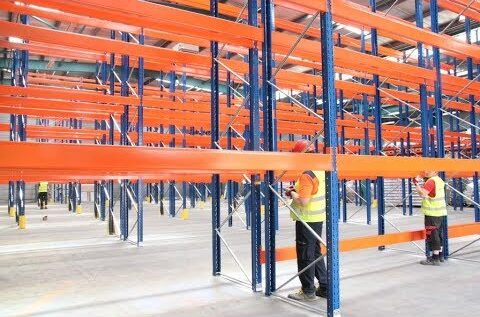
| Performance Characteristic | Unit-Load Stacker Crane ASRS | 4-Way Pallet Shuttle System | Very Narrow Aisle (VNA) High-Bay | Standard Selective Racking |
|---|---|---|---|---|
| Operating Height Ceiling | Up to 40+ meters (Clad-Rack Silo) | Up to 24 meters | 12 to 17 meters | 6 to 10 meters |
| Beam Deflection Limit | 1/800 to 1/1000 of span FEM 9.831 | 1/500 of span | 1/300 of span | 1/200 of span |
| Aisle Clearance Required | 1,400mm – 1,650mm | Modular Transfer Concourse | 1,650mm – 1,950mm | 3,000mm – 3,600mm |
| Footprint Volumetric Efficiency | Up to 88% Net Cubic Volume | Up to 82% Net Cubic Volume | 55% – 65% Net Volume | 35% – 42% Net Volume |
| Automation Interfacing | Direct PLC / Optical Positioning | RF / Wi-Fi Fleet WCS Protocol | Wire / Inductive Rail Guided | Manual Line-of-Sight Driving |
| Singapore Land Use Suitability | Optimal (Maximizes JTC Plot Ratio) | Optimal for Cold Storage & FMCG | Moderate (Requires Turret Trucks) | Low (Sub-optimal for high industrial rent) |
With Singapore's land lease constraints governed by JTC and urban footprint priorities, our engineered ASRS solutions address localized structural and operational demands across distinct logistics corridors.
High-throughput automated buffering for sea container de-stuffing. Designed with 2.5-ton unit-load double-deep racking, serving automated shuttle transfer carts to process cross-border transshipment pallets 24/7 without manual handling delays.
Temperature-controlled automated high-bay racking operating from -25°C to +4°C. Fabricated with low-temperature cold-drawn steel to eliminate cryogenic embrittlement, ensuring seamless integration with refrigerated autonomous stackers for GDP-compliant vaccine storage.
Precision Mini-Load ASRS and multi-tier modular cleanroom bin storage. Designed with electrostatic discharge (ESD) powder finishes and micron-level rail alignment for delicate wafer fab consumables, avionics spares, and robotics line feeding.
Ultra-dense 4-way radio shuttle racking frameworks engineered for FIFO food inventory cycling. Featuring washable galvanized GI decking panels, pest-resistant base seals, and multi-tier picking platforms complying with Singapore Food Agency (SFA) hygiene audits.
Three primary systemic shifts are mandating the transformation from manual forklift operations to automated, high-bay structural storage frameworks in Singapore's logistics infrastructure.
Industrial land allocation by JTC Corporation requires tenants to optimize Gross Plot Ratio (GPR) under strict land-use efficiency benchmarks. Traditional 8-meter warehouses underutilize available vertical envelopes.
Tightening dependency ratio ceilings (DRC) for S-Pass and Work Permit holders in the logistics sector make manual forklift operations increasingly expensive and vulnerable to structural incidents.
Modern Singapore distribution hubs demand real-time telemetry interfacing directly with Tier-1 WMS software (SAP EWM, Blue Yonder, Manhattan Associates) through standard RESTful APIs.
Unlike trading resellers or secondary distributors, we fabricate all heavy-duty upright frames, box beams, guide rails, and safety barriers within our own 100% owned manufacturing facilities.
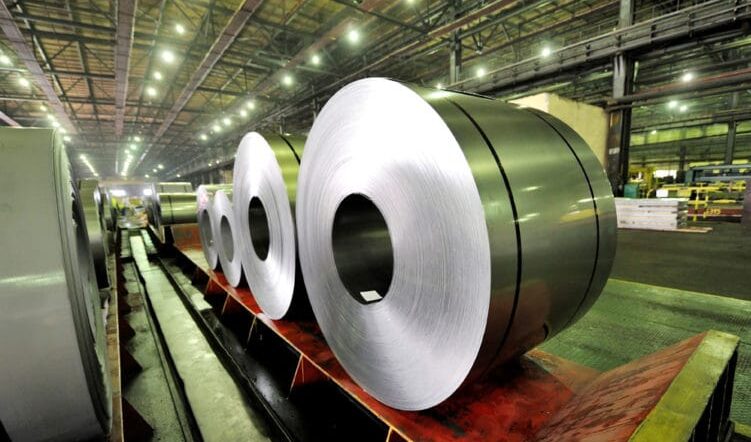
Multi-roller continuous forming ensures stress-free cold working and cross-sectional consistency across extended structural lengths.
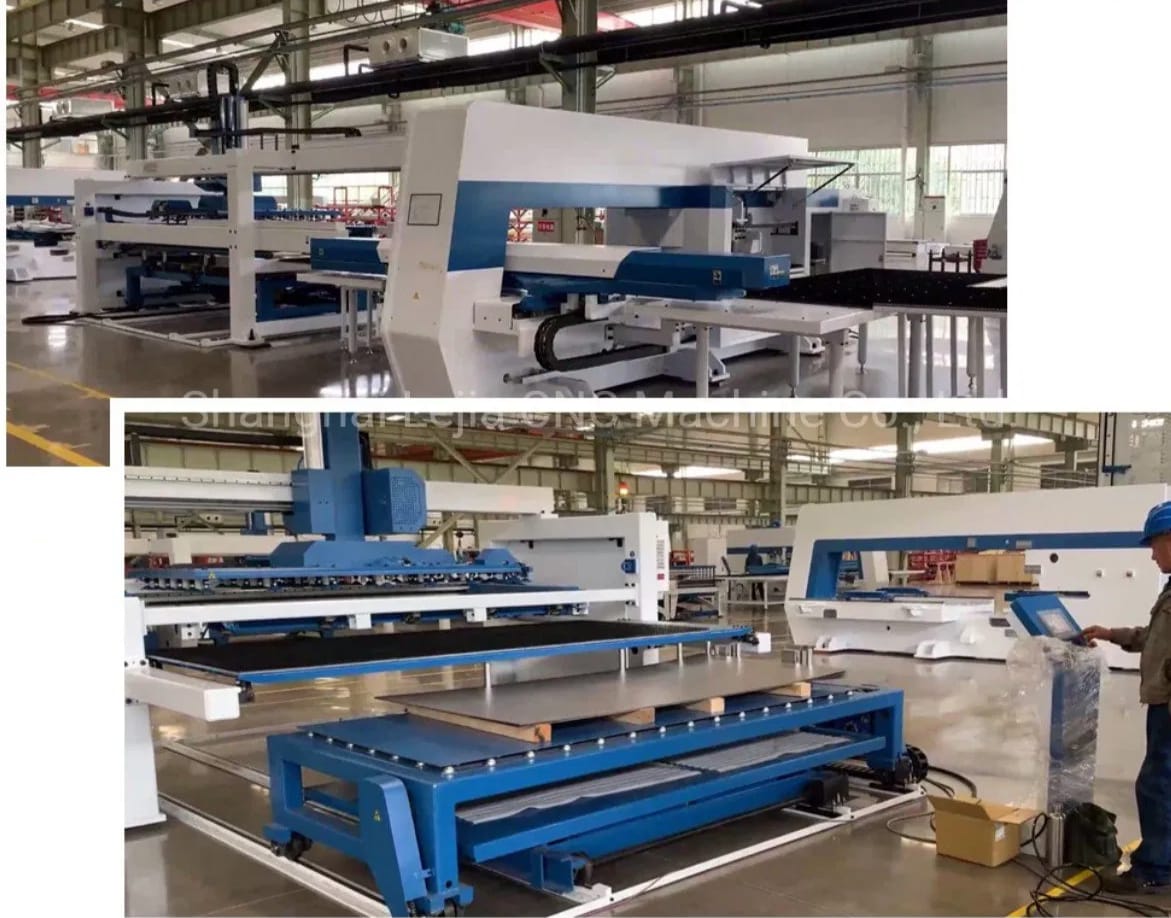
50mm and 75mm standardized pitch punched at ±0.1mm repeatability, ensuring rigid interlocking between beams and upright columns.
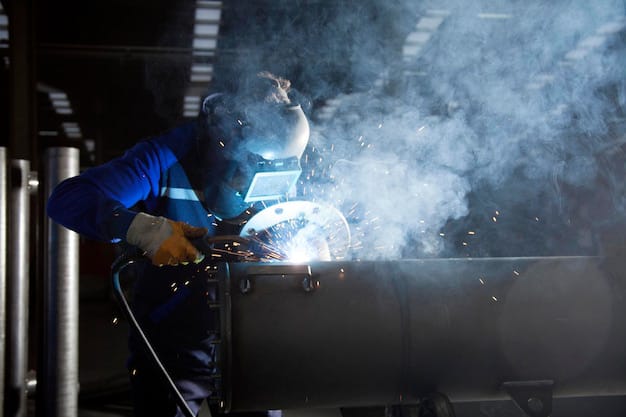
Automated multi-axis CO2 gas shielded robotic welding provides full-penetration structural joints between box beams and end connectors.
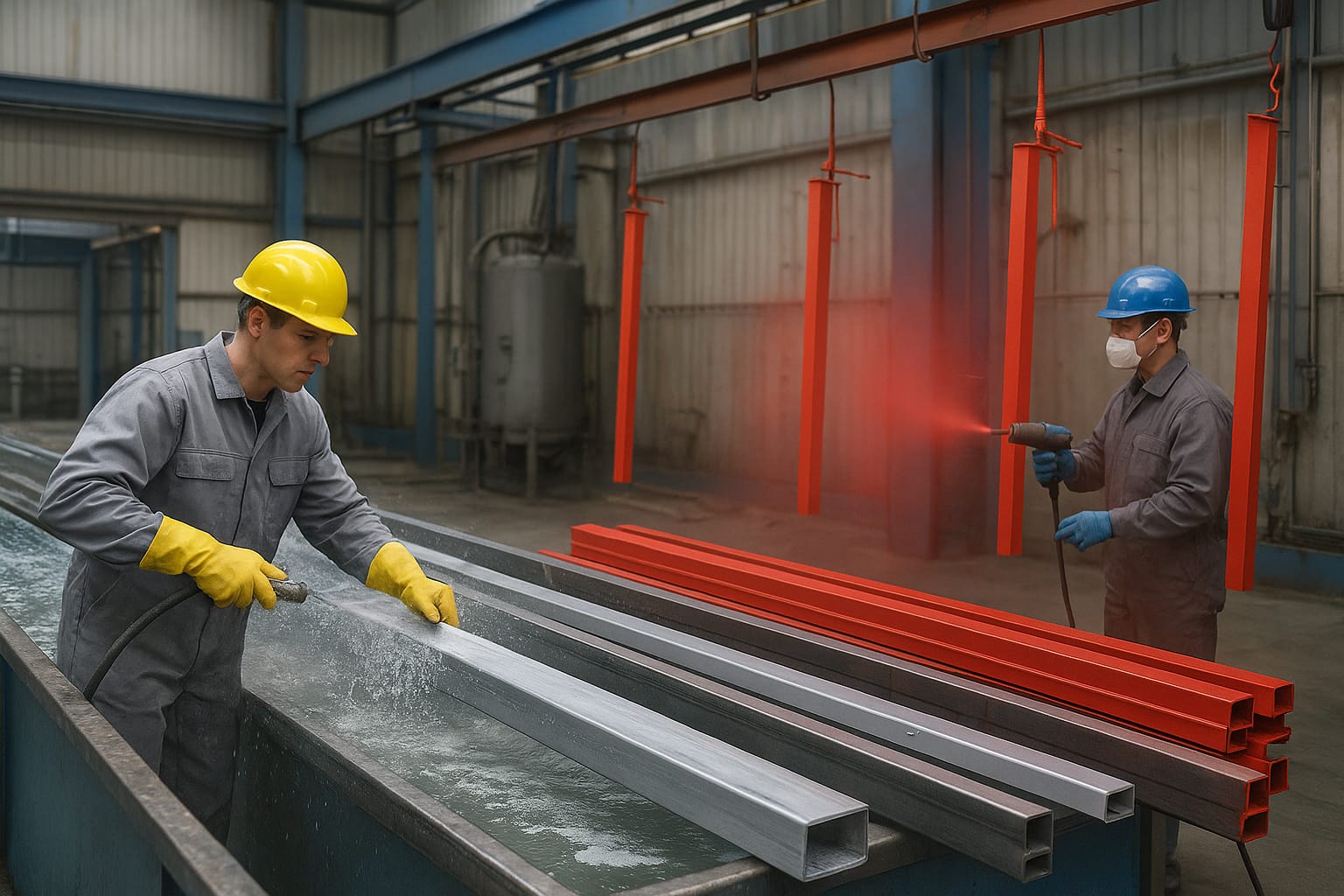
12-stage phosphating wash followed by 80-120 micron thermosetting epoxy powder curing for long-term corrosion resistance in tropical humidity.
Over two decades of warehouse storage design, calculation modeling, and specialized steel fabrication for multinational 3PLs, state logistics centers, and FMCG cold stores globally.
We deliver factory-direct containerized export shipments straight to Jurong Port and PSA terminals, complete with installation drawings, component coding, and Singapore customs clearance assistance.
Continuous support encompassing annual load-deflection audits, replacement upright components, aisle crash guards, and modular bay expansions as your storage requirements grow.
Critical structural, statutory, and logistical questions answered by our chief structural engineering team.
Yes. In Singapore, racking systems exceeding certain heights or supporting automated equipment, mezzanine levels, or building envelopes (Rack-Supported Clad Buildings) are classified as structural installations under the Building and Construction Authority (BCA) Building Control Act.
Our engineering team collaborates directly with certified Singapore Professional Engineers (PEs) to provide verified finite element analysis (FEA) calculations, base-plate slab load distribution certifications, and anchor pull-out test documents required for mandatory BCA structural submissions.
SCDF Fire Code specifies rigorous in-rack fire suppression parameters once storage heights exceed 6 meters, particularly for Class IV commodities and plastics. Our ASRS designs integrate designated hydraulic sprinkler pipe routing channels within the longitudinal and transverse rack flues.
This layout ensures proper water discharge patterns from ESFR and in-rack intermediate heads while preventing any mechanical interference with moving stacker crane forks or automated shuttle cars.
Automated stacker cranes and narrow aisle shuttles operating at high elevations require Superflat floor tolerances governed by standards such as DIN 18202 Table 3 (Group 4) or VDMA 15307.
Our baseplates include heavy-duty micro-adjustment leveling shims (2mm to 10mm thickness) paired with high-tensile Hilti / Fischer chemical anchor studs. This assembly guarantees structural plumbness even if minor local slab variances exist in your existing JTC facility.
Because all cold-forming, punching, welding, and automated powder coating are executed fully in-house, standard production spans 3 to 5 weeks depending on project tonnage. Containerized ocean transit to Singapore Port (PSA) typically takes 10 to 18 sailing days.
Every shipment is packaged in heavy-duty steel crates and moisture-barrier protective wraps to safeguard pre-finished surfaces during maritime shipping across equatorial waters.
Absolutely. We operate as an open-architecture structural manufacturer. We routinely engineer our beam profiles, top guide rails, and entry funnels to interface seamlessly with major European, Japanese, and domestic automation robotics suppliers (e.g., Daifuku, Dematic, Swisslog, Geek+, Murata).
Our engineers cross-verify all robotic pickup clearances and sensor reflector bracket locations during initial CAD / BIM coordination.
Singapore’s ambient relative humidity frequently exceeds 80%. Prior to powder application, our steel components undergo a multi-stage chemical pre-treatment comprising alkaline degreasing, zinc phosphating, and deionized water rinsing.
We subsequently apply high-grade electrostatic polyester-epoxy hybrid powder baked at 200°C, producing a resilient coating tested to resist 500+ hours of continuous salt spray (ASTM B117) without micro-blistering or delamination.
Connect directly with our structural engineering desk. We provide preliminary CAD space utilization layouts, structural load calculations, and competitive factory-direct export proposals within 48 hours.