1. Strategic Outlook: Stainless Steel Shelving in Colombia's Industrial Modernization
As the fourth-largest economy in Latin America and a crucial geopolitical gateway connecting the Pacific and Atlantic shipping lanes, Colombia has experienced a fundamental transformation in its logistics and manufacturing ecosystems. Driven by national infrastructure master plans, the rapid expansion of modern distribution centers (CEDI) in the Sabana de Bogotá, and the strategic expansion of free trade zones (Zonas Francas) across Cundinamarca, Antioquia, and Valle del Cauca, industrial storage has shifted from generic warehousing to specialized, sanitary, and high-performance structural systems.
In this dynamic landscape, standard painted or lightly powder-coated cold-rolled steel racking consistently demonstrates severe operational vulnerabilities. The tropical environmental profiles across Colombia—ranging from the high-altitude humidity of Bogotá D.C. to the hyper-saline, high-temperature maritime atmospheres of Cartagena, Barranquilla, and Santa Marta—catalyze rapid oxidation and surface degradation in non-stainless equipment. Furthermore, strict regulatory scrutiny executed by the Instituto Nacional de Vigilancia de Medicamentos y Alimentos (INVIMA) across pharmaceutical laboratories, cosmetic packaging units, and agro-export cold storage operations mandates non-porous, non-contaminating, and chemically inert material surfaces.
As an established global manufacturer and premier stainless steel shelving exporter serving Colombia, our organization bridges structural metallurgy, advanced roll-forming precision, and localized Andean regulatory engineering. By manufacturing in-house with certified austenitic alloys and integrating dynamic seismic modeling, we provide Colombian project directors with long-term infrastructure assets that eliminate corrosion failures, drastically reduce life-cycle replacement overheads, and guarantee absolute compliance with international hygiene protocols.
2. Comparative Metallurgy: Engineering the Optimal Grade for Colombian Climates
A critical engineering failure in cross-border procurement is the indiscriminate specification of stainless steel without considering localized atmospheric corrosion classes (ISO 9223) and chemical washdown profiles. Our engineering advisory strictly guides Colombian procurement teams through metallurgical selection based on real operating environments:
| Steel Grade & Microstructure | Alloy Composition (% Nominal) | Pitting Resistance Equivalent (PREN) | Optimal Colombian Geographic Region | Recommended Industrial Applications |
|---|---|---|---|---|
| AISI 304 / 304L (Austenitic UNS S30400) |
18-20% Cr, 8-10.5% Ni, ≤0.08% C | 18.0 – 20.0 | Andean High Altitude: Bogotá, Medellín, Tunja, Pereira, Manizales | Dry pharmaceutical cleanrooms, hospital central sterile supply departments (CSPD), coffee processing, dry food packaging. |
| AISI 316 / 316L (Austenitic UNS S31603) |
16-18% Cr, 10-14% Ni, 2-3% Mo | 23.0 – 25.5 | Coastal & River Ports: Cartagena, Barranquilla, Buenaventura, Cali | Seafood processing, chemical synthesis, blast freezing (-30°C), marine cargo transit, harsh quaternary washdown zones. |
| AISI 430 (Ferritic UNS S43000) |
16-18% Cr, ≤0.75% Ni, ≤0.12% C | 16.0 – 17.5 | Low-humidity interior zones (Non-washdown) | Front-of-house commercial kitchen staging, dry supermarket backroom shelving, retail non-perishables. |
| Hot-Dip Galvanized (HDG) (Structural Carbon Base) |
Zinc coating 65–85 μm over Q235B/Q355B | N/A (Barrier Coating) | Interior distribution hubs, moderate exterior yards | Heavy industrial bulk pallets, structural cantilever racking, high-turnover logistics parks outside sanitary cleanrooms. |
The superior durability of our AISI 316L stainless steel shelving in coastal hubs such as Cartagena Contecar and Sociedad Portuaria Regional de Barranquilla is directly tied to the inclusion of 2.0% to 3.0% Molybdenum. This element stabilizes the passive chromium oxide ($Cr_2O_3$) film against localized pitting and crevice corrosion catalyzed by airborne chloride ions. Every metric ton of stainless steel processed in our automated roll-forming and welding lines is accompanied by certified Mill Test Reports (MTR) according to EN 10204 3.1 standards, ensuring full traceability from raw steel coils to completed upright frames.
3. Structural Integrity: Seismic Engineering Under Colombia's NSR-10 Code
Unlike standard non-seismic storage equipment manufactured for stable geographic zones, stainless steel shelving exported to the Republic of Colombia must address the complex geological dynamics dictated by the Colombian Seismic Resistant Design and Construction Code: Reglamento Colombiano de Construcción Sismo Resistente (NSR-10), specifically Title A and Chapter A.10 regarding non-structural elements and self-supporting racking systems.
Seismic Hazard Zone Stratification in Colombia
Colombia is divided into three distinct seismic risk zones that directly govern structural baseplate engineering, anchor bolt embedding, upright column gauges, and vertical diagonal bracing:
- High Seismic Hazard Zone ($A_a > 0.20g, A_v > 0.20g$): Encompasses critical industrial corridors including Cali (Valle del Cauca), Bucaramanga (Santander), Pereira, Armenia, and Manizales (Eje Cafetero). Storage systems engineered for these regions feature oversized moment-resisting baseplates, heavy dual-anchor concrete bolting (Hilti seismic-rated chemical or mechanical expansion anchors), and reinforced horizontal/diagonal bracing geometries capable of absorbing lateral cyclic stresses without elastic bucking.
- Intermediate Seismic Hazard Zone ($0.10g ≤ A_a ≤ 0.20g$): Includes the largest warehousing concentration in the nation: Bogotá D.C. and the surrounding municipalities (Mosquera, Funza, Cota, Tocancipá, and Madrid), along with Medellín (Antioquia). While horizontal accelerations are moderate, the high storage heights (frequently reaching 8 to 12 meters in automated installations) require stringent deflection limitations under full design load.
- Low Seismic Hazard Zone ($A_a < 0.10g$): Principally the Caribbean coastal cities of Cartagena, Barranquilla, and Santa Marta. In these locations, seismic lateral forces are subordinated to wind-load factors (in semi-open logistics docks) and aggressive marine corrosivity.
Our structural design team uses finite element analysis (FEA) software to perform response spectrum analyses on every custom shelving and racking configuration destined for Colombian sites. Upright profile perforation patterns are optimized to eliminate stress concentration points, while locking beam connectors incorporate four-lug stamped hooks with stainless steel safety pins that prevent dislodgement during seismic ground oscillations.
4. Localized Colombian Application Scenarios: Sector Deep Dive
Pharmaceutical & Biotechnology
Bogotá D.C. & Medellín
Fully sanitary, electropolished AISI 304 multi-tier shelving designed to meet rigorous INVIMA Buenas Prácticas de Manufactura (BPM) cleanroom audits. Smooth, seamless welding lines eradicate microbial breeding pockets.
Agro-Industrial & Perishables
Valle del Cauca & Urabá
Perforated stainless decking engineered for rapid cold-air convection in Hass avocado, banana, and cut-flower staging facilities. Resists organic acids and cyclic high-pressure washdowns.
Maritime Ports & Cold Logistics
Cartagena & Buenaventura
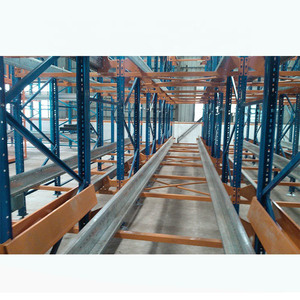
Marine-grade AISI 316L shuttle racking systems operating in extreme -25°C blast freezers. Designed to resist oceanic chloride ingress and thermal contraction stresses without structural fatigue.
3PL & E-Commerce Hubs
Funza, Mosquera & Cota
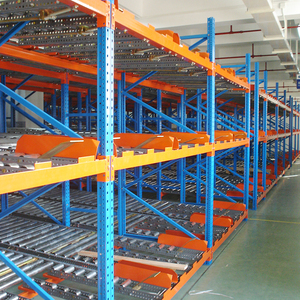
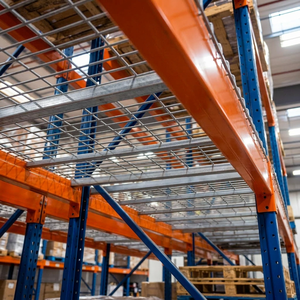
High-velocity carton-flow and wire-decked selective rack configurations supporting multinational e-commerce fulfilment platforms requiring NFPA fire-suppression compliance.
In-Depth Analysis: The Bogotá Pharmaceutical Cleanroom Corridor
Within Colombia's capital region, pharmaceutical manufacturers and multinational medical device enterprises operate under strict INVIMA Resolution 1160 (which regulates Good Manufacturing Practices for active ingredients and finished pharmaceutical formulations). In these controlled environments, traditional slotted angle steel shelving painted with epoxy resin exhibits continuous degradation: paint flakes during bin contact, exposed carbon steel oxidizes during hydrogen peroxide vapor (VHP) sterilization cycles, and unsealed crevices harbor bioburden.
Our exported stainless steel cleanroom shelving systems incorporate 100% austenitic AISI 304 components treated with automated immersion acid passivation according to ASTM A967 specifications. We eliminate exposed threads, hollow open tubes, and blind rivet joints, utilizing fully welded round tubular frames or sanitary open-channel uprights. Shelving tiers can be configured with solid rolled-edge sheet panels (brushed #4 surface finish, $Ra \le 0.8\,\mu\text{m}$) or electropolished wire grid decking with 72% open area, allowing laminar HVAC airflow to circulate uninterrupted across sterile supply cartons.
Cold Chain Modernization in the Caribbean Port Triangle
Colombia's Caribbean ports—Cartagena (Contecar and SPRC), Barranquilla, and Santa Marta—handle the overwhelming majority of containerized agricultural exports and temperature-sensitive imports. The aggressive maritime environment (classified under ISO 9223 as C4 High to C5 Very High atmospheric corrosivity) rapidly destroys generic warehouse racking. Salt aerosol combined with relative humidity persistently exceeding 80% causes rapid galvanic corrosion at every mechanical bolt interface.
To overcome these operating conditions, we supply complete cold-chain storage frameworks constructed exclusively from molybdenum-bearing AISI 316L stainless steel. Fasteners, anchor studs, and safety locking clips are matched electrochemically to prevent bimetallic corrosion. In automated blast freezing tunnels operating at -30°C, our austenitic stainless profiles preserve exceptional impact toughness ($Charpy\text{ }V\text{-notch} > 100\,\text{J}$ at sub-zero temperatures), whereas conventional structural carbon steels become susceptible to brittle fractures under dynamic forklift collisions.
5. Macro Trends Shaping Colombian Warehouse Infrastructure (2025–2030)
Procurement directors and facility planners in Colombia face several macro shifts that are driving specifications toward stainless steel and automated storage solutions:
- Nearshoring Supply Chain Reconfiguration: Multinational corporations are diversifying regional supply chains toward Latin America. Colombia's strategic maritime positioning makes it an optimal regional distribution hub. Consequently, international tenants leasing CEDI space in parks such as Megapuerto en Tocancipá or Parque Industrial El Dorado demand equipment that adheres to strict international standards (ANSI MH16.1, FEM 10.2.02, and EN 15512).
- Stricter Food Safety Modernization (HACCP & INVIMA): The expansion of Colombian agro-exports (processed coffee, Hass avocados, Tahiti limes, and organic frozen fruit purees) to North American and European markets requires complete cold chain compliance. Facilities must withstand daily washdown protocols utilizing peracetic acid, caustic soda, and chlorine compounds, rendering coated mild steel obsolete.
- Total Cost of Ownership (TCO) Prioritization: While stainless steel shelving commands a higher initial capital expenditure than electro-galvanized or painted steel, Colombian CFOs recognize the compelling 20-year TCO advantage. By completely eliminating annual rack shutdowns for rust sanding, recoating, structural frame replacements, and product contamination write-offs, stainless systems achieve full return on investment (ROI) within 3.5 to 5 years of operation.
- High-Density Automation and Vertical Space Optimization: With prime logistics land costs escalating across the Sabana de Bogotá and the Aburrá Valley (Medellín), warehouses are maximizing vertical cube utilization. This necessitates rigid, seismically braced automated pallet shuttle systems, narrow-aisle (VNA) racking, and integrated high-bay mezzanines fabricated to exacting dimensional tolerances.
6. Enterprise Advantages: End-to-End Manufacturing & Global Export Competence
Selecting an international equipment exporter is fundamentally an exercise in risk mitigation. Signature Racking Systems combines the heavy industrial capability of our certified manufacturing facilities with extensive international logistics and export engineering experience:
20+ Years Manufacturing Pedigree
Over two decades of dedicated structural engineering, roll forming, and robotic fabrication. Over 500 major enterprise installations delivered across GCC, Latin America, and global trade corridors.
Fully In-House Production Lines
Complete control over coil slitting, multi-station roll forming, automated CNC punching, robotic welding, and automated surface treatment. We do not outsource critical structural fabrication.
Seismic & Structural CAD Engineering
Every racking layout is modeled specifically around your site floor dimensions, ceiling clearance heights, forklift turning radii, and Colombian NSR-10 seismic zone requirements.
Export-Grade Knocked-Down Packaging
Components are precision-bundled in heavy-duty protective wrapping with vapor corrosion inhibitors (VCI) and ISPM-15 heat-treated timber dunnage to survive 30+ days of ocean transit without scratches.
Direct Port-to-Port Containerized Shipping
Established freight partnerships providing reliable FCL (Full Container Load) delivery directly into Sociedad Portuaria de Cartagena, Buenaventura, or Barranquilla, with complete consular documentation.
Certified Material Traceability
All stainless and structural steels are backed by Mill Test Certificates (EN 10204 3.1). We guarantee chemical composition, tensile yield strength, and dimensional tolerances with every production run.