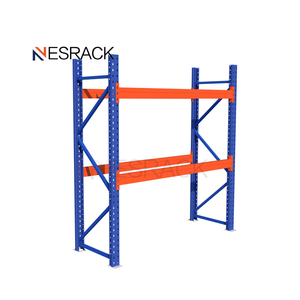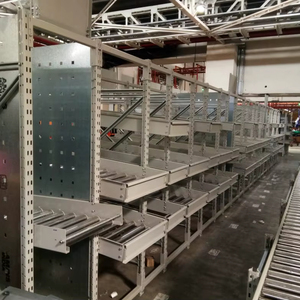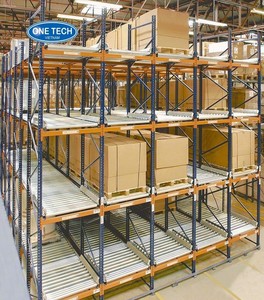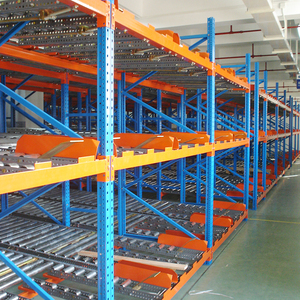
Engineered storage racking components, flow tracks, and picking solutions designed to streamline logistics workflows across plumbing wholesale, manufacturing, and distribution centers throughout New Zealand.
Industrial storage systems operating within New Zealand face some of the strictest structural safety regulations worldwide. Positioned across the Pacific and Indo-Australian tectonic plates, the country requires structural racking systems to withstand significant seismic actions without catastrophic collapse. When sourcing heavy-duty pipe racking systems, structural tube racks, and industrial cantilever systems for storage yards in Auckland, Wellington, Christchurch, or Hawkes Bay, specifying compliance with the joint Australian/New Zealand Standard AS/NZS 4084:2023 (Steel Storage Racking) and NZS 3404 (Steel Structures Standard) is non-negotiable.
Unlike standard static pallet shelving, pipe racking systems carry exceptionally high linear loads. Long, unbound bundles of rigid PVC, poly (PE) pipe, structural hollow sections (RHS/SHS/CHS), and galvanized steel conduits exert concentrated point loads on cantilever arms. During a seismic event, these unrestrained long loads introduce high dynamic amplification factors and torsional lateral forces into the vertical columns. Our factory engineers manufacture pipe racks utilizing certified heavy structural Universal Beam (UB) and Universal Column (UC) hot-rolled profiles, ensuring superior ductile capacity under extreme seismic ground acceleration.
Seismic Design Performance Criteria (NZS 1170.5 Compliance): Our engineering team models every bespoke pipe rack using FEA (Finite Element Analysis) software to verify limit state design against local seismic hazard coefficients ($Z$), soil class classifications (A through E), and building importance levels (IL2/IL3). Baseplates are dimensioned with substantial anchor hole patterns to accept Grade 8.8 M16/M20 chemical anchors rated for cracked concrete conditions.
By controlling the fabrication process in-house—from continuous automated roll-forming and robotic multi-pass welding to multi-spindle CNC drilling—our plant guarantees tight mechanical tolerances. All welding procedures conform to AS/NZS 1554.1:2014 (Structural Steel Welding) standards, preventing weld embrittlement and notch-stress failure along high-moment cantilever arm-to-column connections.
High-thickness baseplates engineered to dissipate energy under cyclic loading, fully compliant with NZS 1170.5 ductility factor requirements for Region Z hazard zones.
Pivot-pin or tapered wedge locking arms designed to deflect safely under impact, eliminating upright deformation caused by uneven crane or forklift load insertion.
Complete structural calculations and Producer Statement 1 (PS1) design documentation ready for New Zealand Territorial Authority (Council) building consent filing.
The industrial geography of Aotearoa New Zealand presents unique micro-demands across its North and South Islands. Warehouses and distribution hubs in South Auckland (Wiri, East Tāmaki, Highbrook) experience high-throughput logistics demands, while South Island facilities in Christchurch and Dunedin navigate colder climates and severe seismic resilience protocols. Our factory tailors pipe racking and long-item storage systems specifically for these core domestic sectors:
Storage of 6-meter rigid PVC stormwater pipes, smooth-wall conduit, and heavy coils of HDPE water-main tubing. Incorporates cradle dividers, drop-in timber bunks, and arm end-stoppers to prevent cylindrical rolling.
Heavy hot-rolled structural cantilever racks for steel hollow sections (RHS, SHS), black steel pipes, schedule 40/80 process pipe, and boiler tubes. Built for overhead gantry crane and combilift side-loader operations.
Designed for agricultural plumbing merchants across Canterbury, Waikato, and Southland. Storage for pivot irrigation pipes, dairy shed stainless steel sanitary conduits, and polyethylene stock-water systems.
Extreme heavy-duty outdoor pipe racks for drill casings, geothermal steam transmission piping in Taupō/Rotorua, and sawmill pneumatic extraction ducting. Fitted with hot-dip galvanized protective finishes.
Because no point in New Zealand is situated more than 130 kilometers from the sea, ambient atmospheric salinity is a primary catalyst for structural degradation. In accordance with ISO 9223 / AS/NZS 2312.2, atmospheric corrosivity ranges from Category C3 (Medium coastal) up to Category C5 (Very High Marine / Severe Industrial) in coastal hubs like Mount Maunganui, Napier, Lyttelton, and New Plymouth.
Deploying standard commercial warehouse powder coatings in outdoor pipe yards or partially sheltered canopies will lead to premature edge blistering, underfilm corrosion, and joint weld oxidation within 24 to 36 months. As a dedicated manufacturer and exporter, we provide two specialized protective coating systems designed for long-term field endurance in New Zealand:
Applied in accordance with AS/NZS 4680. Fully submerged post-fabrication bath ensures an internal and external zinc barrier thickness of 85μm minimum, providing 25+ years of maintenance-free service in outdoor C4/C5 coastal environments.
For high-traffic indoor trade stores. Components undergo 5-stage automated surface pre-treatment (shot-blasted to Sa 2.5), primed with a high-solids zinc-rich epoxy, and electrostatically cured with an 80–110μm heavy-duty TGIC polyester powder finish.
Every structural column and arm element is delivered with EN 10204 3.1 Material Test Reports (MTR), detailing heat chemical composition and tensile mechanical properties matching AS/NZS 3678 / AS/NZS 3679.1 standards.
The comparative matrix below represents our baseline structural models calibrated for Australasian pallet and long-goods warehouses. Custom heights up to 12,000mm and arm loads up to 5,000kg are engineered on request.
| System Classification | Standard Column Heights | Arm Clear Lengths | Safe Working Load (SWL/Arm) | Seismic Ductility ($\mu$) | Standard Surface Treatment |
|---|---|---|---|---|---|
| Light/Medium Duty Roll-Formed | 2,000mm – 4,500mm | 600mm – 1,000mm | 250kg – 600kg UDL | $\mu = 1.25$ (Elastic) | High-Gloss TGIC Powder Coated |
| Heavy-Duty Hot-Rolled I-Beam | 3,000mm – 7,500mm | 800mm – 1,500mm | 750kg – 2,200kg UDL | $\mu = 2.0$ (Nominally Ductile) | Hot-Dip Galvanized / Epoxy Primer |
| Extra Heavy-Duty Industrial (Pipes/Beams) | 4,500mm – 12,000mm | 1,000mm – 2,200mm | 2,000kg – 5,000kg UDL | $\mu = 2.0 - 3.0$ (Specific Study) | AS/NZS 4680 Galvanized (85μm) |
| A-Frame Vertical Extrusion Rack | 2,400mm – 4,800mm | N/A (Divider Bays) | 300kg – 800kg / Bay | $\mu = 1.0$ (Self-Supporting) | Safety Yellow TGIC Powder |
| Crank-Arm / Roll-Out Mechanical Pipe Rack | 2,500mm – 5,000mm | 800mm – 1,200mm (Extendable) | 1,000kg – 3,500kg / Level | $\mu = 1.25$ (Rigid Frame) | Zinc Phosphate Electro-Coating |
The logistics and building supply landscape across New Zealand is experiencing profound structural transformations driven by three key commercial imperatives:
1. Escalating Industrial Land Values: Industrial land prices across prime hubs—such as South Auckland, Drury, and Hornby in Christchurch—have surged significantly over recent years. As a direct consequence, storage facility operators can no longer afford wide, inefficient floor-stacking of tubing, PVC conduit, or drainage pipe. Facilities are aggressively adopting Very Narrow Aisle (VNA) cantilever configurations serviced by multi-directional Combilift or Hubtex reach forklifts, pushing clear racking heights up to 9–11 meters to maximize cubic floor utilization.
2. Tightening Health and Safety at Work Act (HSWA) Enforcement: WorkSafe New Zealand has amplified inspections regarding the mechanical storage of unstable, cylindrical long products. Unrestrained floor nesting or DIY timber cradles pose extreme crush hazards to floor personnel. Modern compliant facilities require certified structural steel pipe racking systems fitted with positive-locking retaining pins, heavy end stops, and physical aisle protection barriers to eliminate rack upright corner strikes.
3. Transition Toward Automated Long-Goods Warehousing: Leading Australasian pipeline distributors are increasingly transitioning from manual picking toward AS/RS (Automated Storage and Retrieval Systems) and semi-automated cantilever cassette systems. By combining high-density honey-comb pipe storage racks with digital Pick-to-Light guidance systems and automated cassette shuttles, fulfillment accuracy increases while minimizing picker dwell time.
Procuring commercial racking systems directly from an ISO 9001 certified primary fabrication plant bypasses multi-tier domestic distribution markups, granting contractors direct access to custom structural profiles, precise roll-forming tolerances, and guaranteed production timelines. Drawing upon over two decades of engineering and manufacturing excellence, our dedicated export division delivers end-to-end reliability:
Our dedicated CAD engineering team produces custom layouts tailored to your clear building height, slab capacity, and exact pipe diameters within 48 hours.
High-speed automated roll-forming and CNC multi-head punch presses guarantee identical hole pitches across uprights for effortless field assembly.
Welding stations operated by certified technicians following structural steel fabrication standards, backed by stage-by-stage ultrasonic weld inspections.
Components are pre-bundled with protective timber dunnage, heavy corner protectors, and steel banding designed for sea container deconsolidation.
Detailed technical, regulatory, and logistics answers for warehouse managers, structural engineers, and commercial procurement teams.
Yes. We collaborate directly with accredited New Zealand Chartered Professional Engineers (CPEng). For turnkey projects requiring Territorial Authority (Council) building consent, we provide detailed finite element structural calculation packages to support the issuance of a Producer Statement Design (PS1) compliant with B1 (Structure) of the New Zealand Building Code.
We analyze the site-specific Seismic Hazard Factor ($Z$), Soil Class, and Building Importance Category according to NZS 1170.5. Baseplates are structurally up-gauged, column sections are selected from heavy universal beams (UB), and seismic arm-retaining devices are integrated to ensure the complete assembly maintains required ductility without brittle fracture under cyclic ground motion.
Production typically requires 20 to 30 business days depending on order tonnage and whether hot-dip galvanizing is specified. Ocean freight shipping transit times from our international loading port to Ports of Auckland, Tauranga, or Lyttelton generally range from 16 to 24 days. Full Container Load (FCL) 20GP and 40HQ containerization ensures direct, damage-free delivery.
Absolutely. Our cantilever systems are custom-engineered for your precise material handling equipment. We supply integrated floor-mounted guide rails (structural angle or heavy flat steel) to accommodate guided narrow-aisle side-loaders and multi-directional reach trucks, optimizing aisle widths down to 2,200mm.
Every cantilever arm can be fabricated with welded or removable socket-fit front stop pins (ranging from 100mm to 300mm in height). We also manufacture continuous roll-stop saddles, poly-lined arm cradles to protect delicate PVC/copper surfaces, and adjustable bay dividers for segregating diverse diameter bundles.
For standard medium-duty cantilever installations, a minimum slab thickness of 150mm to 175mm with 25–30 MPa concrete is standard. For heavy-duty industrial pipe racks (over 5,000mm in height or carrying heavy steel casing), a slab thickness of 200mm to 300mm with certified rebar placement is generally required to resist moment forces using heavy M16/M20 cracked-concrete chemical anchors.
All export timber dunnage, pallets, and bracing timbers used in containerized shipments undergo full heat-treatment (HT) and carry official ISPM-15 stamps. Steel components are securely bundled with polyester or heavy steel strapping, moisture-wrapped, and clearly tagged with part numbers matching the supplied assembly blueprints.
Yes. Our in-house electrostatic TGIC powder coating line accommodates the entire RAL and Pantone color spectrum. We regularly supply safety high-visibility configurations (such as RAL 1023 Traffic Yellow for arms and RAL 5015 Sky Blue for columns) as well as custom corporate liveries at no additional custom-color setup cost.