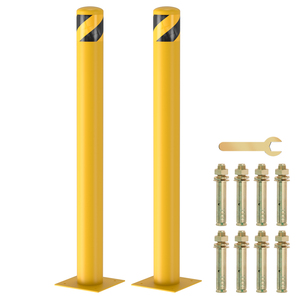
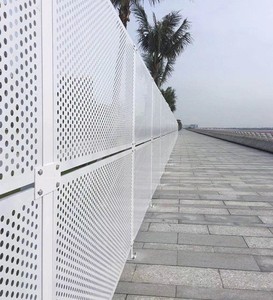
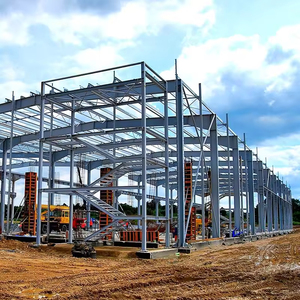
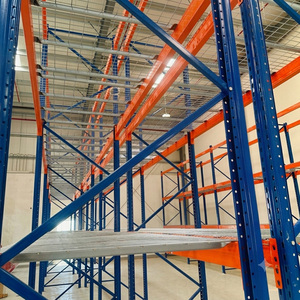
Integrate mobile cantilever systems with our heavy-duty industrial shelving, pallet racking arrays, and certified factory floor protection modules engineered for maritime and factory logistics.
A rigorous engineering evaluation of motorized cantilever mobile chassis systems for high-load bar stock, structural extrusions, heavy dies, and long-profile raw materials.
In modern industrial warehouse logistics, the storage of awkward, heavy, and non-standard long materials presents an intrinsic engineering paradox. Standard static cantilever racks consume up to 65% of floor real estate solely for forklift access aisles. When operating in high-density logistics corridors such as the Port of Osaka (Nanko), Sakishima, and the Higashiosaka SME industrial belt, land acquisition costs and high warehouse rent turn stationary storage into a severe balance sheet liability.
Our Mobile Cantilever Racks solve this geometric challenge by mounting heavy-duty cantilever uprights onto precision-guided, electronically synchronized motorized wheel bogies running over embedded steel guide rails. Instead of maintaining dedicated aisles between every single racking row, mobile cantilever systems condense the entire storage envelope into a single, dynamic floating aisle that opens on-demand via remote radio control, push-button consoles, or warehouse management software (WMS) integration. This technical vector immediately eliminates unusable dead space, delivering an unprecedented volumetric density increase of up to 85% within identical warehouse dimensions.
Fabricated using heavy-gauge hot-rolled structural steel profiles (Q355B / equivalent to JIS SS400/SM490) rather than roll-formed sheet metal, guaranteeing zero column torsion under continuous dynamic loads up to 25 tons per bay.
Equipped with decentralized SEW Eurodrive motor gearboxes and variable frequency drives (VFD). Smooth soft-start and soft-stop acceleration curves mitigate inertial shifting of long steel bundles during lateral travel.
Integrated Class-4 photoelectric light curtains, full-length emergency foot-trip wires, and safety bumpers that stop movement instantaneously upon detecting foreign objects, forklifts, or personnel in transit corridors.
Review the definitive spatial and operational metrics calculated for a typical 1,500 m² Osaka industrial bay holding 6-meter long bar stock and steel piping.
| Evaluation Parameter | Conventional Static Cantilever | Heavy-Duty Mobile Cantilever (Signature) | Net Operational Benefit |
|---|---|---|---|
| Storage Density Efficiency | 35% – 45% (Net floor utilization) | 80% – 90% (Continuous block array) | +80% Volumetric Yield |
| Dedicated Forklift Aisles | Requires 1 dedicated aisle per 2 rack faces | 1 single dynamic aisle for 8–15 rack rows | Eliminates 6–10 wasted access corridors |
| Seismic Interlock Capabilities | Rigid top ties; prone to harmonic whip | Base-level floor rail anchoring & locking pins | Engineered to absorb Hanshin/Kansai ground shears |
| Arm Adjustment Flexibility | Bolted or welded fixed levels | Plug-in tapered arm connections with 100mm pitch | Fast reconfiguration without torch cutting |
| WMS & PLC Integration | Manual visual stock management | Direct Siemens/Omron PLC interface with automated calls | Enables lights-out picking & automated crane feeds |
| Land Cost Amortization | High real estate overhead per ton stored | Cuts required warehouse footprint by 45% | Substantial monthly lease savings in Osaka Bay |
Tailored structural cantilever deployments serving the distinct manufacturing clusters and logistics ports of the Kansai Economic Corridor.
High-bay mobile cantilever installations situated in Sakishima and Maishima logistics warehouses, supporting maritime pipe bundles, structural steel beams, and heavy alloy bars moving through the Port of Osaka.
Custom heavy-arm mobile banks carrying heavy steel plates, injection molds, and brass bars for the thousands of precision engineering and metal stamping workshops across Higashiosaka's micro-machining sector.
Heavy-duty corrosion-resistant mobile cantilever systems engineered with galvanized deck covers for raw tube profiles, refinery heat-exchange pipe bundles, and specialized stainless alloy stock.
Distribution centers along the Meishin and Shin-Meishin expressways in Ibaraki and Settsu, deploying motorized cantilever bases for rapid picking of composite timber, architectural PVC, and solar racking frames.
Addressing structural safety under Japan's Building Standard Law while mitigating severe Kansai labor constraints.
1. Overcoming the "2024 Problem" (2024-nen Mondai): Japan's statutory enforcement of annual overtime caps (960 hours) on commercial logistics drivers has placed immense pressure on Kansai freight terminals. Turnaround times at warehouse loading docks must be reduced dramatically. Conventional storage requires side-loaders or multidirectional forklifts to navigate narrow, obstructed aisles. Our mobile cantilever systems integrate with automated picking calls: as the driver approaches the warehouse door, the WMS triggers the mobile cantilever bay to clear the specific aisle automatically, reducing pallet and long-profile retrieval cycles from 18 minutes down to under 4 minutes.
2. Kansai Seismic Design Protocols (Hanshin-Awaji & Nankai Trough Mitigation): Osaka's proximity to active fault lines (including the Uemachi Fault) and future Nankai Trough seismic scenarios demands extreme earthquake mitigation for heavy cantilever racks. Because cantilever arms hold cantilevered loads without front upright columns, dynamic seismic forces induce intense moments of bending. Our engineering integrates:
Operating from our modern manufacturing base in the Ajman Free Zone, we bring over 20 years of structural engineering to global export markets.
From uncoiling to multi-station roll profiling, we maintain dimensional tolerances within ±0.5mm across 12-meter columns, guaranteeing seamless vertical alignment on your Osaka site.
Computer-controlled high-tonnage punch presses create uniform connection pitches. This ensures our heavy cantilever arms hook into columns securely without slop or uneven stress points.
Full-penetration MIG/MAG welding certified under international structural codes. Column base assemblies and cantilever arm collars withstand maximum dynamic load moments.
Automated degreasing, zinc phosphate pre-treatment, and high-durability electrostatic powder baking protect against humid, salt-laden coastal atmospheres common around Osaka Bay.
Heavy steel members are strapped with anti-abrasion polymer dunnage, shrink-sealed in moisture barrier film, and loaded into 40ft open-top or high-cube containers for direct shipment to Osaka Port.
Every project includes complete structural calculation dossiers, 3D BIM/CAD erection models, anchor bolt schematics, and English/Japanese technical assembly guidelines.
Technical clarifications on civil engineering requirements, import logistics, rail casting, and safety certifications for projects in Osaka.
Mobile cantilever systems concentrate large point loads along the rail axes. We generally require an existing or newly cast reinforced slab of at least 200mm to 250mm thickness with compressive concrete strength of 25–30 MPa (FC 250–300). During our preliminary engineering consultation, we calculate rail-line point pressures and provide anchoring depth specs for chemical expansion bolts.
Yes. We offer two rail profiles: flush-embedded and surface-mounted ramps. For existing Osaka rental warehouses where deep trenching is restricted, surface-mounted chamfered rails can be anchored directly onto the floor, allowing counterbalance forklifts and reach trucks to roll smoothly over the tracks without structural disruption.
We routinely export complete racking systems under CIF or DDU Port of Osaka terms. Cargo arrives via direct container lines into Osaka Minato / Nanko Container Terminals. Components are pre-bundled in structural lifting slings to facilitate rapid unloading onto flatbed trucks for swift transfer to your facility anywhere in Osaka Prefecture.
Safety is managed through redundant Class-4 optical curtains spanning both ends of every aisle. If a beam is interrupted during chassis travel, the motors halt within milliseconds. Additionally, full-length infrared photoelectric proximity sensors sweep the floor gap, and heavy-duty manual kick-plates line the chassis base. An optical lockout tag system prevents reactivation until manually reset.
Yes. Our control cabinets, inverters, and drive assemblies are custom-configured for Japan's domestic industrial power grid (200V / 220V 3-Phase, 60Hz for the Kansai electric power district). All PLC control hardware uses CE-certified and Japan-compatible Omron or Siemens electrical logic modules.
Initial CAD layouts and seismic load simulation reports take 3 to 5 business days upon receiving your warehouse drawings. Production in our Ajman Free Zone plant takes 3 to 4 weeks depending on overall tonnage. Maritime transit from our hub to Port of Osaka runs approximately 18 to 24 days, providing one of the fastest turnkey turnaround times in the export racking industry.