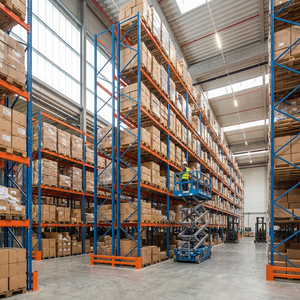
Explore our certified cold-rolled box beams, heavy-duty distribution rack beams, and smart selective upright-beam configurations engineered for modern logistics centers.
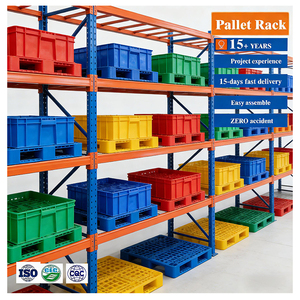
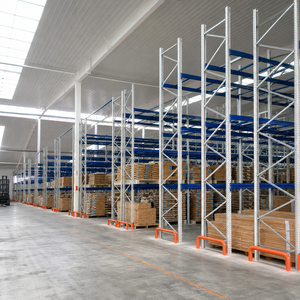
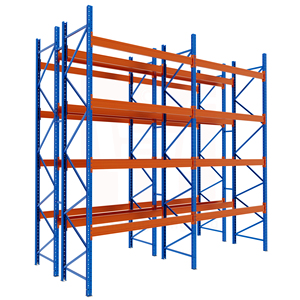
A rigorous examination of cross-sectional beam engineering, bending moments, torsional stiffness, and international structural standards for industrial racking.
In high-density industrial warehousing, the horizontal pallet racking beam represents the primary load-bearing interface between unitized cargo and vertical frame columns. The failure of a single beam profile invariably initiates a catastrophic progressive collapse across consecutive pallet bays. Therefore, certified manufacturing demands an exhaustive comprehension of yield point mechanics, shear distribution, torsional buckling, and connector end-moment resistance.
Modern beam manufacturing centers predominantly on two core geometric profiles: the twin C-profile interlocking box beam and the step beam. Each configuration serves distinct mechanical and operational storage requirements:
Structural Formula Compliance: Under the European Standard EN 15512 and RMI MH16.1 (Specification for the Design, Testing and Utilization of Industrial Steel Storage Racks), maximum allowable vertical deflection under uniformly distributed safe working load ($q$) must never exceed:
$$\delta_{max} \le \frac{L}{200}$$ (where $L$ denotes clear span between upright faces; in automated AS/RS applications, tightened to $L/300$ or $L/350$).
A racking beam is not simply a pin-ended beam; rather, it behaves as a semi-rigid frame element. The beam connector—stamped from 3.5mm to 4.5mm heavy structural steel with 3-claw, 4-claw, or 5-claw engagement—determines the degree of rotational stiffness ($k_b$) introduced to the vertical upright. A connector with higher rotational stiffness reduces central span deflection by transferring a portion of the bending moment into the vertical columns. Every connection is secured with automatic spring-loaded gravity safety locks designed to withstand an accidental vertical upward uplift force in excess of 1,000 lbs (4.45 kN) caused by forklift operator error.
| Beam Profile Type | Steel Grade Spec | Standard Span Range | Deflection Limit ($\delta_{max}$) | Primary Application Matrix |
|---|---|---|---|---|
| Twin-C Welded Box Beam (80-160mm) | Q235B / S235JR | 2300mm – 3900mm | $L / 200$ (Standard) | Heavy Selective Storage, Euro/ISO Pallets (1000–4500kg/pair) |
| Roll-Formed Step Beam (50x50 to 50x110) | Q235B / Q355B | 1350mm – 2700mm | $L / 200$ | Carton Flow, Drop-in Wire Mesh Decking, Retail Cash & Carry |
| High-Yield Micro-Alloyed Tube Beam | Q355B / S355JO | 2700mm – 4200mm | $L / 250$ to $L / 300$ | Automated High-Bay Storage (AS/RS), Seismic Risk Zones |
| Triple-Support Heavy Logistics Beam | Q235B Heavy Plate | 2500mm – 3600mm | $L / 200$ | Beverage Bottlers, Chemical Drums, Tooling Die Storage |
In certified factories, the junction between the roll-formed beam tube and the multi-claw connector bracket represents the most critical stress-concentration zone. Certified suppliers employ computerized dual-station robotic MIG (Metal Inert Gas) welding units. This automated welding process guarantees deep, continuous weld penetration without spatter, cold lap, or undercut defects, ensuring that cyclic fatigue under repeated pallet loading cycles will not induce catastrophic weld root failure.
Operating from our modern facility in Ajman Free Zone, Signature Racking Systems maintains 100% in-house engineering and fabrication control over every phase of production.
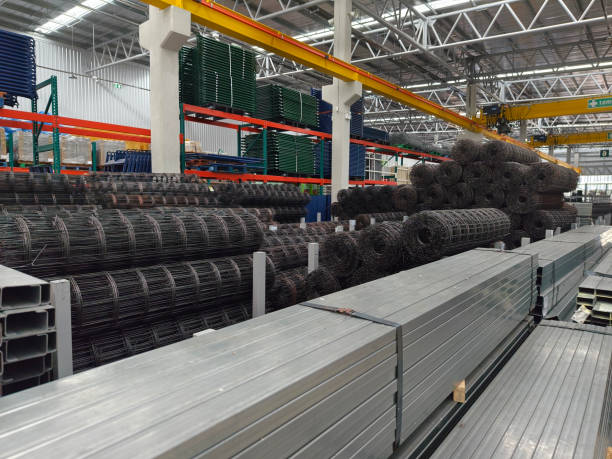
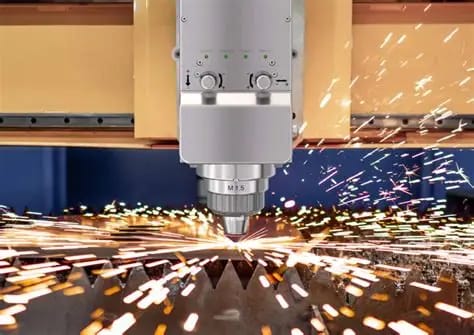
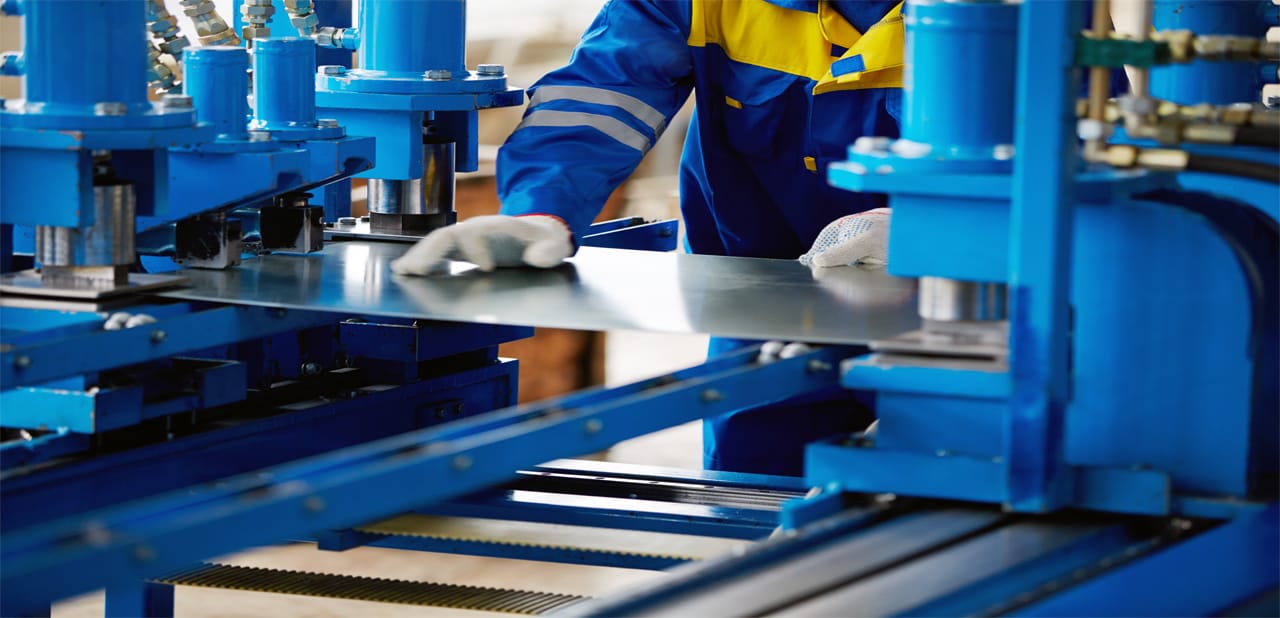
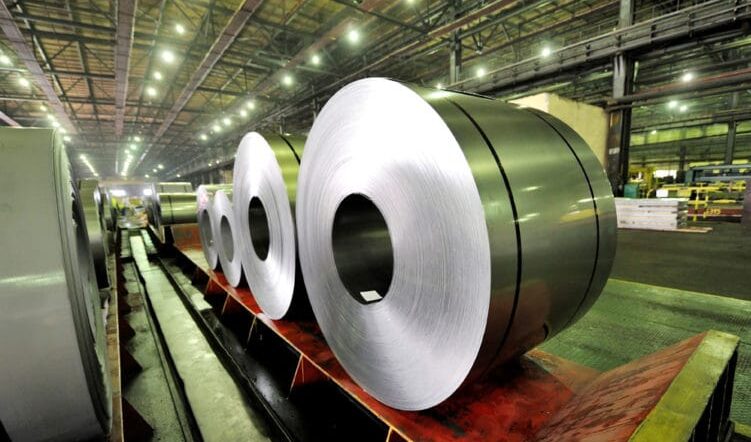
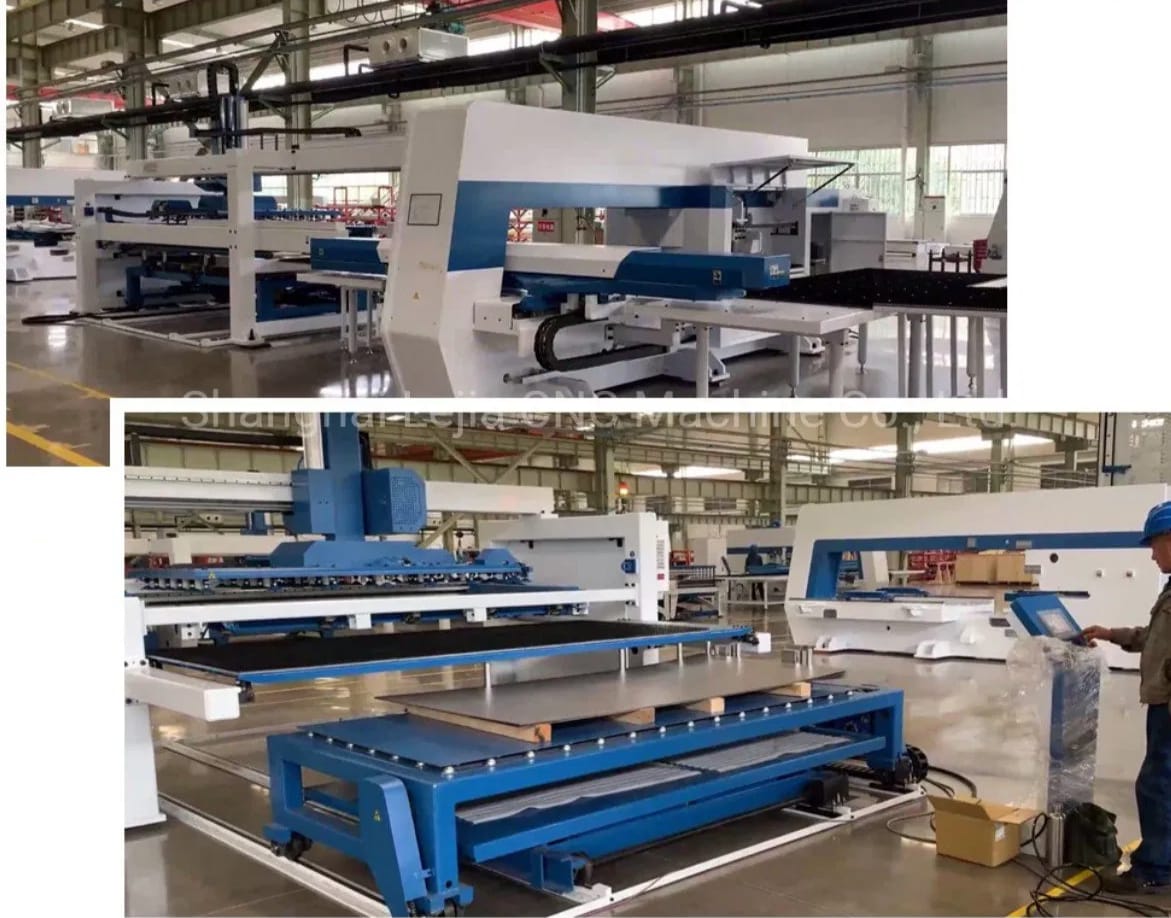
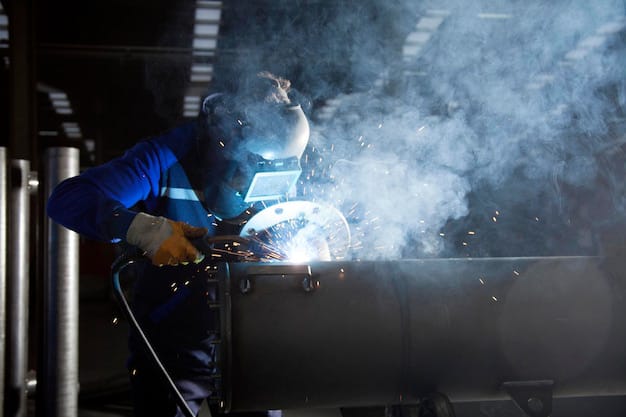
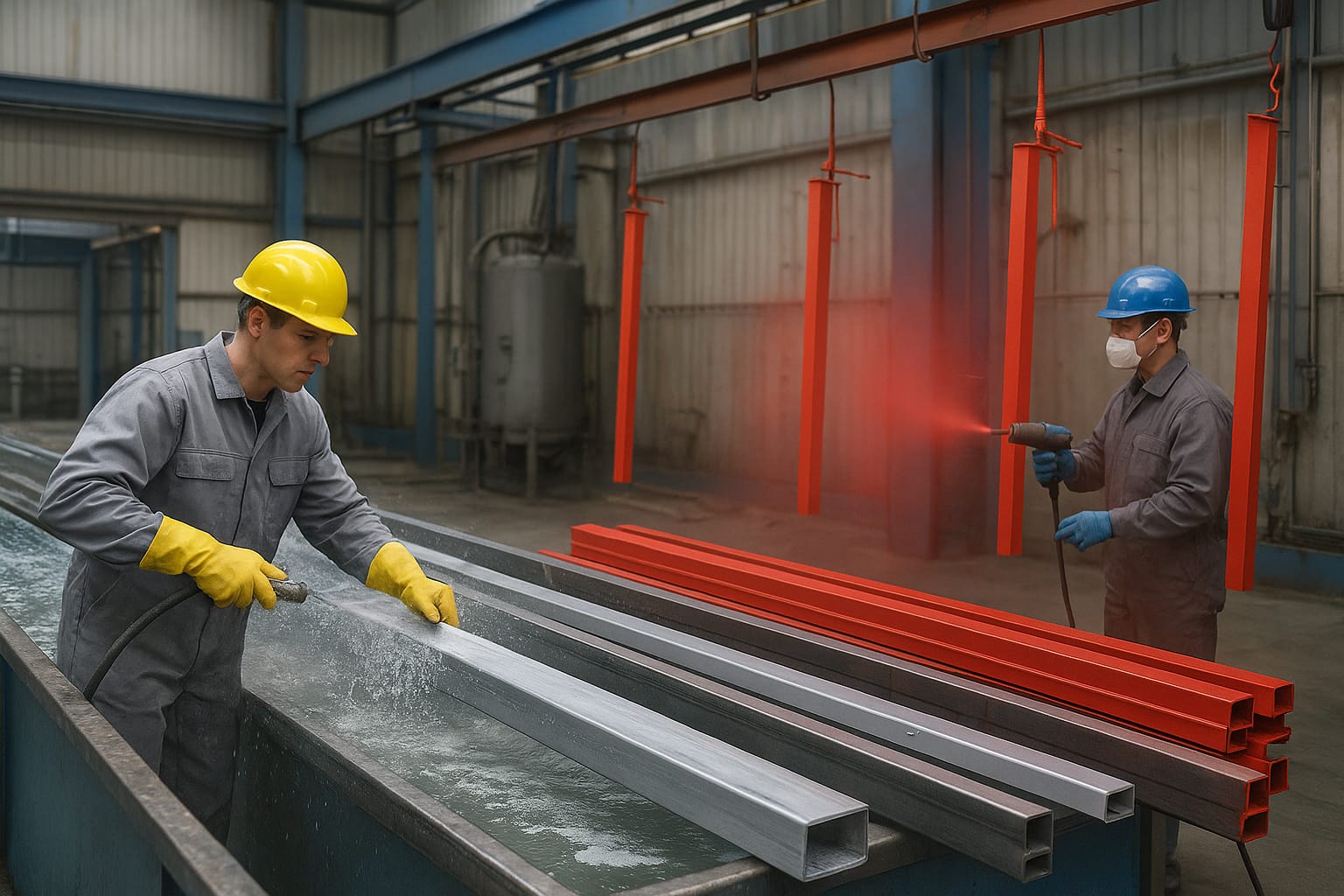
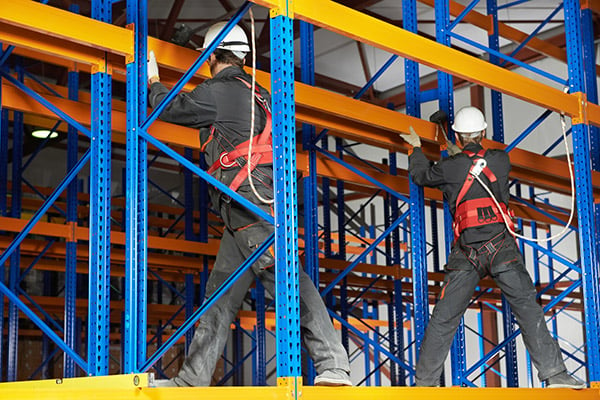

From initial site laser surveys to static load CAD modeling, our seasoned structural engineers eliminate racking undersizing and structural bottlenecks across 12 demanding industries.

We source prime mill-certified structural steel and handle rolling, punching, robotic welding, and powder coating under one roof, guaranteeing absolute dimensional tolerance repeatability.

Offering knocked-down export bundling from Ajman Free Zone with custom lengths, reinforced beam gauges, and specialized finishes for UAE logistics, GCC hubs, and international clients.
Anticipate structural transitions, metallurgical advances, and digital warehouse integration reshaping global pallet racking procurement strategies.
Procurement directors are shifting from thick, heavy mild steel toward cold-formed high-strength micro-alloyed steels (such as Q355B and S355MC). By leveraging higher yield strengths (minimum 355 MPa vs. 235 MPa), manufacturers roll beam walls that are 15% to 20% thinner while maintaining identical moment of inertia and safe load ratings. This markedly reduces freight tare weight, lowers steel tariffs, and decreases the carbon footprint of intercontinental shipping.
The explosive adoption of high-speed automated storage and retrieval systems (AS/RS), automated guided vehicles (AGVs), and 4-way pallet shuttles demands unprecedented dimensional accuracy. Future-ready pallet racking beams feature optical sensor positioning holes, laser-calibrated end-stops, and deflection thresholds locked down to L/300. Beams must demonstrate negligible torsional sway to ensure shuttle wheel tracks remain parallel within ±1.0mm tolerances under load.
Global supply chain logistics parks are increasingly mandated to satisfy stringent seismic building codes (such as Eurocode 8, ASCE 7, and RMI seismic provisions). Modern procurement evaluates beams not simply under static dead loads, but for ductility, energy dissipation capacity, and dynamic beam-end connector plastic hinge formation during earthquake accelerations. Pre-engineered nonlinear finite element modeling (FEM) is becoming standard mandatory submission data.
Smart warehouses are testing embedded RFID and low-power optical strain sensors fitted within beam hollow cores. These sensors alert safety supervisors when a beam experiences sudden impact deformation from a reach truck or when load limits are chronically exceeded, transitioning industrial storage from reactive annual audits to real-time predictive structural health maintenance.
Corporate ESG (Environmental, Social, and Governance) commitments are actively dictating vendor selection. Industrial suppliers must now verify the scrap-ratio utilization of steel melt shops (EAF vs. blast furnace) and employ solvent-free, heavy-metal-free thermosetting powder coatings with zero VOC emissions. Long-lasting anti-corrosion pretreatments enhance asset lifecycle expectancy beyond 25 years.
To insulate against geopolitical disruptions and erratic maritime freight surges, international enterprise buyers increasingly partner with regional manufacturing powerhouses (such as UAE free zone hubs). Standardized universal beam pitch configurations (50mm / 75mm) allow cross-compatibility, modular expansions, and rapid replacements without waiting for multi-month container lead times.
A step-by-step technical framework to protect your facility from catastrophic racking failures, incorrect steel grades, and under-engineered proposals.
Procuring pallet racking beams requires rigorous engineering scrutiny far beyond comparing surface pricing per meter. A structurally sound procurement assessment requires the validation of five fundamental engineering variables:
Racking beam capacity ratings assume a Uniformly Distributed Load (UDL) across the beam pair. In reality, two pallets placed onto a beam create concentrated line loads at pallet bearer contact points. When specifying beam capacities:
Warehouse ambient conditions determine the required surface finish. Standard dry distribution centers require 60–80 micron electrostatic epoxy-polyester powder coating (C1/C2 rating). However, cold storage facilities operating at −25°C to −30°C, or coastal facilities exposed to saline moisture, demand pre-treatment hot-dip galvanizing or specialized low-temperature polyurethane coatings to prevent micro-cracking and rust creep at welded joints.
Factory Inspection Protocol: Always demand mill test certificates (MTC) proving steel chemical composition (Carbon ≤ 0.20%, Silicon ≤ 0.35%, Manganese ≤ 1.4%), yield point verification (≥ 235 N/mm² for Q235B), and non-destructive ultrasonic or magnetic particle weld test documentation for connector joints.
Authoritative answers addressing structural engineering, international load codes, safety locking protocols, and custom OEM manufacturing.
Roll-formed interlocking box beams consist of two seam-welded C-profiles creating a closed structural tube. This geometry delivers higher torsional resistance ($I_z$) and superior moment resistance against lateral buckling, making them optimal for heavy, flush palletized loads. Step beams feature an indented top flange (typically 18mm to 38mm deep) engineered to support secondary wire mesh decking, timber boards, or steel drop-in shelves. While step beams provide functional decking recesses, continuous welded box beams generally offer superior payload capacity per steel kilogram across spans greater than 2700mm.
Under international storage rack design codes including EN 15512 and RMI MH16.1, the permissible vertical elastic deflection ($\delta$) of a pallet beam pair subjected to its maximum safe working uniformly distributed load must not exceed 1/200th of the clear horizontal span length ($L/200$). For example, across a standard 2700mm bay span, maximum central vertical deflection must never exceed 13.5mm. Once load is removed, the beam must recover completely with zero permanent plastic set. For automated shuttle or AS/RS high-bay installations, deflection limits are commonly tightened to $L/300$ or $L/350$.
Q235B steel possesses a minimum yield strength of 235 MPa and ultimate tensile strength of 370–500 MPa, making it the globally adopted cost-effective standard for standard selective warehouse racking. Q355B (equivalent to European S355JR) offers a higher minimum yield point of 355 MPa (a ~51% increase in yield resistance). Utilizing Q355B allows engineers to specify thinner profile wall thicknesses while supporting identical loads, reducing overall racking dead weight by 15–20%. While Q355B carries a slightly higher per-ton raw material cost, it reduces total freight shipping tonnage, making it highly advantageous for large-scale export projects.
Every beam-to-column connector is fitted with a certified spring-loaded or gravity safety locking pin (commonly safety clips manufactured from electro-galvanized high-yield spring steel). This pin drops through a calibrated aperture in the connector bracket and the upright frame's punched profile. According to OSHA and European safety directives, each safety lock must resist an unintentional vertical uplift force of at least 1,000 lbs (4.45 kN) without shearing or releasing, guaranteeing that erratic forklift lifting does not unseat the beam.
Yes. Sub-zero temperatures (down to −30°C common in frozen seafood and pharmaceutical cold stores) induce ductile-to-brittle transitions in standard commercial structural steel. Standard low-grade steels risk brittle fracture under dynamic forklift impact. For cold-store applications, Signature Racking Systems utilizes fine-grained Q235B or low-temperature impact tested S235J2/S355J2 steel grades with verified Charpy V-notch impact values at −20°C. Furthermore, polyurethane or multi-layer thermosetting powder finishes are applied to prevent condensation corrosion and surface peeling.
Overseas procurement directors and general contractors must mandate: (1) Certified Raw Material Mill Test Certificates (MTC) referencing ASTM, EN 10204 3.1, or GB standards; (2) Finite Element Analysis (FEA) or static load deflection calculation sheets signed by a chartered structural engineer; (3) Robotic weld quality inspection reports; (4) Powder coating thickness and cross-hatch adhesion test certificates (ISO 2409); and (5) Detailed CAD bay configuration and installation anchor drawings accompanied by certified capacity warning plaques.
Yes. Signature Racking Systems operates comprehensive custom metal stamping and tooling units capable of fabricating connector brackets that match proprietary upright pitch systems, including 50mm, 75mm, 76.2mm (3-inch), and teardrop configurations. When expanding existing warehouses, our engineers measure the existing upright hole pattern, column face profile, and hook depth to fabricate precision plug-in replacement or expansion beams that integrate seamlessly with your existing infrastructure.
Standard lead times for high-volume custom production range between 15 to 25 working days depending on order volume and custom powder coat colors. Because our manufacturing facilities are located directly within the Ajman Free Zone, UAE, containerized maritime shipments can be loaded and dispatched rapidly via Dubai Port (Jebel Ali). Beams are packaged in heavy-duty nested wooden dunnage with corner edge guards, strapping bands, and vapor-barrier moisture shrink wrap to ensure scratch-free international ocean freight arrival.
Collaborate directly with our senior racking structural engineers. Submit your warehouse floor plan, ceiling clear height, forklift models, and unit pallet weights for a comprehensive load calculation, free CAD layout, and factory-direct quotation.