
Explore China's next-generation intralogistics portfolio. Every system combines finite element-verified (FEA) cold-rolled structural steel, sub-millimeter PLC servo control, and turnkey integration with SAP, Oracle, and Manhattan WMS/WCS ecosystems.
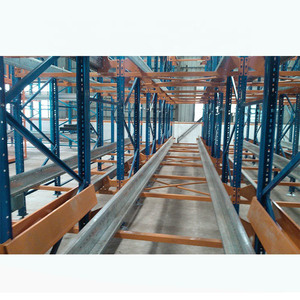
Equipped with bi-directional radio shuttles, high-precision laser positioning, and heavy-duty cold-rolled guide rails. Maximizes cubic floor utilization up to 85% for high-throughput distribution hubs.
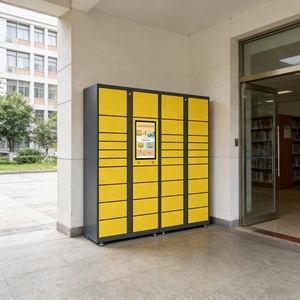
Industrial-grade outdoor/indoor smart delivery terminal engineered with anti-tamper optical detection, modular cell scalability, and remote cloud telemetry for postal and residential parcel automation.
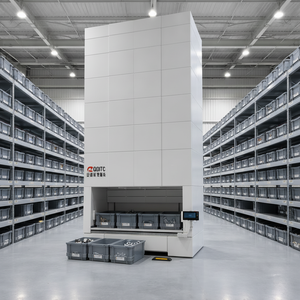
Vertical Lift Module (VLM) utilizing goods-to-person ergonomics. Automatic height sensing dynamically allocates optimal storage slots, recovering up to 90% of warehouse floor footprint for tooling and electronics.
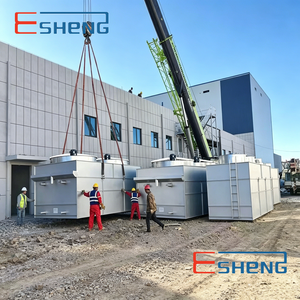
Heavy-duty stacker crane automated system purpose-built for low-temperature food and biopharma hubs. Includes anti-condensation drive electronics, self-heating sensors, and dynamic WES path optimization.
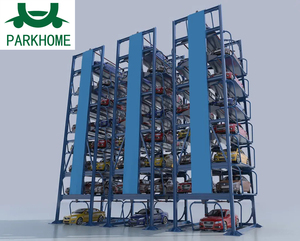
Vertical circulation mechanical parking lift park system converting 2 ground spots into 12 to 20 parking spaces. Features high-torque motor gearboxes, dual photoelectric sensors, and galvanized carrier pallets.
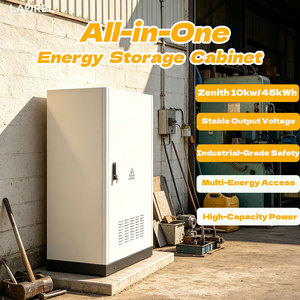
Mission-critical energy storage cabinet designed to power automated microgrids and provide clean UPS backup for continuous AS/RS crane and shuttle operations during grid disturbances.
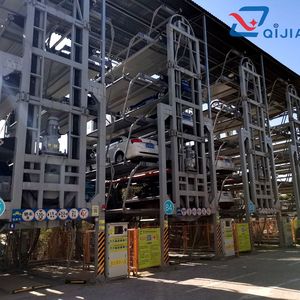
Touch-screen operated automated rotary car carousel system. Integrated with safety fall-arrest hooks, laser alignment guidance, and overload interlocks for urban fleet and commercial facility density.
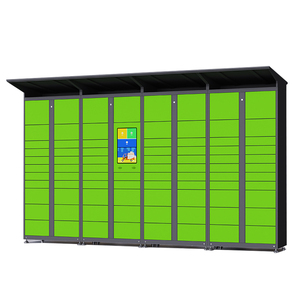
Heavy-gauge steel delivery kiosk featuring independent latch sensors, integrated surveillance cam modules, and bar-code scanner logic designed for heavy postal, B2B depot, and courier drop operations.
The global logistics infrastructure is undergoing a permanent structural migration. Skyrocketing commercial land acquisition costs, regional labor shortages, and aggressive omni-channel delivery SLAs have rendered conventional static pallet racking and manual reach-truck operations obsolete for forward-thinking enterprise operations. Today, modern warehouse engineering prioritizes automated storage and retrieval systems (AS/RS) that convert horizontal footprint into high-capacity vertical cubic volume, operating safely up to 40 meters high.
As a leading Chinese manufacturer and global exporter, our automated storage engineering philosophy bridges heavy mechanical metallurgy with real-time software orchestration. High-density shuttle systems and automated stacker cranes impose intense, cyclical dynamic loads upon structural steel profiles. Unlike static storage where loading is predominantly gravitational, an automated warehouse rack acts as a machine foundation. Deflection tolerances must not exceed 1/1000 of beam spans under full dynamic acceleration, lest optical sensor triangulation and shuttle rail engagement fail.
Our manufacturing facilities integrate structural steel engineering with intelligent electrical control panels. We utilize high-yield strength Q235B, Q355B, and specialized Q355D cold-rolled steel coils, verified via spectral chemical analysis and ultrasonic weld inspections. Every upright channel, continuous omega-beam profile, and shuttle track is roll-formed in-house, ensuring mechanical tolerances that prevent vibration harmonics during high-speed crane traverses of up to 240 m/min.
Hardware excellence constitutes only half of the intralogistics equation. A world-class automated storage system requires sub-millisecond coordination between field PLCs (Programmable Logic Controllers), Warehouse Control Systems (WCS), and enterprise Warehouse Management Systems (WMS). Our automated platforms utilize industrial Ethernet protocols—predominantly Profinet and EtherCAT—interfacing directly with Siemens S7-1500 and Beckhoff automation controllers.
When a pallet is inducted through automated dimensioning, weighing, and scanning (DWS) portals, our WCS calculates the optimal storage slot based on velocity matrices (ABC SKU rotation), structural rack weight balancing, and minimal crane travel vectors. Laser rangefinders and multi-turn absolute encoders calculate positioning with sub-millimeter precision, mitigating mechanical wear and preventing drive brake micro-slippage.
For global procurement teams, sourcing automated systems from China offers unmatched cost-to-performance velocity. China’s comprehensive industrial supply chain produces precision gears, hardened rack-and-pinion tracks, optical safety curtains, and lithium battery management systems within tightly integrated manufacturing clusters. Sourcing from our manufacturing base delivers world-tier componentry—such as SEW-Eurodrive geared motors, Sick optical sensors, and Schneider electrics—integrated onto factory-priced structural frames engineered to outlast 25-year fatigue lifecycles.
Procurement directors and supply chain engineers must future-proof their capital investments. Strategic analysis highlights four dominant procurement trajectories shaping automated material handling over the coming decade.
Traditional stacker cranes are aisle-bound; a mechanical failure in a single crane halts an entire storage aisle. Global procurement is shifting aggressively toward 4-way pallet shuttle systems. 4-way shuttles travel horizontally along both rack axes and utilize high-speed vertical reciprocating lifts to switch tiers. By decoupling cranes from dedicated aisles, operations achieve infinite modular scalability and zero-single-point-of-failure redundancy.
Food security, cold-chain logistics, and biopharma handling require extreme low-temperature automation. Human labor inside deep-freeze rooms suffers from drastic efficiency drops and acute occupational safety hazards. Modern procurement budgets prioritize cold-temperature automated systems constructed from low-temperature notch toughness steel (Q355D/E), anti-frost optical lenses, and specialized low-viscosity synthetic lubricants.
Energy consumption has become a tier-one tender evaluation criterion across Europe, the Middle East, and North America. Next-generation automated storage systems incorporate Kinetic Energy Recovery Systems (KERS). When a 2,000 kg stacker crane carriage descends or brakes from 200 m/min, regenerative drives convert mechanical kinetic energy back into clean AC electrical power, reducing facility-wide energy expenditures by up to 32%.
Physical commissioning delays represent the greatest financial risk in automated warehouse procurement. Modern tenders now mandate complete 3D Digital Twin validation before steel cutting. Utilizing Siemens Tecnomatix or Emulate3D, engineers simulate 100% of PLC code, WCS routing bottlenecks, and earthquake sway behavior. Real-time vibration and thermographic IoT sensors monitor mechanical health, shifting maintenance from reactive to predictive.
Compare dynamic payload thresholds, throughput capabilities, land footprint efficiency, and realistic ROI cycles across standard warehousing configurations to guide your capital deployment.
| Architecture Type | Max Operating Height | Single-Lane Throughput | Floor Space Utilization | Direct Access (Selectivity) | Typical Payback (ROI) |
|---|---|---|---|---|---|
| Selective Pallet Racking | 12 Meters (Reach Truck) | 20 – 30 Pallets / Hr | 35% – 40% (Low) | 100% Direct Access | Immediate (Low Capex) |
| Radio Shuttle System | 18 Meters (Forklift Driven) | 40 – 60 Pallets / Hr | 65% – 75% (High) | LIFO / FIFO (Channel Based) | 18 – 24 Months |
| Single-Mast AS/RS Crane | 24 Meters (Automated) | 45 – 70 Pallets / Hr | 80% – 85% (Very High) | 100% Computerized Access | 24 – 36 Months |
| Double-Mast High-Bay AS/RS | 40 Meters (Heavy Unit Load) | 80 – 120 Pallets / Hr | 85% – 92% (Maximum) | 100% High-Speed Access | 30 – 42 Months |
| Vertical Lift Module (VLM) | 24 Meters (Goods-To-Person) | 250 – 350 Trays / Hr | Up to 90% Floor Saved | 100% Ergonomic Window | 12 – 20 Months |
Our research and development pipeline centers on three core mechanical and computing advancements engineered to elevate operational uptime and throughput velocity.
Conventional photo-eye sensors can struggle with broken pallet boards, sagging stretch-wrap, or displaced carton loads. Our newest automated crane masts incorporate dual 3D Time-of-Flight (ToF) cameras coupled with edge AI processors. The system inspects pallet geometry in 120 milliseconds during transit, dynamically adjusting extraction forks to eliminate catastrophic rack snagging.
Eliminating lithium battery swapping downtime, our high-density pallet shuttles utilize hybrid super-capacitor energy storage modules. When the shuttle docks with the mother cart or vertical elevator hoist for just 12 seconds during pallet hand-off, an ultra-fast charging burst occurs, empowering 24/7 perpetual operation across high-velocity 3PL fulfilment distribution hubs.
In rack-supported building structures (Rack-Clad AS/RS), the automated racking framework itself forms the load-bearing skeleton supporting the roof and side-wall sandwich panel cladding. By eliminating the necessity of structural building columns, developers achieve unparalleled cubic volume optimization, significantly reduced construction timelines, and up to 25% lower civil works expenditures.
Backed by over two decades of heavy industrial fabrication, our dual manufacturing footprint in mainland China and our Middle East strategic presence delivers single-source accountability from CAD drawing to post-installation site sign-off.
We do not outsource critical structural fabrication. From uncoiling heavy gauge raw steel to computer-controlled continuous punching and roll-forming, our in-house lines achieve strict dimensional tolerances, ensuring exact structural hole pitch repeat accuracy.
Every steel heat receives tensile, yield, and elongation testing. All automated structural uprights, cantilever arms, and mezzanine floor components comply strictly with EN 15512, RMI, and FEM specifications, backed by seismic damping finite element validation.
Export engineering requires rigorous logistics packaging. All structural profiles are bundled with protective polyethylene corner guards, heavy-gauge steel banding, moisture-proof desiccants, and container-optimized racking packs designed for damage-free ocean freight arrival.
One accountable engineering partner. From initial structural site surveys, building laser scans, and bespoke CAD engineering drawings to factory acceptance testing (FAT), site anchoring, alignment leveling, and ongoing preventative maintenance.
Our systematic four-stage engineering delivery process eliminates operational surprises and guarantees on-time intralogistics system handover.
Detailed analysis of building clear heights, floor slab load capacities (DIN 18202 Class 3 flatness), pallet SKU velocity distribution, and handling equipment clearances to build optimized CAD layouts.
Structural finite element analysis under static load, dynamic shuttle braking stress, and regional seismic zone codes. All profile geometries, baseplate anchorings, and splice connections verified.
In-house roll forming, multi-axis automated robotic welding of beam end connectors, automated acid wash surface degreasing, and tough electrostatic epoxy powder coating baking at 200°C.
Rigorous on-site assembly by certified installation crews, chemical anchor pull-out testing, laser rail alignment, full-load live cycle testing, and comprehensive WMS/WCS integration sign-off.
Direct, data-driven answers to the most critical mechanical, electrical, software, and international sourcing questions posed by supply chain directors.
High-bay AS/RS and intensive shuttle systems demand stringent floor slab tolerances. For structures exceeding 15 meters, the concrete slab must conform to DIN 18202 (Table 3, Line 4) or VDMA 15251 specifications for superflat floors. Point-load capacities typically require 80 to 150 kN per upright column, with slab shrinkage and expansion joints strategically positioned away from crane anchor guide rails to avoid structural settlement and laser triangulation divergence.
Our automated racking systems and mechanical equipment are engineered in strict conformance with European FEM (Fédération Européenne de la Manutention) codes (notably FEM 9.831, 9.841, and 10.2.02), European Standards EN 15512 and EN 15620, as well as American RMI (Rack Manufacturers Institute) and ANSI MH16.1 specifications. All structural steel certificates (MTC 3.1) are documented, electrical panels carry CE marking, and electrical safety systems incorporate SIL-3 rated emergency stops and light curtains.
Our proprietary or customized open-architecture WCS platforms communicate seamlessly via RESTful Web APIs, SOAP, direct TCP/IP sockets, or database-level staging tables (MSSQL, Oracle, PostgreSQL). We have pre-configured communication handshakes for leading global ERP and WMS platforms including SAP EWM, Oracle NetSuite, Manhattan Associates, and Infor, enabling bidirectional real-time inventory allocation, order dispatch, and equipment diagnostic telemetry.
Manufacturing lead time for medium-to-large automated projects (2,000 to 15,000 pallet positions) typically ranges from 60 to 90 calendar days following CAD freeze and structural sign-off. Because our racking and shuttle guide tracks are engineered as modular knockdown assemblies, a standard 40-foot high-cube container accommodates between 18 and 22 metric tons of structural steel, drastically reducing ocean freight costs per pallet location compared to pre-welded frameworks.
System resiliency is built directly into our mechanics. In intensive shuttle systems, shuttles are not locked into single lanes. If a shuttle requires servicing, our quick-recovery rescue cart retrieves the unit without human personnel entering the high-bay racking matrix. In multi-level 4-way shuttle systems, spare shuttles dynamically take over assigned tasks through WCS rerouting, guaranteeing zero complete warehouse operational blackouts.
Yes. Our structural design teams utilize advanced seismic simulation software (STAAD.Pro, SAP2000) modeling dynamic response spectra under regional building codes (UBC, IBC, Eurocode 8). Racking frames for earthquake-prone territories feature upgraded Q355 structural steel profiles, oversized ductile baseplates, heavy cross-bracing diagonals, and high-tensile anchor bolts with calibrated embedment depths to safely absorb seismic energy.
We provide structured maintenance manuals, calibrated torque inspection regimens, and automated PLC diagnostic logs. Mechanical preventative cycles focus on semi-annual torque checks of beam connector bolts, annual ultrasonic rail alignment inspections, drive belt and polyurethane wheel wear measurements, and optical sensor calibration. High-wear mechanical components are selected with international interchangeability (SKF bearings, SEW drives, Sick optics).
We support flexible international project deployment. Clients can choose between full turnkey installation executed by our dedicated site engineers and mechanical teams, or experienced site supervision where our senior engineers direct and inspect local contractor crews. Every installation concludes with calibrated optical leveling, dynamic load testing under maximum design capacity, and comprehensive operational training for client technicians.
Submit your facility layout, clear ceiling heights, and pallet specifications. Our senior structural and intralogistics engineers will provide a comprehensive CAD concept layout, capacity simulation, and itemized tender proposal within 48 business hours.