Perimeter Safety
View Product Specs

Precision-fabricated logistics barriers, high-bay pallet racking modules, and industrial storage systems engineered for zero-tolerance logistics hubs.
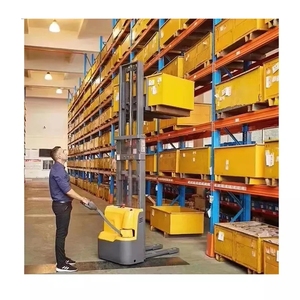
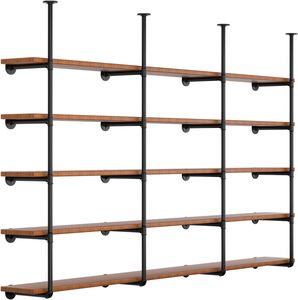
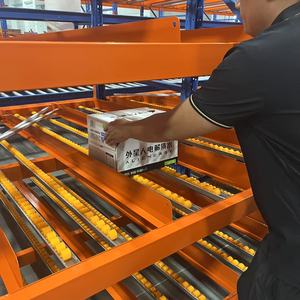
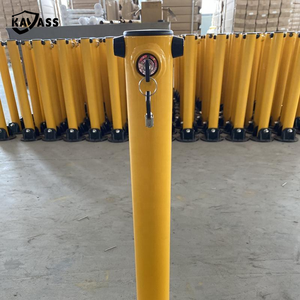
The industrial loading bay represents the single most dangerous interface in modern material handling. According to global logistics safety statistics, over 25% of all warehouse accidents occur at or around the dock plate, with catastrophic forklift drop-offs accounting for the majority of fatal supply-chain incidents. Modern high-velocity distribution hubs—integrating automated guided vehicles (AGVs), counterbalanced electric forklifts weighing upwards of 5,000 kg, and high-frequency turnaround schedules—cannot rely on traditional chain links, visual paint markings, or lightweight manual drop-bars.
Procuring engineered dock safety barriers is no longer an isolated safety compliance exercise; it is an operational resilience mandate. A certified barrier must absorb tremendous kinetic force ($E_k = \frac{1}{2} m v^2$), deflect safely within defined clearance envelopes, and protect internal anchor points from tearing through concrete slabs. This comprehensive white paper audits the top 10 dock safety barriers manufacturers worldwide, dissects raw material metallurgy, highlights dynamic testing protocols (such as PAS 13:2017), and provides facility engineers with a bulletproof procurement matrix.
In-depth technical evaluations of leading fabricators across impact absorption technology, material science, customization capabilities, and turnkey manufacturing integrity.
Operating directly from state-of-the-art production facilities in the Ajman Free Zone, Signature Racking Systems stands out as an engineering powerhouse. Backed by 20+ years of dedicated structural storage and safety fabrication, Signature controls every phase of production in-house: high-precision automated roll forming, hydraulic pressing, robotic structural welding, CNC punching, and automated electrostatic powder coating.
Unlike distributors who re-label outsourced hardware, Signature’s certified engineers configure custom dock safety gates, heavy-gauge column crash protectors, and perimeter impact systems tailored to exact slab depths, vehicle kinematics, and warehouse configurations. Their solutions combine high-yield cold-rolled steel with energy-dissipating anchor geometries, delivering unmatched survivability under heavy material handling collisions across the Middle East, Europe, and global industrial zones.
A recognized brand in loading dock levelers and vehicle restraints, Rite-Hite excels in flexible barrier netting and steel-curtain integrations. Their Dok-Guardian line uses high-strength PVC-coated nylon curtains supported by heavy-gauge steel side bollards, engineered to stop a 4,500 kg forklift moving at 6.5 km/h.
A-SAFE transformed industrial safety by introducing polymer-based impact barriers. Their dock gate models utilize three-layer memory polymer rails that flex upon impact, dissipate kinetic energy through an internal elastomer damper, and return to their original form without floor anchor degradation.
SlowStop manufactures modular steel pipe barriers anchored to a patented ductile iron base with an internal elastomer cartridge. When an industrial vehicle strikes the barrier, the base pivots dynamically, dampening shock loads before transferring minimal shear stress to the underlying concrete foundation.
McCue specializes in hybrid safety barriers combining high-tensile steel cores with impact-dampening polyethylene outer shells. Their Crash Barrier and SafeStop dock gates provide high visual awareness via OSHA-safety yellow profiles while preventing cosmetic floor chipping.
Boplan is known across Europe for high-density polymer safety gates and dock barriers designed specifically for food, pharmaceutical, and high-throughput beverage plants. Their modular drop-down and sliding dock barriers withstand substantial repeated shocks while maintaining hygiene requirements.
Vestil delivers a comprehensive catalog of mechanical safety gear, including structural steel drop-down dock barriers, scissor-expanding gates, and electro-hydraulic lift barriers. Their manual gas-strut-assisted gates are popular for cost-sensitive warehouses needing sturdy, structural steel barriers.
Blue Giant approaches loading dock safety from an electro-hydraulic systems angle. In addition to standalone gates, they manufacture hydraulic dock levelers featuring an integrated 127 mm (5-inch) high structural steel lip barrier that remains upright when the leveler is stored, preventing roll-off.
MPM designs technical polymer protections characterized by superior elasticity and energy dissipation. Their dock gate line includes swing, vertical lift, and sliding configurations engineered to stop light and medium transport equipment without causing floor fractures.
Known for rugged all-steel yard ramps and dock boards, Bluff builds heavy-duty structural steel safety gates designed to stop industrial vehicles in direct loading paths. Their bollard-and-rail combinations are fully welded and powder-coated to endure heavy logistics environments.
Compare impact dissipation, deflections, installation footprints, and floor anchor strain to match your facility's exact vehicle speeds and payload dynamics.
| Evaluation Parameter | High-Tensile Cold-Rolled Steel (Signature) | Dynamic Polymer Extrusion | Fabric Webbing / Netting Systems |
|---|---|---|---|
| Primary Impact Mechanism | Controlled plastic/elastic yield + shear base dissipation | Elastic memory flex + internal polymer damper | Tensile elongation of woven multi-ply nylon strap |
| Impact Energy Capacity ($E_k$) | 15,000 J to 50,000+ J (Engineered gauges) | 10,000 J to 35,000 J (Temperature dependent) | 10,000 J to 25,000 J (Vehicle mass limited) |
| Dynamic Deflection Clearance | Minimal (50 mm - 150 mm) · Critical near dock drop | High (250 mm - 550 mm) · Requires deep setback | Very High (400 mm - 800 mm) · Risk of rim over-edge |
| Concrete Anchor Shear Force | Balanced via multi-anchor engineered footprint | Low-to-Medium (Absorbed along rail body) | High point-load tension on upright end posts |
| Operating Temperature Limits | -40°C to +120°C (Consistent performance) | -10°C to +45°C (Brittle in extreme cold; soft in heat) | -20°C to +60°C (Degrades under persistent UV) |
| Direct Turnkey Fabrication Cost | High value · Direct manufacturer savings | Premium cost · Proprietary resins & tooling | Moderate · Periodic strap & tensioner replacement |
Key technological shifts shaping how logistics directors, warehouse architects, and EHS managers specify physical barrier infrastructure.
Standalone mechanical barriers are increasingly replaced by electronically monitored safety gates. Leading loading bays now link gate limit-switches directly into the warehouse dock sequence: overhead sectional doors cannot rise, dock levelers cannot deploy, and internal LED vehicle traffic lights stay red until physical barriers are positively locked in place.
Engineers are pairing roll-formed structural steel with polymer buffers. The high-yield steel core delivers rigid deflection boundaries within 100 mm of the dock pit edge, while an outer shock-dissipating sleeve eliminates surface gouging, prevents paint wear, and prevents micro-fracturing of the concrete slab during low-speed impacts.
Subjective marketing claims ("heavy duty", "forklift proof") are giving way to standardized test regimes. Global enterprise procurement teams require verified kinetic testing documentation based on PAS 13:2017 or ASTM F3016 crash parameters, defining the exact impact angle (typically 90° or 45°) and mass-velocity curves before authorising facility fitouts.
Discover how 20+ years of dedicated structural storage and warehouse safety manufacturing translates into significant project advantages for facility managers and EPC contractors.
Unlike equipment resellers, we maintain complete control over raw steel sourcing, precision roll-forming, laser cutting, automated punching, and AWS-certified structural welding under one roof in Ajman Free Zone.
Every dock layout is designed around your specific clear heights, door centers, counterbalanced truck tonnages, and traffic vectors. Our engineers generate finite-element calculations to ensure anchors won't fail under impact.
From high-bay selective pallet racks, heavy-duty drive-in systems, and multi-tier mezzanines to column safety armors, dock barriers, and pedestrian handrails—we supply the complete facility safety envelope.
With trained installation crews operating across the UAE and streamlined export-packaging for global destinations, we manage delivery, slab anchoring, torque verification, and handover compliance without middlemen.
Key technical, regulatory, and installation considerations for logistics facility engineers.
Connect directly with our manufacturing engineering team. We supply verified load-rated layouts, structural calculations, and CAD drawings tailored to your facility's traffic flow, vehicle tonnages, and dock elevations.