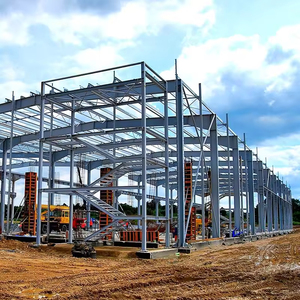
Custom-fabricated cantilever configurations, high-density flow systems, and integrated plant safety barriers delivered to global distribution hubs.
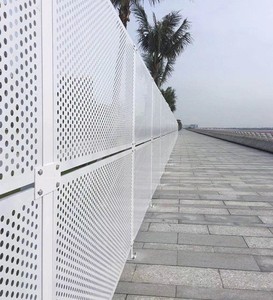
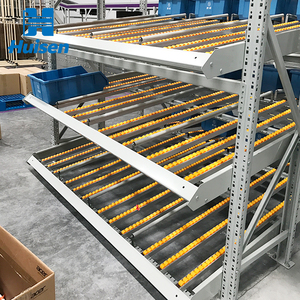
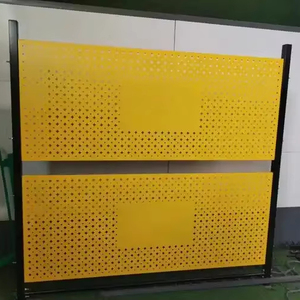
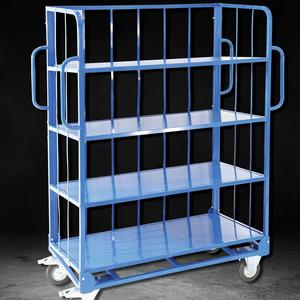
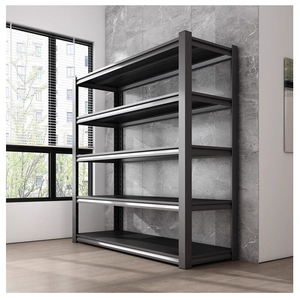
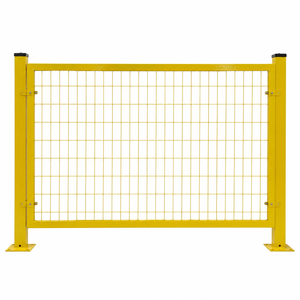
Modern industrial supply chains handling non-palletized, long-span structural materials—such as hot-rolled steel profiles, extruded aluminum profiles, industrial PVC conduits, timber bundles, and specialized aerospace composites—require heavy-load storage frameworks that defy standard pallet racking architectures. Structural cantilever racking serves as the backbone for these severe-duty operations. Engineered from robust, hot-rolled I-beams (H-beams) rather than lighter cold-formed sheet steel, structural cantilever systems provide high impact resilience, high static and dynamic load thresholds, and complete horizontal accessibility.
As premier Chinese structural cantilever rack factories and exporters, our manufacturing philosophy merges European FEM 10.2.02 and American RMI (Rack Manufacturers Institute) design standards with advanced in-house steel fabrication. By leveraging automated sub-arc welding, CNC computer-aided punching, and high-precision laser profiling, we eliminate the structural vulnerabilities commonly found in conventional storage racking. The absence of front columns removes vertical storage barriers, converting inaccessible cubic floor volume into clear, high-density storage capacity.
Industrial Sourcing Insight: Structural cantilever racks fabricated from hot-rolled ASTM A36 / Chinese Standard Q235B and Q355B structural steel maintain ductile yield behavior under severe forklift impact, preventing systemic progressive collapse commonly associated with lighter cold-rolled rack configurations.
When selecting industrial cantilever storage, plant engineers and procurement heads must carefully weigh cold-formed roll-formed steel against structural hot-rolled I-beam configurations. The following comparative engineering matrix outlines why heavy industrial applications consistently standardize on hot-rolled structural cantilever fabrications:
| Performance Parameter | Cold-Formed Cantilever Racks | Structural Cantilever Racks (Hot-Rolled) | Operational Impact & Safety Advantage |
|---|---|---|---|
| Base Material Selection | Gauge steel coils (1.5mm - 3.0mm) | Heavy I-Beams (Q235B / Q355B H-Section) | Superior impact resistance against forklift damage. |
| Arm Load Capacities | Light to Medium (200kg - 800kg per arm) | Ultra Heavy Duty (1,000kg - 5,000kg+ per arm) | Supports high-density packs of solid steel billets and bar stock. |
| Connection Interface | Drop-in pins, light tab connectors | Grade 8.8 / 10.9 High-Tensile Structural Bolts | Rigid moment frames minimize arm deflection and sway under load. |
| Outdoor Durability | Standard electrostatic powder coating | Hot-Dip Galvanization (EN ISO 1461 compliant) | Corrosion-proof in exposed yards, lumber docks, and coastal ports. |
| System Deflection Recovery | Plastic deformation upon severe impact | Elastic recovery; ductile structural yield | Extends asset service life beyond 20 years in high-traffic facilities. |
Cantilever racks are structurally unique: the vertical columns operate primarily in combined compression and bending (beam-column behavior), while the horizontal cantilever arms endure severe single-cantilever bending moments. A critical factor often overlooked by non-specialized fabricators is asymmetrical rack loading—where one face of a double-sided cantilever system is fully loaded to rated design capacity while the opposing side is completely unladen. Our engineering team utilizes finite element analysis (FEA) to verify that column bases, vertical column webs, and foundation anchors withstand maximum eccentric overturning moments without anchorage pull-out or column buckling.
Total vertical integration from raw structural steel profiling to robotic anti-corrosion coating ensures unmatched reliability and international compliance.
Direct sourcing from certified tier-one Chinese steel mills (Baosteel, Ansteel) guarantees mill test certificates (MTC) with full heat-number traceability for every batch of Q235B and Q355B structural steel.
Factory-floor execution includes multi-axis robotic MAG/MIG welding cells that create consistent, deep-penetration welds along all arm saddles, column flanges, and base-plate moment connections.
In-house 12-stage pre-treatment tunnels, zinc-phosphate chemical conversion, automatic electrostatic powder coating, or heavy-duty hot-dip galvanizing meet stringent C3-C5 corrosion environments.
As enterprise global logistics embrace Industry 4.0 paradigms, procurement heads and supply chain architects face shifting demands. When budgeting for long-profile storage infrastructure, leading organizations are focusing on three primary industry evolutions:
The manual handling of six-meter steel pipes and timber bundles via side-loader forklifts presents labor hazards and operational bottlenecks. Modern warehouse design is pivoting rapidly toward crane-fed Cantilever AS/RS configurations. Automated stacker cranes operate within narrow aisles, retrieving bundles from structural cantilever arms with millimeter accuracy. This shift requires cantilever arms to be manufactured to tighter deflection tolerances (L/300 or L/500 rather than commercial L/200), ensuring sensor-driven shuttles and optical sensors can position payloads without catching.
Industrial real estate costs have made enclosed factory space valuable. Consequently, heavy profile and pipe storage is moving outdoors. Procurement managers increasingly specify hot-dip galvanized (HDG) structural cantilever racks outfitted with engineered canopy roof arms. These structures double as building envelopes—supporting overhead weather sheeting, integrated runoff drainage, and snow/wind loads calculated to local building codes—significantly reducing capital expenditure compared to building traditional industrial warehouses.
With international carbon border adjustment mechanisms (such as the EU CBAM) reshaping trade, Tier-1 Chinese exporters are adopting low-carbon electric arc furnace (EAF) steel options and eco-efficient thermoset polyester powder formulations. EPC contractors and multinational buyers now evaluate not just load ratings, but also the embodied carbon metrics of their racking structures.
Clear, technical guidance addressing load certification, installation logistics, international shipping, and custom manufacturing criteria.
Our engineering division requires the maximum product profile dimensions (length, depth, height), bundle weight, whether products are rigid or subject to mid-span sag, load center-of-gravity (CG), forklift model and mast lift clearance, floor slab thickness and concrete compressive strength (e.g., C25/30), as well as local seismic and wind load classifications.
Heavy structural H-beams and base assemblies are packaged in heavy-gauge steel channel cradles with custom wooden dunnage to prevent flange deformation. Cantilever arms are grouped on dedicated steel skids with protective corner wraps, and all hardware is sealed in waterproof steel drums. This ensures components fit within standard 40ft High Cube (HC) or Open Top (OT) shipping containers without transit damage.
Yes. Columns are CNC-punched with a standard 100mm, 140mm, or 150mm vertical hole pitch. Arms secure to the column flange using Grade 8.8 or Grade 10.9 high-strength structural bolts. This allows warehouse maintenance teams to reconfigure shelf clearance levels to accommodate changing product inventory heights without structural welding or torch cutting.
All structural designs, moment connection calculations, and material selections are engineered to comply with ANSI/RMI MH16.1, EN 15512, and AS 4084 standards. We provide third-party finite element structural calculation packages, raw steel mill test certificates (MTC), and professional engineer (PE) structural stamps upon project request.