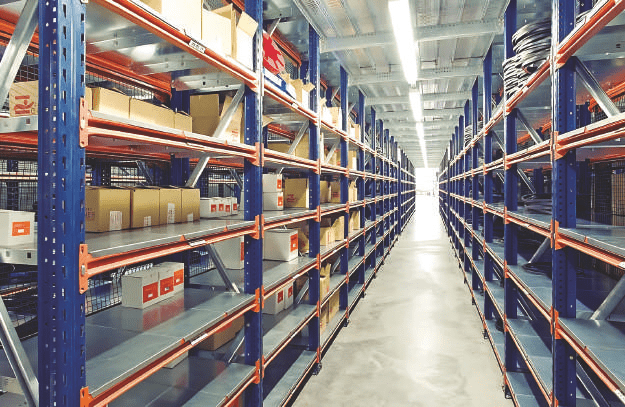
Explore our certified dynamic flow lanes and heavy-duty structural warehouse storage units, fully custom-manufactured in China and supplied globally across GCC, European, and American logistics hubs.
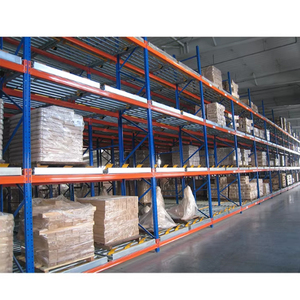
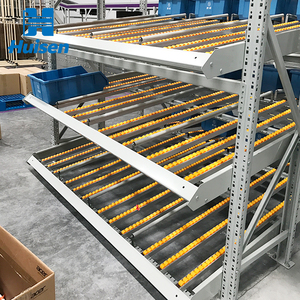
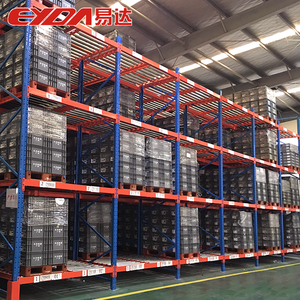
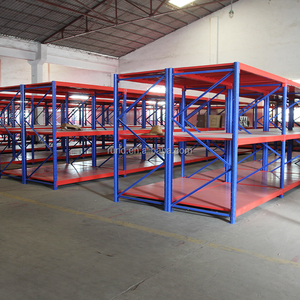
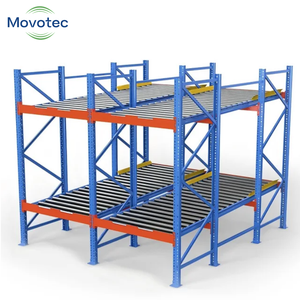
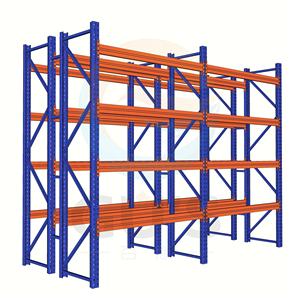
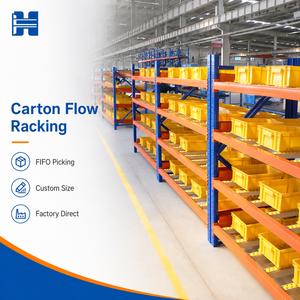
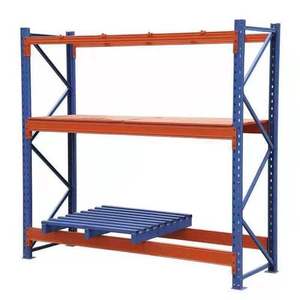
A deep structural overview of inclined roller mechanics, centrifugal brake drum engineering, and separator damper safety in modern high-throughput logistics terminals.
Pallet flow racks—commonly classified as gravity flow racks or dynamic live storage systems—represent the pinnacle of non-powered high-density warehousing. Operating on a strictly controlled incline (typically between 3.0% and 4.0% or approximately 1.7° to 2.3°), pallet flow channels leverage gravitational potential energy to feed palletized goods seamlessly from the loading (replenishment) face to the unloading (picking) face.
Unlike push-back or drive-in configurations which enforce Last-In-First-Out (LIFO) inventory rotations, gravity pallet flow systems guarantee an immutable FIFO discipline. This characteristic makes them essential for cold storage perishables, pharmaceutical products, time-sensitive food & beverage supply chains, and high-velocity fast-moving consumer goods (FMCG).
By dedicating discrete operational aisles for loading and picking, warehouse throughput capacity surges while collision hazards between counterbalance forklifts, reach trucks, and warehouse order selectors are entirely eliminated.
To maintain controlled speed without runaway inertia, lane designers balance gravity against rolling resistance and centrifugal brake counter-torque:
| Racking Topology | Inventory Flow | Storage Density Index | Throughput Speed | Floor Space Utilization | Forklift Travel & Wear | Capital Investment |
|---|---|---|---|---|---|---|
| Gravity Pallet Flow | FIFO (Strict) | Up to 85% Volumetric | Very High (Separate Aisles) | Exceptional (Min. Aisles) | Low (Forklifts never enter lanes) | Moderate–High (Fast Payback) |
| Selective Pallet Rack | FIFO / Random Access | 35% – 45% Volumetric | High per Pallet Access | Low (Wide Aisles Required) | High (Continuous Aisle Travel) | Low Initial CAPEX |
| Drive-In / Drive-Through | LIFO (Drive-In) / FIFO (Drive-Thru) | 65% – 75% Volumetric | Low (Slow Forklift Entry) | High (Dense Cube) | Very High (Frequent Upright Impact) | Low–Moderate |
| Push-Back Racking | LIFO (Strict) | 60% – 70% Volumetric | Moderate (2–6 Pallets Deep) | Moderate–High | Moderate (Single Aisle Loading) | Moderate |
| Radio Shuttle Cart | FIFO / LIFO (Software Controlled) | Up to 85% Volumetric | High (Autonomous In-Lane) | Exceptional | Low (Cart performs lane travel) | High (Electronics & Batteries) |
Key market catalysts, materials engineering innovations, and structural integration criteria shaping corporate procurement strategies worldwide.
As international supply chain operations strive for carbon neutrality, gravity pallet flow systems provide a zero-emission alternative to powered conveyor networks. By converting gravity into kinetic work, mega-distribution centers eliminate electrical drive motors across intermediate buffering zones, slashing energy costs and maintenance overhead.
Global demand for temperature-controlled logistics (-25°C to -30°C for frozen proteins, vaccines, and biologics) necessitates advanced metallurgical and bearing chemistry. Modern procurement mandates high-density polyethylene (HDPE) non-embrittling rollers, low-viscosity synthetic fluorinated greases, and pre-galvanized frame members to withstand thermal cycling and condensation without corrosion.
Autonomous Mobile Robots (AMRs) and Automated Guided Vehicles (AGVs) are replacing manually driven forklifts. Pallet flow lines are now engineered with optical positioning flags, inductive dock sensors, and dynamic pneumatic release stops, allowing automated equipment to charge and discharge lanes with sub-millimeter positional repeatability.
Procurement executives have pivoted away from low upfront quotes toward 10-year lifecycle evaluations. High-precision CNC-punched uprights, precision sealed cartridge bearings, and field-replaceable roller assemblies yield lower lifetime maintenance costs, mitigating the downtime risks inherent in inferior welded roller tracks.
High ocean container freight tariffs require maximum volumetric packing efficiency. Next-generation pallet flow racks utilize modular bolted side frames, plug-in roller tracks, and nesting structural channels that maximize 40ft High Cube container cube utilization, dramatically lowering per-pallet landed export costs.
Modern distribution operations handle diverse pallet formats (Euro 800×1200mm, Industrial 1000×1200mm, US GMA 40×48", plastic slave boards, and metal skids). Pallet flow systems are engineered with full-width cylindrical steel rollers or triple-track split wheels to handle varying bottom-board configurations without binding.
Pioneering advancements in mechanical damping, eddy current non-contact braking, and high-strength structural profiles.
Traditional friction brake rollers suffer from mechanical pad wear over millions of pallet cycles. Next-gen pallet flow tracks incorporate neodymium magnetic rotor systems that generate opposing Lorentz forces, offering wear-free, self-regulating speed damping.
To eliminate backpressure from a queue of fifteen 1,200kg pallets resting against the extraction face, engineered rocker-arm separators lock the second pallet until the first is safely lifted 50mm clear by the forklift operator, preventing dangerous load pinches.
Advanced FEA computational simulation optimizes upright omega-sections and beam cross-sections. Using high-yield Q355B micro-alloyed steel, structural engineers reduce deadweight by 12% while boosting seismic moment resistance across critical seismic zones.
Automated 5-stage iron phosphating and degreasing combined with continuous electrostatic powder application delivers 80–120 micron dry film thickness. Racks exhibit over 500 hours of continuous ASTM B117 salt spray resistance for humid tropical or marine facilities.
Combining 20+ years of structural fabrication excellence, in-house roll forming lines, and precision engineering across our modern manufacturing centers.
Unlike trading intermediaries, our manufacturing infrastructure controls the complete fabrication lifecycle. From raw steel coil slit-line intake to automated continuous roll forming, CNC punch lines, robotic welding stations, and multi-stage automated electrostatic powder coating ovens—every component is verified against strict engineering tolerances.
With an international export footprint spanning 500+ major warehouse installations across the UAE, Saudi Arabia, Europe, Southeast Asia, and North America, we engineer storage solutions around your actual load configurations, clear ceiling heights, and floor slab load ratings.
Comprehensive bay layout and 3D FEA structural modeling.
Direct mill test certificates for Q235B, Q355B, and galvanized coil.
Knock-down seaworthy export packaging with layout blueprints.
Load signage, column guards, end barriers, and site handover.
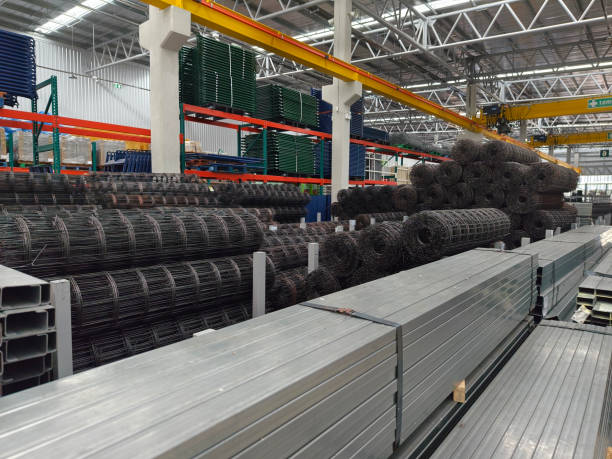
Verification of yield tensile strength, sheet thickness tolerance, and chemical composition before cold rolling.
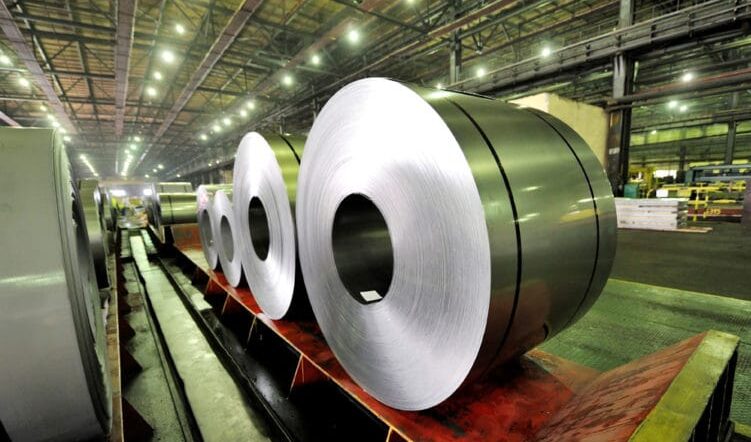
High-precision automated continuous roll forming lines ensure precise upright omega geometry and exact hole pitch.
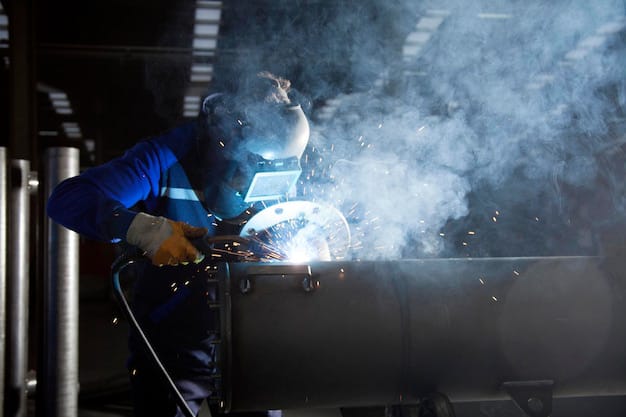
Automated multi-axis CO2 gas shielded welding produces deep joint penetration between connector claws and box beams.
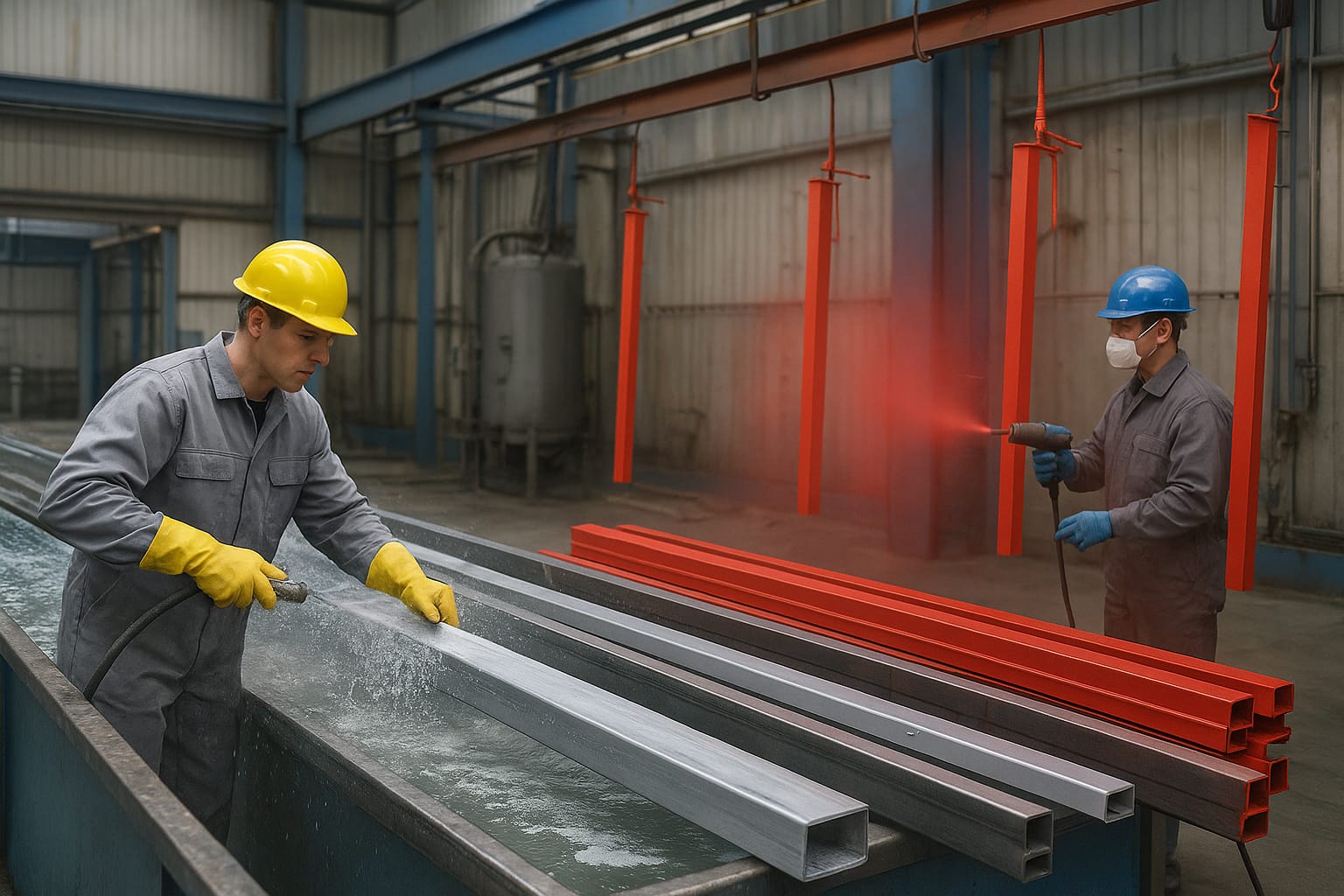
Automated washing, electrostatic spray, and thermoset curing followed by export strapping with moisture protective film.
Get authoritative engineering answers regarding lane inclination, brake roller ratios, pallet tolerances, and cold chain performance.
For standard wooden Euro (800×1200mm) or GMA (1000×1200mm) pallets carrying uniform distributed loads between 500kg and 1,500kg, the standard engineered slope is between 3.0% and 4.0% (approximately 1.7° to 2.3°). Poor-condition pallets, plastic pallets with runners, or cold storage environments operating at -25°C may require 3.5% to 4.5% to overcome bearing seal viscous friction. Lane gradients are calculated via CAD based on your specific pallet samples.
Centrifugal speed controllers should be placed every one pallet length (typically every 1.2m to 1.5m) along the lane. As a pallet accelerates down the gravity channel, the internal centrifugal flyweights inside the brake drum expand outward against an internal lining, producing proportional counter-torque that caps the pallet's terminal velocity between 0.20 m/s and 0.30 m/s, protecting inventory and upright frames from high-impact collisions.
Pallet flow tracks rely on smooth, consistent contact with the roller surface. Ideal pallets are 3-runner, 5-runner, or full perimeter base wooden pallets with no broken bottom deckboards or protruding nail heads. Pallet bottom deflection under maximum load should never exceed L/200 (less than 5mm). For slave boards, metal skids, or plastic pallets without bottom runners, full-width heavy steel cylindrical rollers with dual track guides are specified.
While lanes can theoretically extend up to 30 pallets deep, the most common and operationally efficient depth is between 10 and 20 pallets. In lanes exceeding 6 pallets, a mechanical pallet separator mechanism is mandatory at the discharge face. Without a separator, the cumulative hydrostatic backpressure from queued pallets can crush the leading pallet or exert excessive force against the forklift mast during extraction.
Yes. Our engineering division conducts structural analysis complying with European Standard EN 15512 (Steel Static Storage Systems), British Standard BS EN 15635, and American RMI (ANSI MH16.1) specifications. Racks exported to seismic-prone regions (such as Chile, New Zealand, or California) are designed using site-specific spectral acceleration data ($S_s, S_1$) with upgraded baseplates, heavy duty bracing, and seismic sleeve anchors.
Sub-zero conditions cause standard greases to solidify and conventional plastics to undergo brittle fracture. For freezer applications, we specify low-temperature synthetic fluorinated greases (rated to -40°C), zinc-plated carbon steel bearings, and pre-galvanized roller tubes or specially formulated impact-modified polymers. Upright columns and beams are rolled from fully killed, fine-grain steel with verified Charpy V-notch impact toughness.
Every export shipment is accompanied by Mill Test Certificates (MTC) proving steel grades (Q235B/Q355B equivalent to S235JR/S355JR), CE declaration of conformity, ISO 9001:2015 quality inspection sheets, detailed packing lists with piece markings, structural CAD erection drawings, and step-by-step installation manuals. Third-party inspections via SGS, TÜV, or Bureau Veritas are available upon project request.
Standard production lead time ranges from 3 to 5 weeks depending on project scale (up to 50 40ft containers). Complete modular components are bundled with steel banding, wooden dunnage, edge protectors, and waterproof plastic film to ensure zero surface abrasion during ocean transit. Our engineers provide remote video erection guidance or dispatch on-site project supervisors worldwide.
Share your pallet dimensions, maximum unit weights, clear ceiling height, and target pallet capacities. Our engineering division will supply a complete structural layout and load optimization proposal within 24 hours.