
+971 55 447 8664 +971 50 514 7060 [email protected]
0%

In 2026, warehouse operators face tighter floor space, higher labor costs, and faster inventory turnover. Drive In Racking Systems can address these pressures by storing pallets deeply and reducing unnecessary aisles. They suit stable, high-volume products, especially when forklifts load from controlled entry points. They are not a universal solution. That matters.

Recent industry research supports a careful comparison. Grand View Research identifies warehouse racking as a growing market, driven by e-commerce, manufacturing expansion, and improved storage utilization. The 2024 MHI Annual Industry Report also highlights rising investment in automation, data visibility, and warehouse productivity. These trends make rack design more important than simple purchase price. A system must match pallet dimensions, turnover rates, forklift clearances, and fire-protection requirements.

Real-world experience shows small details can decide performance. A damaged guide rail may interrupt an entire lane. Uneven floors can affect forklift stability. Poorly planned depths may trap older stock behind newer pallets. These risks require verified load calculations, impact protection, inspections, and trained operators. Standards such as RMI and FEM guidance can support safer specification, although local requirements still need confirmation.

This guide compares the 2026 best Drive In Racking Systems for global buyers. It considers capacity, durability, accessibility, installation quality, supplier support, and long-term operating cost. Price alone is misleading. The strongest option may not be the cheapest system or the most automated one. It should be the system that fits the warehouse honestly, including its limitations.
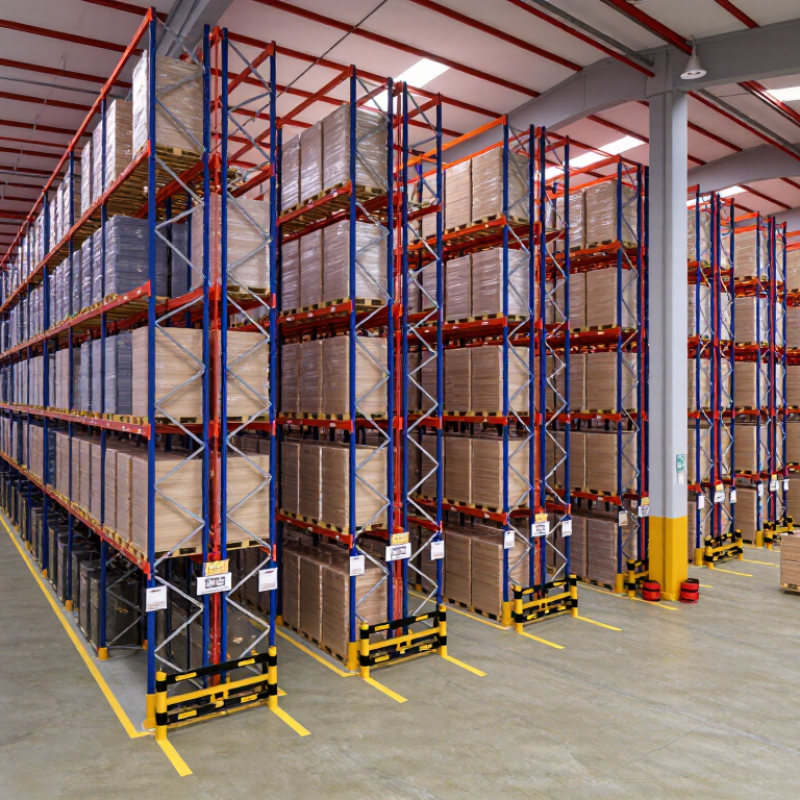
2026 Best Drive In Racking Systems for Global Buyers?

What Are Drive-In Racking Systems?

Drive-in racking systems are high-density pallet storage structures designed for forklifts to enter storage lanes. Unlike selective racks, they use fewer aisles and more vertical space. Pallets rest on horizontal rails fixed between upright frames. This arrangement supports deep-lane storage, often with one product per lane.

The system usually follows a last-in, first-out flow. A forklift enters the lane, places a pallet on the rails, and reverses carefully. During retrieval, the nearest pallet leaves first. Drive-through layouts can support first-in, first-out movement, but they require access from both ends. That distinction matters for inventory control, especially when products have shelf-life limits.

In my experience, correct pallet dimensions and load data decide whether the design works. Rails must match pallet width, weight, and forklift clearance. Upright frames also need protection from impact. Operators should keep loads centered and inspect rails, bracing, and floor conditions regularly. Small damage can become a serious stability problem. Cold rooms often benefit from this layout because it reduces wasted aisle space. However, deep lanes can hide older stock and complicate picking. That weakness is easy to underestimate. A reliable assessment should review product turnover, lane depth, building height, floor capacity, fire protection, and local safety requirements before installation.

How Drive-In Racking Systems Work

Drive-in racking systems store pallets inside deep lanes supported by horizontal rails. A forklift enters the lane and places each pallet on the next available rail position. The same vehicle later removes the pallets from the entry side. This creates high storage density with fewer aisles.

The system usually follows a last-in, first-out flow. The newest pallet enters first and leaves first. Upright frames support the structure, while guide rails help the forklift stay aligned. Entry guides reduce contact with the rack during loading. Rear supports or backstops help prevent pallets from moving too far.

Operators must check pallet size, load weight, and forklift clearance before use. A small mismatch can damage rails or reduce stability. In cold storage, floor conditions and visibility deserve extra attention. I have seen efficient layouts fail when workers ignore turning space at the lane entrance. It is not foolproof.

Pallets should sit evenly on both rails, with no broken boards or unstable loads. Regular inspections should examine bent frames, loose components, and impact marks. Capacity signs must reflect the actual configuration, not an old warehouse plan. Drive-in racks save valuable floor space, but they demand disciplined loading and careful operator training.

Key Types, Components, and Technical Specifications

2026 Best Drive In Racking Systems for Global Buyers?

Drive-in racking suits dense storage of uniform pallets with low product variety. Forklifts enter the rack tunnel and place pallets on continuous support rails. Drive-through layouts allow loading from both sides. They can improve rotation when warehouse flow requires separate loading and unloading faces. Push-back systems use nested carts, while shuttle-assisted systems reduce forklift travel inside deep lanes. The correct type depends on pallet consistency, turnover rate, and handling equipment.

Key components include uprights, horizontal rails, guide rails, backstops, entry guides, and column protectors. Check the pallet width, depth, and bottom-board design before selecting rail spacing. A common mistake is confirming pallet weight but ignoring uneven load distribution. That detail can damage rails over time. Typical specifications should state bay height, lane depth, clear entry width, rail capacity, and allowable pallet load. Forklift mast height must also match the lowest beam clearance.

Technical approval should include floor capacity, rack anchoring, impact protection, and local seismic requirements. Load signs should remain visible after installation. During site inspections, measure actual aisle width, not only the drawing. Small differences matter. A 50-millimeter obstruction can change forklift clearance and operating risk. Engineering calculations should use real pallet conditions, not idealized dimensions. Some projects still overlook damaged pallets, temperature changes, or future load growth. That deserves a second review. Specification sheets should identify steel grades, coating methods, tolerances, inspection points, and maintenance intervals for reliable global purchasing.

How to Choose a Drive-In Rack for Global Warehouse Needs

How to Choose a Drive-In Rack for Global Warehouse Needs

Choosing a drive-in rack starts with product behavior, not catalog dimensions. This system suits stable pallets with limited stock-keeping units and longer production runs. It normally supports last-in, first-out rotation, so it may not fit food, medicine, or other date-sensitive inventory. Confirm pallet width, height, bottom-board strength, and forklift clearance before requesting quotations. Small errors become expensive inside a 12-meter tunnel.

Density is attractive.

The 2024 MHI Annual Industry Report states that 55% of respondents plan to increase supply-chain technology and innovation investment. That trend supports better storage planning, but automation cannot correct poor rack geometry. Compare usable cube, access frequency, and replenishment labor. A drive-in layout may reduce aisles, yet it can increase handling time when operators search for one specific pallet. Measure real movements for several weeks.

Ask for load calculations, upright protection, rail spacing, tunnel length, and seismic design where relevant. International buyers should request drawings in metric units and clear steel grades. Check corrosion protection for humid or cold rooms. Insist on installation records and a documented inspection routine. Local standards still matter.

Do not trust maximum capacity alone. It can be misleading.

A practical trial with sample pallets and the actual forklift often reveals hidden collisions, unstable entry, or poor visibility. I would also leave one spare tunnel for changing demand. That choice may appear inefficient today, but global inventory rarely stays predictable.

2026 Safety Standards, Trends, and Supplier Evaluation

In 2026, drive-in racking safety begins with a documented site assessment. Buyers should verify pallet dimensions, forklift clearance, floor capacity, seismic risk, and fire protection requirements. Local building codes still matter more than a generic catalog statement. Every upright, rail, and guard should carry visible load information. Keep aisles clear.

Practical inspections reveal problems early. Check guide rails for bending, protectors for impact marks, and frames for loose anchors. A trained inspector should record photographs, dates, corrective actions, and responsible personnel. Safety training must cover entry speed, pallet placement, load stability, and damaged components. Some facilities add sensors or digital inspection tools in 2026, but technology cannot replace disciplined operators. The data may also be incomplete.

When evaluating suppliers, request structural calculations, material traceability, installation procedures, and evidence of testing. Ask whether the supplier can adapt designs for cold storage, corrosion exposure, uneven floors, or high seismic zones. Reliable partners provide replacement parts, inspection guidance, and documented maintenance support after installation. Lead time matters, but technical response quality matters more. Speak with previous international customers when possible.

A low quotation can hide weak steel, unclear tolerances, or expensive modifications. I have seen projects focus heavily on storage density and overlook forklift turning behavior. That mistake is costly. Buyers should compare total risk, service capability, and compliance evidence, not only price. One final question remains useful: who will respond when a damaged rail is discovered during a night shift?

2026 Best Drive-In Racking Systems for Global Buyers? — 2026 Safety Standards, Trends, and Supplier Evaluation

A practical comparison framework for selecting drive-in pallet racking by storage profile, safety requirements, operating environment, compliance evidence, and total cost of ownership. Values shown as typical engineering ranges or recognized reference requirements; the final design must be verified for the actual pallet, load, building, seismic, and fire-protection conditions.

Evaluation Category Decision Criterion Typical 2026 Benchmark or Technical Data Safety, Compliance, or Performance Consideration Buyer Verification
Application Fit Best operating principle LIFO storage for homogeneous products with relatively low SKU variety and multiple pallets of the same item. Drive-in lanes use one loading face and are generally suited to last-in, first-out inventory. Drive-through layouts can support first-in, first-out when both ends are accessible. High priority
Confirm product rotation rules before selecting the layout.
Storage Density Space utilization Commonly achieves approximately 60%–85% usable floor-space utilization, depending on aisle width, building geometry, pallet mix, and lane depth. Higher density is achieved by reducing operating aisles, but selectivity, access speed, and damage-control requirements are reduced compared with selective pallet racking. Model utilization using actual pallet positions, fire aisles, columns, doors, and required clearances.
Pallet Compatibility Pallet type and condition Verify pallet outside dimensions, bottom-board arrangement, entry direction, stiffness, deflection, and condition. Common pallet footprints include 1,200 × 800 mm and 1,200 × 1,000 mm in many markets. Pallets are supported by rails rather than by front and rear beams. Weak, damaged, or incompatible pallets can increase product-drop and pallet-failure risk. Required
Submit representative pallet samples and loaded pallet drawings.
Load Capacity Per-pallet and per-lane load Capacity is project-specific. It depends on pallet load, lane depth, rail span, upright geometry, steel grade, seismic forces, and impact assumptions. A system must be engineered for both individual pallet loads and the cumulative load carried by each upright frame, rail, and base connection. Request stamped calculations or certified design calculations, load plaques, and a clearly defined load case.
Lane Geometry Lane depth and pallet clearance Typical designs use several pallet positions in depth. Clearances must account for pallet tolerance, load overhang, forklift mast movement, and rail deflection. Excessively tight clearances increase pallet and rack impact. Excessive clearance reduces storage density and may permit unstable pallet placement. Approve dimensioned plan and elevation drawings using the largest actual pallet and load envelope.
Forklift Operation Truck suitability Common equipment includes reach trucks, counterbalance trucks, and specialized drive-in forklifts, subject to tunnel width, lift height, turning radius, and operator visibility. The truck must enter the lane without contacting uprights, rails, bracing, pallet loads, or rear stops. Forklift capacity decreases at greater lift heights and load centers. Conduct a site trial or digital clearance study with the exact truck model and attachment.
Rack Protection Impact protection Use protected upright bases, end-of-aisle guards, guide rails, column guards, and rear protection where the risk assessment identifies vehicle or load impact. Protection devices should not conceal damage or interfere with required rack deflection. They must be compatible with the rack design and anchorage system. Required
Review the impact-protection layout as part of the engineering package.
Structural Safety Design standard and engineering basis Depending on the market, commonly referenced frameworks include EN 15512, EN 15629, EN 15635, ANSI/RMI MH16.1, and applicable local building and seismic codes. The governing code should be agreed before design. Local regulations may control wind, seismic, fire, anchorage, material traceability, and installation requirements. Specify the applicable jurisdiction, design code, load combinations, steel grade, and engineering responsibility in the purchase contract.
Inspection Program Routine rack inspection EN 15635 provides a widely used framework for rack safety management, including immediate reporting of damage and regular systematic inspections. A competent person should assess damage, unauthorized modifications, missing components, overloading, and unsafe pallet placement. Damaged components may require unloading and replacement. Confirm inspection frequency, reporting process, red-amber-green risk classification, and repair responsibility.
Fire Protection Sprinkler and fire-code coordination Fire-protection requirements vary with commodity class, storage height, building height, rack arrangement, packaging, sprinkler type, and local authority requirements. Rack geometry can affect flue spaces, in-rack sprinklers, longitudinal and transverse flues, aisle widths, and ceiling sprinkler performance. Storage approval must be coordinated with the fire engineer. Required
Obtain written approval from the responsible fire-protection designer or authority having jurisdiction.
Seismic Performance Earthquake design Projects in seismic regions require rack design and anchorage checks based on the applicable national or local seismic code and site parameters. Seismic design may require stronger frames, bracing, anchors, pallet restraints, connector checks, and increased aisle or flue clearances. Provide site seismic parameters and require calculations for rack, anchors, floor slab, and pallet-retention measures.
Pallet Retention Rear stops and load restraint Rear guide rails, backstops, or pallet restraints may be used where lane depth, loading method, product stability, or risk assessment requires them. A rear stop is not a substitute for correct pallet positioning and should not be designed to absorb routine forklift impact unless specifically engineered for that purpose. Define stop location, allowable impact energy, pallet overhang, and inspection method.
Operational Safety Tunnel control Use lane-entry procedures, speed control, operator training, pedestrian exclusion, adequate lighting, and clearly marked traffic routes. Drive-in tunnels have restricted visibility and higher collision exposure than open-face systems. Pedestrian access should be prevented unless the area is specifically designed and controlled. Request the method statement, operator training plan, traffic-management plan, and signage schedule.
Installation Quality Assembly and anchorage Installation should follow approved drawings, specified bolt tightening requirements, base-plate details, plumb tolerances, and floor-load limitations. Incorrect anchorage, missing bracing, poor plumb, or unauthorized field modifications can materially reduce structural capacity. Require installation inspection records, anchor test evidence where applicable, as-built drawings, and handover documentation.
Durability Finish and environment Select painted, powder-coated, galvanized, or specialty finishes according to humidity, wash-down procedures, temperature, chemicals, and outdoor exposure. Cold stores, food facilities, coastal sites, and chemically aggressive environments may require corrosion-resistant materials or enhanced coating systems. Confirm coating specification, surface preparation, thickness requirements, corrosion category, and warranty exclusions.
Cold-Store Use Low-temperature operation For frozen or chilled warehouses, verify steel toughness, coating performance, floor condition, condensation control, lighting, and forklift battery or power-system suitability. Low temperatures and moisture can affect coatings, floor friction, visibility, corrosion, and equipment performance. Condensation can increase slip and corrosion hazards. State operating temperature range, defrost cycle, humidity conditions, and cleaning chemicals in the design brief.
Automation Readiness Sensors and inventory control Drive-in racks can be combined with barcode, RFID, warehouse-management systems, position sensors, and automated or semi-automated vehicles when lane tolerances are controlled. Automation improves traceability but requires consistent pallet quality, repeatable positioning, reliable detection, and clearly defined exception handling. Evaluate interface protocols, sensor locations, pallet identification, recovery procedures, and cybersecurity requirements.
Supplier Evaluation Engineering capability A qualified supplier should provide project-specific calculations, drawings, component specifications, permissible loads, installation instructions, and inspection guidance. Catalog capacity tables alone are insufficient where the project includes unusual pallet loads, high storage heights, seismic exposure, fire constraints, or non-standard forklifts. High priority
Audit design competence, quality procedures, and engineering accountability.
Supplier Evaluation Manufacturing quality Assess material certificates, welding or roll-forming controls, dimensional inspection, coating inspection, traceability, and nonconformance procedures. Consistent component geometry and verified material properties are essential for predictable load capacity and correct field assembly. Request sample inspection reports, quality certificates, and batch or heat-number traceability where relevant.
Commercial Value Total cost of ownership Evaluate rack supply, engineering, freight, duties, installation, floor preparation, protection, fire upgrades, inspections, repairs, and future reconfiguration. The lowest purchase price may not provide the lowest lifecycle cost if it results in frequent impact damage, limited spare parts, difficult inspections, or poor space utilization. Compare equivalent scopes and include a five- to ten-year maintenance and damage-repair estimate.
Global Procurement Documentation and after-sales support Required documentation commonly includes drawings, calculations, installation manuals, load signs, inspection guidance, spare-part lists, and warranty terms. Documents should use consistent units, identify revision status, and state exclusions. Local-language safety information may be required by the installation jurisdiction. Make document delivery, response time, spare-part availability, and local service coverage contractual requirements.
Selection Summary Best-fit system profile A strong candidate combines high-density lane storage, verified pallet compatibility, engineered load capacity, suitable forklift access, robust impact protection, and coordinated fire and seismic design. Drive-in racking is generally strongest for dense storage of stable, homogeneous products; it is less suitable where high selectivity, rapid access, or strict FIFO control is essential. Conditional
Approve only after site-specific engineering and safety review.
Reference frameworks mentioned: EN 15512 for adjustable pallet racking design principles; EN 15629 for specification of storage equipment; EN 15635 for the use and maintenance of storage equipment; ANSI/RMI MH16.1 for industrial steel storage racks where adopted by the project jurisdiction. Always confirm the legally applicable edition and local requirements before procurement.
Important: Capacity, dimensions, clearances, fire protection, seismic resistance, and anchorage must be confirmed by a competent engineer for the specific building, pallet, load, forklift, and operating conditions. The benchmarks above are for supplier comparison and preliminary planning, not a substitute for project-specific design approval.

FAQS

How does a drive-in racking system work?

A forklift enters a deep lane and places pallets on horizontal rails. The same vehicle removes them from the entry side. Fewer aisles save floor space.

What inventory suits this storage system?

It suits stable pallets, limited product variety, and longer production runs. It usually follows last-in, first-out rotation. It may not suit date-sensitive inventory.

What pallet details must operators check?

Check pallet width, height, bottom-board strength, and total load weight. Confirm that the forklift has enough clearance. Small mismatches can damage rails.

Why are guide rails and entry guides important?

Guide rails help the forklift remain aligned inside the lane. Entry guides reduce contact during loading. They do not remove every risk.

How can warehouses improve loading safety?

Pallets should rest evenly on both rails. Do not load broken boards or unstable products. Keep turning space clear at the lane entrance.

What inspections should be performed regularly?

Inspect bent frames, loose components, damaged rails, and impact marks. Check rear supports and backstops. Replace inaccurate capacity signs.

Is maximum rack capacity enough for choosing a system?

No. Maximum capacity can mislead. Request load calculations, rail spacing, tunnel length, and upright protection. The actual configuration matters more than a large number.

How should international warehouses evaluate a proposed layout?

Test sample pallets with the actual forklift. Measure collisions, visibility, turning space, and handling time. Request metric drawings and relevant seismic details.

Does high storage density always improve efficiency?

Not always. Fewer aisles can increase search and replenishment time. Measure real forklift movements for several weeks. My earlier assumption might be too simple.

Should a warehouse reserve extra space?

Leaving one spare tunnel can support changing inventory demand. It may look inefficient today. Global inventory rarely stays predictable.

Conclusion

Drive In Racking Systems are high-density storage solutions designed to maximize warehouse capacity by allowing forklifts to enter storage lanes and place pallets on continuous rails. Unlike selective racking, they reduce the need for multiple aisles, making them suitable for warehouses handling large quantities of similar products. This summary explains how drive-in and drive-through configurations operate, including pallet movement, loading sequences, structural frames, guide rails, support beams, entry protections, and essential technical specifications such as load capacity, bay depth, height, and forklift clearance.

For global warehouse needs, selecting the right system requires evaluating inventory turnover, pallet dimensions, product uniformity, building conditions, equipment compatibility, and local installation requirements. The article also highlights 2026 safety expectations, including impact protection, load signage, inspections, operator training, and routine maintenance. Buyers should assess suppliers based on engineering capability, material quality, documentation, customization, installation support, spare parts availability, and transparent communication to ensure a safe, durable, and efficient storage investment.

Ethan

Ethan

Ethan is a professional marketing specialist with a strong understanding of the company’s products, customer needs, and industry trends. Through years of experience in market research, content strategy, and customer communication, he transforms complex product information into clear, practical, and......